
MTSU Title IX Attorney: Defense for Students and Faculty
Experienced MTSU Title IX defense for Blue Raiders students, faculty, and staff. Former prosecutor. Hundreds of sex crime cases handled.
Call (513) 540-0450 – Free Consultation
If you are a Middle Tennessee State University student, faculty member, or staff member facing a Title IX complaint, the procedural calendar will move faster than you expect. Hiring an MTSU Title IX attorney early is the single biggest factor in how the case unfolds. The Office of Civil Rights Compliance under Christy Sigler will issue the Notice of Allegations within days of receiving a Formal Complaint. You will be summoned to interviews. You will be given a defined window to inspect the evidence and respond to the investigation report. At the live hearing, only your advisor may ask cross-examination questions of the complainant and the witnesses. Every interview, every objection, every document response builds the record the decision-maker will rely on.
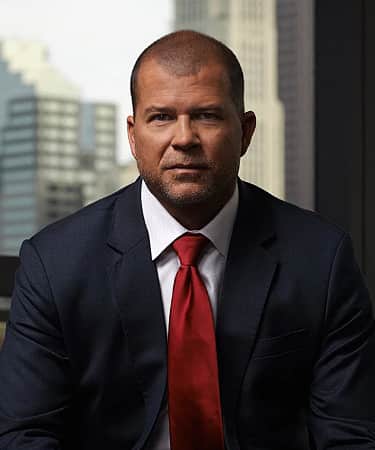
Mark Wieczorek is a former Hamilton County prosecutor who defends students, faculty, and coaches accused of sexual misconduct at Midwest and Southeast universities, including Middle Tennessee State University. As an MTSU Title IX lawyer, his job is to put the same procedural pressure on the Office of Civil Rights Compliance that the office’s own investigators put on you, and to do it before the hearing officer is appointed, not after.
There is one fact about MTSU’s Title IX posture that most respondents and most parents who call have never thought through, and it shapes how an experienced attorney builds the case: MTSU operates a separate office structure for Title IX matters, with the Office of Civil Rights Compliance handling overall Title IX compliance, a designated staff member handling student-specific complaints, and athletics-related matters routed through a dedicated athletics liaison. That separation creates institutional pressure to coordinate findings across offices, and respondents pay the price for the resulting alignment.
How MTSU’s Title IX Process Works Under Policy 29
MTSU’s Title IX Compliance policy, designated Policy 29 within the University Policies framework, controls every Title IX matter at MTSU. The Office of Civil Rights Compliance is located in 116 Cope Administration Building at 1301 East Main Street, Murfreesboro, Tennessee 37132. The main office phone is (615) 898-2185. Christy Sigler, J.D., serves as Assistant to the President for the Office of Civil Rights Compliance and is the senior Title IX official. Tamika Mitchell handles student-specific Title IX complaints. Diane Turnham handles athletics-related Title IX matters.
The process begins when the Office of Civil Rights Compliance receives a Formal Complaint. Once the complaint is accepted, the office issues a Notice of Allegations to the respondent. The Notice will identify the policy provisions alleged to have been violated, summarize the allegations, and explain procedural rights including the right to an advisor of choice. The accepted standard of evidence in MTSU Title IX matters is preponderance of the evidence, meaning the decision-maker must determine whether it is more likely than not that the alleged conduct occurred.
The investigation phase that follows is where most cases are won or lost, not the hearing. The Office’s investigator will interview the complainant, interview the respondent, interview witnesses, collect electronic communications, review physical evidence, and produce a written investigation report. Both parties have the right to review all evidence directly related to the allegations before the report is finalized, and both parties have a defined window to submit a written response identifying inaccuracies, providing additional context, and flagging any evidence that should have been included but was not.
One foundational legal fact about MTSU’s process is often misunderstood: federal Title IX regulations promulgated under 34 CFR Part 106 preempt the Tennessee Uniform Administrative Procedures Act for Title IX matters. 34 C.F.R. section 106.6(h) makes Title IX procedural rules controlling, and MTSU as a public university receiving federal funds is bound by them. This means the procedural framework is federal first, not state administrative law, and arguments about state administrative procedure are largely unavailable as substantive defenses.
The Statute Most MTSU Respondents Have Never Heard Of: T.C.A. § 24-7-102
Tennessee Code Annotated section 24-7-102 is buried in the Tennessee evidence code, not in the higher-education code, and it does something no other state’s law does for Title IX respondents at a public Tennessee university. The statute provides that any written or oral statement a party gives in a student disciplinary proceeding concerning sexual misconduct cannot be admitted in a later civil or criminal trial, hearing, or proceeding for any purpose, and cannot be used for impeachment, without the party’s informed and written consent, IF the statement was made in a disciplinary proceeding in which the party did not have the active assistance of counsel.
Read that sentence twice. The shield runs in one direction. If you give a statement to an MTSU Title IX investigator and you have active assistance of counsel during the proceeding, your statement cannot be turned around and used against you in a parallel civil suit or in a Rutherford County criminal case without your written consent. If you give a statement to an MTSU investigator and you do not have active assistance of counsel, your statement is fair game later. MTSU’s investigator can be subpoenaed in a later civil deposition or called as a witness in a later criminal trial, and what you said in the disciplinary process can be replayed verbatim.
The statute exists to encourage MTSU respondents to participate fully in the disciplinary process without sacrificing their criminal-case rights, but only if they retain counsel. Most MTSU Title IX respondents have never heard of T.C.A. section 24-7-102. Few campus advisors mention it. Some have not read it. The decision about when to retain counsel at MTSU is not just about the Title IX hearing. It is about whether every interview you give to MTSU’s Office of Civil Rights Compliance becomes admissible in a parallel criminal or civil proceeding, or whether it stays protected.
Call Mark Directly – (513) 540-0450
The Sixth Circuit’s Due Process Standard Cuts in Your Favor
Middle Tennessee State University sits in the Middle District of Tennessee, federal venue for the United States Court of Appeals for the Sixth Circuit. That is the same federal circuit as Cincinnati, the University of Cincinnati, Ohio State, and the University of Michigan. The Sixth Circuit is one of the most accused-student-favorable circuits in the federal system on Title IX procedural due process, and the controlling Sixth Circuit precedent applies directly to MTSU.
The marquee Sixth Circuit case is Doe v. Baum, 903 F.3d 575 (6th Cir. 2018). The Sixth Circuit held that when a public university’s disciplinary case turns on credibility, the university must give the accused student or his agent the opportunity to cross-examine the accuser and adverse witnesses in the presence of the decision-maker. Doe v. Baum is the case that locked in the live-hearing-and-cross-examination requirement for public universities in this circuit, and it is binding precedent for MTSU. Every procedural shortcut by an MTSU investigator that limits cross-examination, that prevents the respondent’s advisor from probing a credibility-determinative point, or that excludes a relevant witness on weak grounds is potentially a Doe v. Baum violation.
The companion Sixth Circuit case is Doe v. Miami University, 882 F.3d 579 (6th Cir. 2018). Miami University held that an accused student stating a Title IX claim need only allege facts supporting a plausible inference that the school discriminated against him on the basis of sex. The plausible-inference pleading standard makes the Sixth Circuit one of the easier federal venues to bring a Title IX challenge to a flawed university process, which in turn creates ongoing institutional pressure on MTSU to run a procedurally clean hearing. An MTSU respondent represented by counsel who understands Sixth Circuit precedent has procedural footing at every stage of the process that an unrepresented respondent does not.
What Cross-Examination at MTSU Looks Like When It Is Done Right
Cross-examination at an MTSU Title IX hearing is not the same as cross-examination in a criminal trial, but the skills transfer in important ways. Federal Title IX regulations and Sixth Circuit precedent guarantee the right of the respondent’s advisor to cross-examine the complainant and any adverse witnesses at the hearing. The respondent, you, cannot personally question the complainant. The cross-examination must be conducted by your advisor.
Effective Title IX cross-examination requires identifying inconsistencies between the complainant’s hearing testimony and prior statements made during the MTSU investigation, handling hostile witnesses without appearing aggressive in a way that alienates the decision-maker, introducing documents, communications, and timelines that contradict or contextualize the complainant’s testimony, and staying within the bounds the hearing officer permits while still building a record that supports both the hearing defense and any subsequent appeal.
Mark Wieczorek’s prosecutorial background is directly relevant here. As a former prosecutor who spent years questioning witnesses in criminal trials, he developed a methodical approach to cross-examination that is uncommon in attorneys who have only worked on the defense side. The complainant’s advisor will also cross-examine you. Preparation for being cross-examined matters as much as preparation for cross-examining, and most MTSU respondents have never been formally questioned by a hostile party in a recorded proceeding.
Why a Cincinnati-Based Title IX Attorney for an MTSU Matter
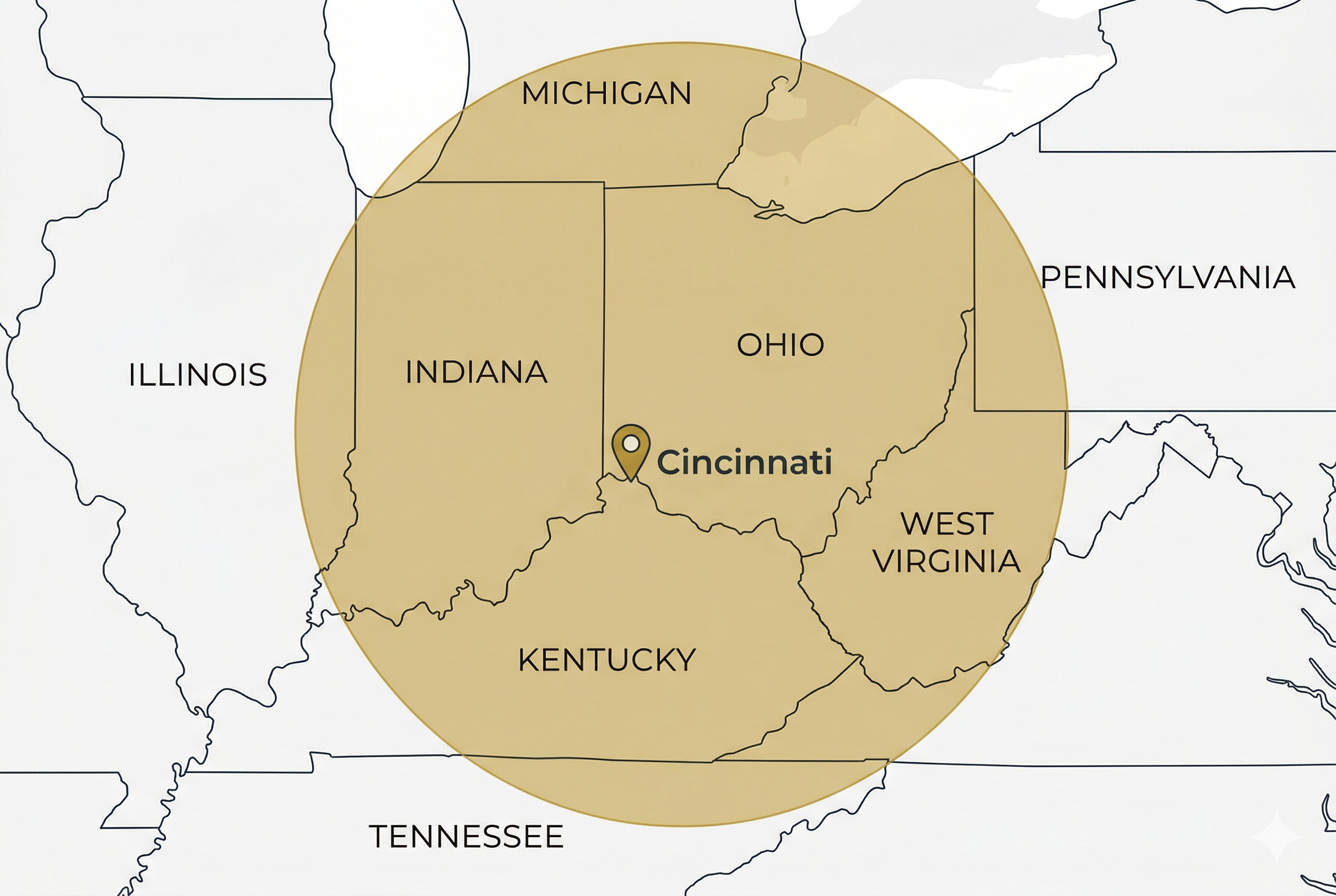
Cincinnati to Murfreesboro is roughly 280 miles, about five hours by car, well within the range of regular travel for hearings and meetings. The 6th Circuit binding precedent that controls MTSU also controls the University of Cincinnati, Ohio State, the University of Michigan, and every other Sixth Circuit public university Mark defends. The procedural posture, the cross-examination doctrine, and the pleading standard for Title IX challenges are identical across this circuit.
An MTSU Title IX matter does not require an attorney admitted to the Tennessee bar. Title IX hearings are educational administrative proceedings governed by federal regulation, not licensed Tennessee legal practice. Mark Wieczorek’s prosecutorial background, his MTSU-specific case strategy informed by Sixth Circuit precedent and Policy 29, and his ability to invoke T.C.A. section 24-7-102 protection from the first phone call forward make him a viable defense option for MTSU students and faculty regardless of where they call from.
Sanctions MTSU Can Impose and What They Mean for Your Future
If the MTSU decision-maker finds responsibility, sanctions are imposed. The range is broad and depends on the severity of the conduct, the policy provision violated, and any aggravating or mitigating factors the decision-maker considered. Common sanctions at MTSU and at peer institutions include warning or formal reprimand, probation with conditions, loss of housing or campus privileges, suspension for a defined period (often one or two academic terms), expulsion with a permanent notation on the academic transcript, and for faculty and staff, termination, loss of tenure, loss of pension contributions, and effective exclusion from future academic employment.
The line between an outcome that lets an MTSU student finish their degree and an outcome that derails an academic career can be a single procedural ruling, a single piece of evidence properly contextualized, or a single cross-examination question that exposes the weakness in the complaint. Sanctions are also often the most aggressive part of the process. Universities facing public pressure to demonstrate Title IX enforcement frequently impose maximum sanctions even in close cases, which is why an experienced defense built early in the investigation is the single biggest factor in how the case actually ends. Sanctions on a graduate or professional-school transcript carry implications far beyond MTSU itself, including licensing board disclosures in nursing, education, law, and medicine, all of which deserve attention at the front end of the case.
When MTSU Title IX Intersects with Parallel Criminal Investigation
Some Title IX matters at MTSU run in parallel with a criminal investigation by Murfreesboro Police, the Rutherford County Sheriff’s Office, or the Rutherford County District Attorney. This is most common in alleged sexual assault cases but can also arise in stalking, harassment, or domestic-violence cases. The parallel proceedings create significant legal complications that Title IX-only attorneys frequently miss.
Statements you make in the MTSU Title IX process are not automatically protected from disclosure in a criminal proceeding unless T.C.A. section 24-7-102 protection attaches, which means you must have active assistance of counsel during the disciplinary proceeding. Anything you say to an MTSU Title IX investigator, in a hearing, or in a written response can potentially be subpoenaed by law enforcement if you proceeded without counsel. This is one of the most underappreciated risks in the MTSU Title IX process and one of the most important reasons to retain an attorney who understands both Title IX defense and criminal defense from the first call.
The Wieczorek Law Firm handles both. Mark Wieczorek’s practice includes criminal defense for clients facing sex crimes charges, OVI, drug crimes, and related matters. When an MTSU Title IX case includes parallel criminal exposure, the strategic decisions about what to say in the Title IX process are made with full awareness of how those statements may be used in a subsequent criminal proceeding. Attorneys who only handle one side of the parallel proceedings inadvertently put their clients in a worse position on the other side.
Mark Wieczorek’s Title IX Case Results
Below are real Title IX matters Mark has defended across the Midwest, for students and faculty facing the same kind of allegations you’re navigating right now. They’re a look at what’s possible when the defense is built right from day one.
- University of Dayton: Professor accused of inappropriate sexual contact with a student. Case dismissed. Full tenure and pension retained. The defense identified inconsistencies in the complainant’s account, procedural irregularities in the investigation, and evidentiary gaps that the institution could not explain. The professor continues to teach.
- University of Cincinnati: Student accused of rape and sexual assault. Case dismissed prior to hearing. Retained early, challenged evidence reliability, identified procedural deficiencies. The student continued his education without interruption.
- University of Cincinnati (separate case): Student accused of rape and sexual assault. Found not responsible after a full hearing with cross-examination. The defense identified inconsistencies across multiple investigative interviews and methodically dismantled the case at the hearing.
- Miami University: Fraternity matter, client found not individually responsible, all felony charges dismissed in parallel criminal proceedings.
Disclaimer: The above case results are not a guarantee, warranty, or prediction regarding the outcome of your case. Past results afford no guarantee of future results. Every case is different and must be judged on its own merits.
Frequently Asked Questions: Title IX at MTSU
Who handles Title IX complaints at MTSU?
MTSU’s Office of Civil Rights Compliance handles Title IX matters under Policy 29. Christy Sigler, J.D., is the senior Title IX official. Tamika Mitchell handles student-specific complaints, and Diane Turnham handles athletics-related matters. The office is located in 116 Cope Administration Building at 1301 East Main Street, Murfreesboro, TN 37132. Phone: (615) 898-2185.
Is MTSU in the Sixth Circuit for Title IX purposes?
Yes. MTSU sits in the Middle District of Tennessee, federal venue for the Sixth Circuit. Doe v. Baum and Doe v. Miami University are binding precedent at MTSU.
What is T.C.A. section 24-7-102 and does it apply at MTSU?
It is a Tennessee evidentiary shield statute that protects statements made by a respondent in a sexual misconduct disciplinary proceeding from later use in civil or criminal proceedings, but only if the respondent had the active assistance of counsel during the disciplinary proceeding. The shield applies to MTSU Title IX matters. Respondents without counsel during the MTSU process lose this protection.
Can I be cross-examined personally at an MTSU Title IX hearing?
No. Federal Title IX regulations and Sixth Circuit precedent require that cross-examination at a live hearing be conducted by the party’s advisor, not by the party personally.
Does an MTSU Title IX finding follow me after I graduate?
If MTSU finds responsibility, the disciplinary record is typically maintained and may be disclosed to subsequent institutions, employers conducting background checks, and licensing boards depending on the scope. A finding of not responsible does not generate a disciplinary record at most institutions.
How much does an MTSU Title IX defense cost?
Flat fee, defined at the start, no surprise hourly billing. Specific fees depend on case complexity. For a confidential discussion and clear quote, call (513) 540-0450.
Title IX Defense at Other Midwest Universities
If you are looking for a Title IX defense attorney serving multiple universities, see our practice pages for University of Tennessee Title IX defense, Vanderbilt University Title IX defense, University of Cincinnati Title IX defense, Ohio State University Title IX defense, University of Dayton Title IX defense, Miami University Title IX defense, Indiana University Title IX defense, Purdue University Title IX defense, University of Michigan Title IX defense, Michigan State University Title IX defense, Penn State University Title IX defense, West Virginia University Title IX defense. For a step-by-step walkthrough of what to expect in a university Title IX proceeding, see our Title IX hearing process step-by-step guide.
For an overview of Mark’s work across the Midwest and Southeast, see our Title IX defense practice page.
Do Not Wait. Contact an MTSU Title IX Attorney Now.
The window to build your defense at MTSU is the investigation phase, not the hearing. By the time the Title IX hearing officer convenes the hearing, the record is largely closed. Every interview, every document response, every objection on the record matters. T.C.A. section 24-7-102 protection turns on whether you had counsel during the proceeding, which means it turns on whether you call before the first interview or after. If you have been notified of a Title IX investigation at MTSU, retain experienced Title IX defense counsel today.
Call (513) 540-0450 Now – Free Consultation
MTSU Blue Raiders students and faculty: free consultation, flat fee, no surprise hourly billing. Mark answers his own phone. You do not have to figure this out alone. That is exactly why we are here.