

Ohio University Title IX Attorney: Defense for Students and Faculty
Experienced Title IX defense for Ohio University students, faculty, and staff. Former prosecutor. Hundreds of sex crime cases handled.
Call (513) 540-0450 – Free Consultation
If you are a student, faculty member, or staff member at Ohio University facing a Title IX investigation, you need an attorney who understands how this campus actually operates. Ohio University is a public doctoral research institution in Athens with Fall 2025 enrollment of 23,264 students on the Athens campus and 30,692 across all campuses. Roughly ten percent of undergraduates participate in Greek life across more than two dozen fraternity and sorority chapters. The procedural rules that govern an Ohio University Title IX case live in two separate policies that run in parallel, and each routes to its own hearing structure with its own cross-examination rules. That is not a process a generalist attorney can navigate from memory.
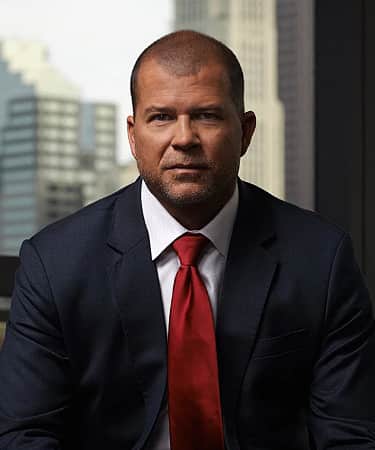
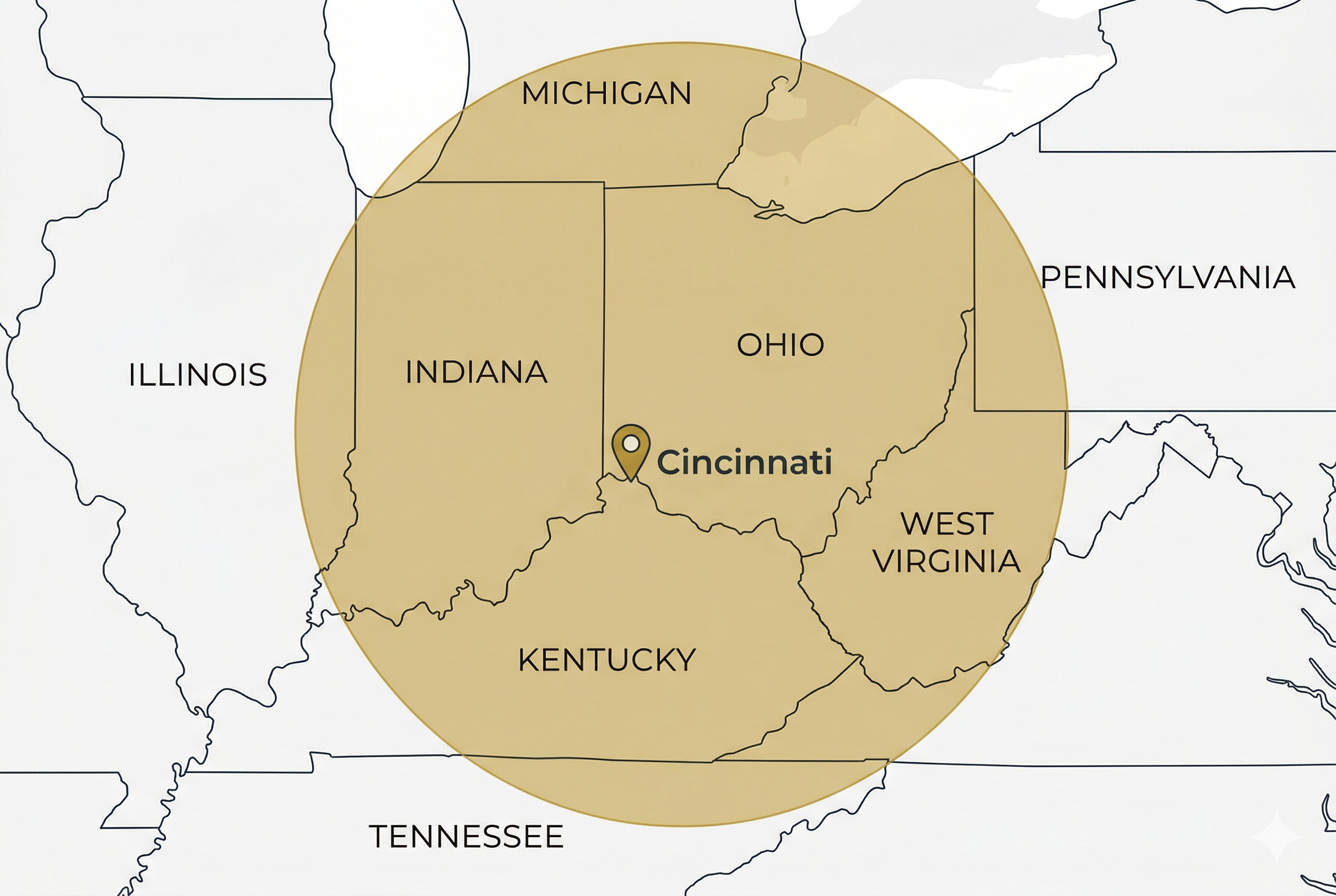
Mark Wieczorek is a Title IX lawyer based in Cincinnati who represents students and faculty at Ohio University. Athens is roughly a three-hour drive from his Cincinnati office, well within his Midwest service area. As a former prosecuting attorney who has handled hundreds of sex crime-related cases, he knows how investigations are built, where procedural weaknesses exist, and how to protect your rights through every stage of Ohio University’s disciplinary process.
Call (513) 540-0450 – Free Consultation
How the Ohio University Title IX Process Works
Two policies control sexual misconduct cases at Ohio University, and the first strategic decision in any case is identifying which one applies. Policy 03.004, Sexual Harassment and Other Sexual Misconduct, is the Title IX policy. It defines covered conduct, sets the investigation timeline, and controls the hearing where the advisor conducts cross-examination. Policy 40.001, Nondiscrimination in Education and Employment, is the broader civil rights policy. It captures sex-based conduct that does not meet the Title IX definition and routes those cases through a hearing where the panel itself asks the questions. Both policies are currently in force. An attorney who assumes every Ohio University sex-related case is a Title IX case has already missed rules that can decide the outcome.
The Civil Rights Compliance Office
Ohio University centralizes sexual misconduct intake and oversight in the Civil Rights Compliance office, located at Lindley Hall 006 in Athens. The current Director and Title IX Coordinator is Kerri Griffin, J.D. The office can be reached at 740-593-9140 or at civilrights@ohio.edu and titleIX@ohio.edu. Every formal report routes through this office, and the Title IX Coordinator is the person who decides whether a case proceeds under 03.004 or 40.001, whether emergency removal is warranted, and how the investigation is structured. Understanding how this office operates is the foundation of any serious Ohio University Title IX defense.
Under Policy 03.004, all Ohio University faculty, administrators, and staff are mandatory reporters who must immediately report violations of the policy to the Title IX Coordinator. Graduate assistants and student employees also qualify as mandatory reporters when they have supervisory, evaluative, grading, or advisory responsibility, or when they have duties involving the safety and wellbeing of others. The only exceptions are designated confidential resources, including Counseling and Psychological Services, the Survivor Advocacy Program, and licensed medical providers at Campus Care. A passing comment to a professor, a resident assistant, a teaching assistant, or a coach can trigger a report before you know one has been filed.
Policy 03.004 vs. Policy 40.001: Two Tracks, Two Sets of Rules
The distinction between Ohio University’s two sexual misconduct policies is one of the most consequential procedural facts in any case. The table below summarizes the core differences.
| Procedural Element | Policy 03.004 (Title IX) | Policy 40.001 (Civil Rights) |
|---|---|---|
| Who decides responsibility | Three-member hearing panel from the grievance process pool, with one panelist serving as chair | Three-member hearing panel from the grievance process pool |
| Who conducts cross-examination | Each party’s advisor | The hearing panel |
| Standard of evidence | Preponderance of the evidence | Preponderance of the evidence |
| Investigation timeline target | Approximately forty business days, with the full grievance process targeted to complete within ninety business days | Within ninety business days from notice to respondent |
| Sanctioning authority | The hearing panel imposes sanctions | Panel for students and staff; the Dean and Faculty Handbook process for faculty respondents |
| Appeal filing window | Five business days | Per Policy 40.001 procedures |
| Appeal body | Single appeal officer drawn from the grievance process pool, not previously involved in the case | Per Policy 40.001 procedures |
Tip: on mobile, swipe the table horizontally to see all three columns.
The Hearing: A Three-Member Panel Under Both Policies
Ohio University uses a three-member hearing panel drawn from its grievance process pool for both student and employee Title IX cases under Policy 03.004. One panelist serves as hearing chair and is responsible for running the hearing, ruling on the relevance of questions, and directing the conduct of the proceeding. The panel decides responsibility by majority vote under the preponderance standard and then imposes sanctions directly in most matters. Ohio University does not use a separate sanctioning official under Policy 03.004. The same panel that decides whether a violation occurred also decides the consequences.
Under Policy 40.001, the structure is similar on the front end, with a three-member panel drawn from the same pool, but sanctioning diverges on the back end for faculty. A final determination against a faculty respondent under 40.001 is forwarded to the Dean and handled through the Faculty Handbook process, layering an additional institutional step on top of the panel’s decision. Student and staff respondents receive sanctioning directly from the panel under both policies.
This panel structure changes the defense playbook. Persuading three decision-makers with different institutional perspectives is not the same work as persuading a single hearing officer. The chair’s real-time relevance rulings are a live battleground. A well-prepared advisor pushes every reasonable question, documents every objection, and preserves the record for appeal.
Cross-Examination Rules: The Critical Policy Difference
The most consequential procedural difference between the two policies sits at the hearing. Under Policy 03.004, cross-examination is conducted by each party’s advisor. The advisor proposes the question, the proceeding pauses while the hearing chair considers it, and the chair determines whether the question will be permitted. No party can question the other party or adverse witnesses directly. The structure exists to comply with binding Sixth Circuit precedent, discussed below, that requires an opportunity to cross-examine through an agent when a Title IX case turns on competing narratives. The practical implication is that the quality of a respondent’s advocacy at the hearing is determined entirely by the quality of the advisor the respondent has retained.
Under Policy 40.001, by contrast, all questions are asked by the hearing panel. A party’s advisor sits in a supporting capacity and does not conduct the examination. That is a meaningfully different strategic environment. A defense that depends on tight, sequenced, adversarial cross-examination of the complainant and adverse witnesses has a structural advantage under 03.004 that does not exist under 40.001. The policy a case is routed through can change how the defense must be built from day one.
The Investigation Phase
After a formal complaint is accepted, the matter is assigned to a trained investigator inside the Civil Rights Compliance office. The investigator conducts interviews with both parties and with witnesses, collects documentary and electronic evidence, and prepares a written report. Parties may bring an advisor to investigative meetings, but during investigation the advisor serves in a support capacity and cannot speak on the party’s behalf.
Policy 03.004 sets a target of approximately forty business days for the investigation itself, with the full grievance process targeted to complete within ninety business days not counting appeal. Extensions are available for good cause, and the reasons given for extensions are a critical part of the record. Unjustified delays are appellate ammunition. Strong advocacy during the pre-hearing window is one of the most important opportunities in the case. An experienced attorney uses that period to challenge factual conclusions, identify omissions, request additional witnesses, and build the record for the hearing.
Standard of Evidence at Ohio University Title IX Hearings
Ohio University applies the preponderance of the evidence standard under Policy 03.004. The panel needs only to conclude that the conduct more likely than not occurred. Preponderance is significantly lower than the beyond a reasonable doubt standard used in criminal court, and it makes evidentiary preparation, witness credibility, and the relevance rulings of the hearing chair disproportionately important.
Appeals
A notice of appeal must be filed within five business days of the date the notice of outcome is delivered. The appeal is decided by a single appeal officer drawn from the grievance process pool who was not previously involved in the case. The appeal officer must issue a written decision within ten business days of receiving the appeal materials. Enumerated grounds include:
- Procedural irregularity that would affect the outcome
- New evidence not reasonably available at the time of the determination
- Conflict of interest or bias by the Title IX Coordinator, an investigator, or a decision-maker
Ohio University’s single-appeal-officer structure is different from many sibling universities that use a multi-member appeal committee. One person reads the written submissions, reviews the hearing record, and makes the final decision. That places extraordinary weight on the written appeal itself. A rushed or poorly documented appeal can lose what a better-prepared one might have won. The five-business-day window is unforgiving.
Emergency Removal and Interim Action
Policy 03.004 permits the Title IX Coordinator to impose emergency removal on a student respondent after conducting an individualized safety and risk analysis finding an immediate threat to physical health and safety. Employee respondents may be placed on administrative leave during the grievance process. Interim action can happen before you have responded to a single allegation. The policy states that respondents must receive notice of the emergency removal and an opportunity to challenge the decision, but the policy does not set a specific deadline for how quickly that challenge must be heard. If you have been notified of emergency removal or administrative leave, contact a Title IX attorney the same day.
Why Ohio University Title IX Cases Are Different
Ohio University presents challenges for respondents that attorneys unfamiliar with this campus often miss.
Ohio University is a state actor, and constitutional due process applies. Unlike private institutions, Ohio University is bound by the Fourteenth Amendment. Students and employees facing discipline have due process rights enforceable through 42 U.S.C. § 1983 in the U.S. District Court for the Southern District of Ohio, with appeal to the U.S. Court of Appeals for the Sixth Circuit. If the university violates its own procedures or fails to provide adequate process, a prepared attorney can challenge the outcome in federal court. That protection is meaningful only if your attorney understands how to preserve the record for a potential legal challenge.
The controlling Sixth Circuit precedent is respondent-friendly. In Doe v. Baum, 903 F.3d 575 (6th Cir. 2018), the Sixth Circuit held that when a public university’s Title IX case turns on competing narratives, the accused must be afforded an opportunity, through the accused or through an agent, to cross-examine the accuser and adverse witnesses in front of a neutral fact-finder. In Doe v. University of Cincinnati, 872 F.3d 393 (6th Cir. 2017), the same circuit held that when a university’s decision turns on credibility, due process requires a hearing that includes the opportunity to cross-examine. Both decisions are binding on Ohio University and on every federal court in Ohio. Policy 03.004’s advisor-conducted cross-examination procedure exists to comply with Baum. A prepared defense preserves the due process theory and the Title IX erroneous-outcome theory from the very first interview.
Ohio University has demonstrated it will impose the most severe sanctions, including against tenured faculty. In April 2021, the Ohio University Board of Trustees unanimously voted to revoke tenure and terminate a tenured journalism professor after the Civil Rights Compliance office found him responsible for sexually harassing two students. The Faculty Senate had recommended reinstatement. The Board overrode that recommendation. Tenured professors, graduate students, staff, and undergraduates are all treated as serious respondents inside this process, and the institutional willingness to impose the most severe sanction available is on the record.
The dual-policy structure creates strategic choices that do not exist at other universities. Ohio University is one of the few institutions that maintains two parallel sexual misconduct processes, Policy 03.004 and Policy 40.001, each with its own hearing structure and its own cross-examination rules. Which policy a case is routed through can change the defense strategy significantly. A generalist attorney who treats every sex-related allegation at Ohio University as a Title IX case under 03.004 may miss procedural ground that only becomes available under 40.001, and vice versa.
Greek life remains a recurring Title IX pressure point. Approximately ten percent of Ohio University undergraduates participate in Greek life across more than two dozen fraternity and sorority chapters organized under four governing councils. Title IX allegations arising out of Greek life, parties, chapter houses, and recruitment events frequently trigger overlapping institutional responses: a Title IX investigation, chapter discipline, and in some cases a criminal inquiry through the Ohio University Police Department.
The Ohio University Police Department can run a parallel investigation. OUPD is a sworn state police agency with jurisdiction over the Athens campus. A criminal report can proceed alongside the Title IX case, and statements made during the Title IX investigation can be obtained in the criminal case. That exposure is one of the most important reasons to consult a lawyer before the first interview, not after it.
As part of his broader Title IX defense practice, Mark Wieczorek represents students and faculty at Ohio University and other institutions throughout the Midwest. He understands how each university’s process creates unique pressure points and opportunities for the defense. For an overview of his statewide work, including case results across multiple Ohio campuses, see Title IX defense across Ohio.
Call (513) 540-0450 – Speak With Mark Directly
Proven Results at Midwest Universities
Mark’s track record at other Midwest universities speaks directly to the defense he provides Ohio University students and faculty.
University of Dayton: Professor Accused of Inappropriate Sexual Contact
Result: Case Dismissed. Full Tenure and Pension Retained.
A tenured professor faced accusations that threatened his career, his pension, and decades of professional work. Mark identified inconsistencies in the complainant’s account, procedural irregularities in the investigation, and evidentiary gaps that the university’s own process failed to address. The case was dismissed entirely. The professor continues to teach today.
University of Cincinnati: Student Accused of Rape and Sexual Assault
Result: Case Dismissed Prior to Hearing.
A UC student faced allegations serious enough to result in immediate expulsion. Mark was retained early, before the investigation had fully taken shape. By challenging the reliability of witness accounts and identifying procedural deficiencies, the case was dismissed before a full hearing.
University of Cincinnati: Student Accused of Rape and Sexual Assault
Result: Not Responsible After Full Hearing.
In a separate matter, a second UC student faced rape and sexual assault allegations that went to a full disciplinary hearing. Mark prepared an exhaustive defense, identified inconsistencies across multiple interviews, and presented a clear, evidence-based narrative to the hearing panel. The student was found not responsible.
Miami University: Student Accused of Title IX Sexual Assault and Hazing
Result: Not Individually Responsible. All Felony Charges Dismissed.
Mark represented an individual charged with Title IX sexual assault and hazing as a fraternity member. Over 20 individuals faced charges. Following a full hearing, the client was found not individually responsible and all felony charges were dismissed.
Disclaimer: Past results do not guarantee future outcomes. Each case is unique and must be evaluated on its own facts and circumstances.
Supportive Measures During Your Ohio University Title IX Case
While your Ohio University Title IX case is pending, the university is required to offer supportive measures at no cost. These are non-disciplinary and non-punitive, and a formal complaint is not required to receive them. They may include:
- Counseling referrals and mental health services
- Academic accommodations, including rescheduled exams, extensions, and class changes
- Housing relocation within the residence halls
- Mutual no-contact directives
- Work and class schedule modifications
- Transportation and parking adjustments
- Campus escort services
- Leaves of absence
Ohio University may also impose interim action, including removal from campus, administrative leave, or emergency removal, if the Title IX Coordinator determines it is warranted. Interim action can happen before you have a chance to respond to the allegations. If you are notified of interim action, contact a Title IX attorney the same day.
Frequently Asked Questions: Title IX at Ohio University
Can I bring a lawyer to a Title IX hearing at Ohio University?
Yes. Policy 03.004 expressly allows each party to choose an advisor, and the policy states the advisor may be anyone of the student’s choosing, including an attorney. At the live hearing under the Title IX grievance process, the parties themselves do not directly question the other party or witnesses. Each party’s advisor conducts cross-examination, and the hearing chair rules on every question before it is answered. Choosing your own Title IX attorney as your advisor places a trained questioner in that seat.
Does Ohio University use a panel or a single decision-maker?
Ohio University uses a three-member hearing panel drawn from the grievance process pool for both student and employee Title IX cases under Policy 03.004. One panelist serves as hearing chair and rules on relevance. Appeals are heard by a single appeal officer drawn from the same pool who was not previously involved in the case. The appeal officer structure is different from many sibling universities that use a multi-member appeal committee.
What is the standard of evidence at an Ohio University Title IX hearing?
Ohio University applies the preponderance of the evidence standard under Policy 03.004. The panel only needs to conclude that the conduct more likely than not occurred. That standard is significantly lower than the beyond a reasonable doubt standard used in criminal court, which is one of the reasons evidentiary preparation and relevance rulings are disproportionately important in Title IX defense.
How much time do I have to appeal an Ohio University Title IX decision?
You have five business days from delivery of the notice of outcome to file a notice of appeal under Policy 03.004. The appeal officer must issue a decision within ten business days of receiving the appeal materials. Enumerated grounds include procedural irregularity that would affect the outcome, new evidence not reasonably available at the time, and conflict of interest or bias by the Title IX Coordinator, an investigator, or a decision-maker. Appeals must be drafted carefully and quickly.
What is the difference between Policy 03.004 and Policy 40.001 at Ohio University?
Policy 03.004 is the Title IX sexual harassment and sexual misconduct policy. Policy 40.001 is the broader civil rights nondiscrimination policy that covers sex discrimination and related conduct that falls outside the Title IX definition. The two policies use similar hearing panels, but cross-examination under 03.004 is conducted by each party’s advisor, while cross-examination under 40.001 is conducted by the hearing panel itself. The procedural track a case is routed through can change the defense strategy significantly.
Title IX Defense at Other Midwest Universities
Mark Wieczorek also represents students and faculty facing Title IX investigations at the University of Cincinnati, Ohio State University, the University of Dayton, Miami University, Xavier University, the University of Louisville, Indiana University, University of Illinois, the University of Michigan, Purdue University, Michigan State University, Penn State University, and University of Tennessee. Each university has its own Title IX procedures, hearing formats, and institutional culture. Mark tailors his defense strategy to the specific school and its process.
Do Not Wait. Contact an Ohio University Title IX Lawyer Now.
Under Policy 03.004, every faculty member, administrator, and staff member at Ohio University is a mandatory reporter who must forward any disclosure of sexual misconduct to the Title IX Coordinator. A Title IX investigation can open within days of a report. Emergency removal or administrative leave can separate you from classes, housing, or work before you have responded to a single allegation. Ohio University’s dual-policy structure, unified hearing panel, single-appeal-officer process, and five-business-day appeal window mean the procedural path of your case is set in the first week. The wrong defense in the wrong policy track is no defense at all.
Ohio University’s Civil Rights Compliance office is well-staffed, procedurally experienced, and operating under a policy framework recently updated in December 2025. The institutional pressure to act decisively on Title IX cases has not diminished. If you are a student, faculty member, or staff member at Ohio University facing a Title IX investigation, call Mark Wieczorek before you attend any meetings, respond to any emails, or make any statements.