
University of Michigan Title IX Lawyer: Defense for Students and Faculty
Experienced Title IX defense for University of Michigan students, faculty, and staff. Former prosecutor. Hundreds of sex crime cases handled.
Call (513) 540-0450 – Free Consultation
If you are a student, faculty member, or staff member at the University of Michigan facing a Title IX investigation, you need an attorney who understands exactly how this campus handles sexual misconduct allegations. U-M is a Big Ten flagship, a member of the Association of American Universities, and the largest public university in Michigan. Fall 2025 enrollment reached 53,488 students, including 35,358 undergraduates. Nearly 14 percent of undergraduates belong to a fraternity or sorority across 56 recognized chapters in four councils. The Equity, Civil Rights and Title IX Office (ECRT) that will investigate your case did not exist before 2022. It was created in the wake of the Robert Anderson scandal and the $490 million settlement that followed, and it operates under one of the most procedurally aggressive Title IX frameworks in the country.
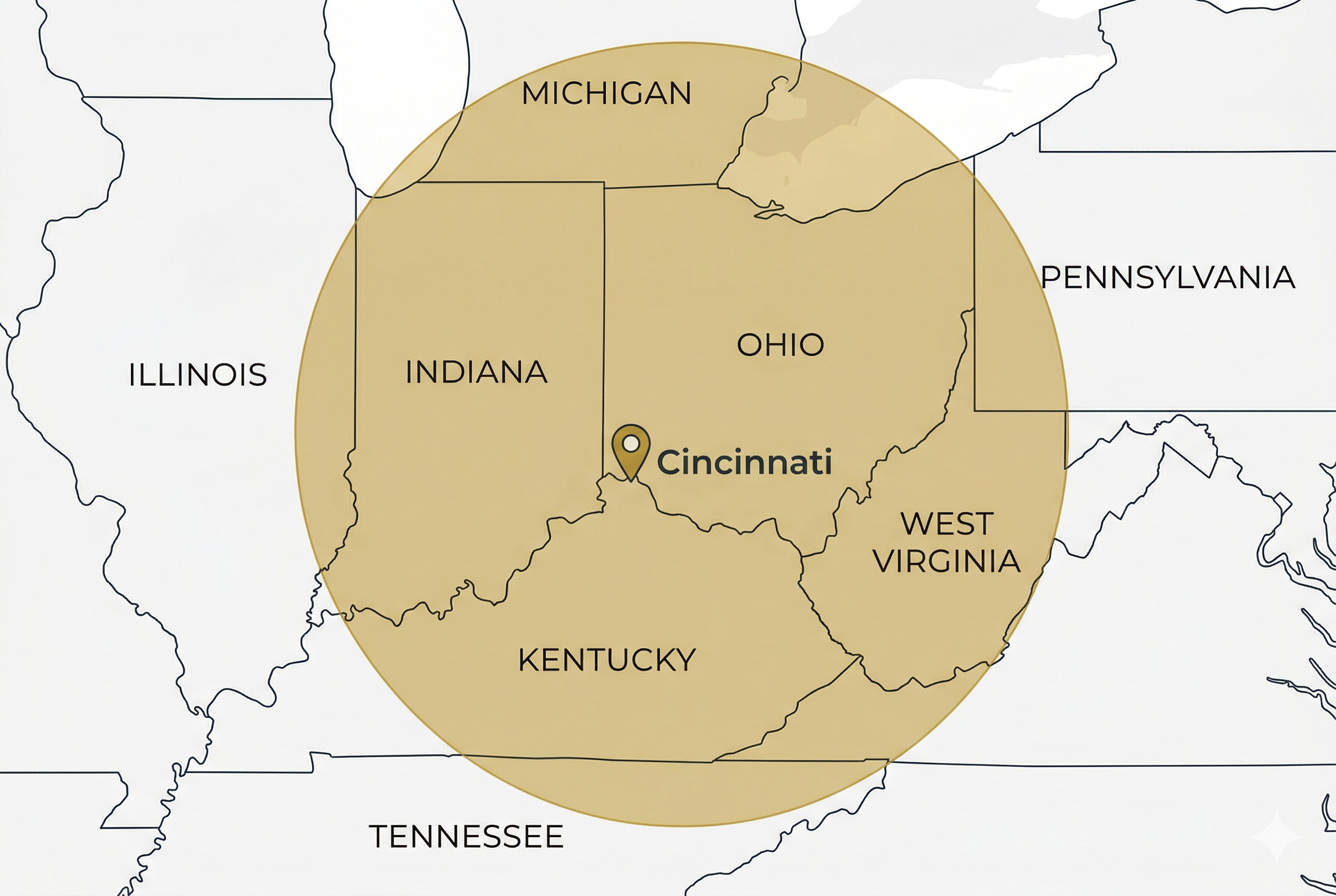
Mark Wieczorek is a Title IX lawyer based in Cincinnati who represents students and faculty at the University of Michigan. Ann Arbor is a 243-mile, roughly four-hour drive from his office, well within his Midwest service area. As a former prosecuting attorney who has handled hundreds of sex crime-related cases, he knows how investigations are built, where procedural weaknesses exist, and how to protect your rights through every stage of the ECRT process.
Call (513) 540-0450 – Free Consultation
How the University of Michigan Title IX Process Works
The current U-M framework is governed by the Policy on Sexual and Gender-Based Misconduct, SPG 601.89, which took effect in its finalized form on September 2, 2025. SPG 601.89 applies across the Ann Arbor, Dearborn, and Flint campuses, including Michigan Medicine, and covers faculty, staff, students, contractors, vendors, and visitors. The companion policy on Discrimination, Harassment, and Retaliation, SPG 201.89-1, handles non-sexual civil-rights matters. An attorney who treats a U-M case as a generic Title IX matter without reading both policies and the underlying ECRT procedures has missed the rules that will decide your case.
The ECRT Office
The Equity, Civil Rights and Title IX Office sits at 2030 Administrative Services, 1009 Greene Street, Ann Arbor, Michigan 48109-1432. The Ann Arbor office main phone is 734-763-0235. The current Director, Sexual and Gender-Based Misconduct, and Title IX Coordinator is Elizabeth Seney. ECRT is the intake point for reports, the assigning authority for investigations, the body that manages the formal grievance process, and the office that notifies parties of hearing dates, appeal outcomes, and final determinations. Reports made to ECRT are private, but they are not confidential. Confidential support for students is available through the Sexual Assault Prevention and Awareness Center (SAPAC) and Counseling and Psychological Services (CAPS). Confidential support for faculty and staff is available through the Faculty and Staff Counseling and Consultation Office (FASCCO), the Michigan Medicine Office of Counseling and Workplace Resilience, and the University Ombuds.
A broad category of U-M employees are Individuals with Reporting Obligations (IROs) under SPG 601.89. IROs include University administrators, supervisors, and employees in designated positions and units. A disclosure to a professor with teaching responsibility, an athletic staff member, a residence hall staff member, or a supervisor can trigger an ECRT intake before you know a report has been filed.
The Single External Hearing Judge Structure
U-M’s hearing structure is distinctive and, for Respondents, procedurally consequential. In matters involving student Respondents where a live hearing is required, the hearing is conducted by a single Hearing Judge who is unaffiliated with the University. U-M does not use a campus panel of students, faculty, or staff to determine responsibility in student sexual misconduct cases. The Hearing Judge is an external neutral. That person decides responsibility under the preponderance standard and imposes sanctions.
This structure is not an accident. It is the direct product of Doe v. Baum, 903 F.3d 575 (6th Cir. 2018), a due process case decided against the University of Michigan that fundamentally reshaped Title IX adjudication at every public university in the Sixth Circuit. Under the current procedures, both parties have access to the final investigation report at least 10 business days in advance of the hearing. Each party’s Advisor conducts cross-examination of the other party and witnesses. The parties themselves may not question the other party or witnesses directly. The Hearing Judge rules in real time on relevance and on the form of questions. Every hearing is recorded.
Investigation Timeline
The ECRT formal grievance process targets completion within 135 calendar days from the filing of a complaint through investigation, hearing, and outcome, and within 180 calendar days if appeals are filed. These are U-M’s stated targets, not ceilings. Extensions are common, and the reasons given for them are part of the appellate record. Unjustified delays are appellate ammunition. Strong advocacy during the investigation window is one of the most important opportunities in the case. An experienced attorney uses that period to challenge factual conclusions in the draft report, identify omissions, request additional witnesses, and build the record for the hearing itself.
Cross-Examination Rules at the Live Hearing
U-M hearings are live, on the record, and follow strict questioning rules:
- Neither the complainant nor the respondent may directly question the other party or any witness
- Each party’s Advisor conducts cross-examination of the investigator, the other party, and witnesses
- The Hearing Judge rules on the relevance of questions in real time and may require rephrasing of questions intended to harass, intimidate, or disparage
- Questions about a party’s prior sexual behavior are generally not relevant, with narrow policy exceptions
- Every hearing is recorded and the record is preserved for appeal
Cross-examination at a U-M hearing is not general courtroom advocacy. It is constrained by the policy, by the Hearing Judge’s relevance rulings, and by the ten-day advance review of the investigation report. Choosing your own Title IX lawyer as your Advisor places a trained questioner, working for your interests, into the cross-examination seat. An attorney who has prepared the case, understands the procedural rules, and has worked through every piece of evidence conducts the questioning that protects your record. This is one of the most consequential moments of the hearing.
Standard of Evidence at U-M Title IX Hearings
The University of Michigan applies the preponderance of the evidence standard. The Hearing Judge only needs to conclude that the conduct more likely than not occurred. Preponderance is a significantly lower bar than the beyond a reasonable doubt standard used in criminal court, and it makes evidentiary preparation, witness credibility, and the relevance rulings at the hearing disproportionately important.
Appeals Decided by an External Reviewer
U-M’s appellate structure is another feature that distinguishes it from most Big Ten peers. A written appeal of a hearing outcome is decided by an external reviewer rather than an internal campus committee. ECRT notifies the parties of the identity of the external reviewer, and the reviewer of the identity of the parties. If the opposing party files an appeal, the non-appealing party has 14 calendar days from notice of the appeal to submit a written response. Enumerated grounds include:
- Procedural irregularity that materially affected the outcome
- New evidence that was not reasonably available at the time the determination was made and that could materially affect the outcome
- Conflict of interest or bias by the decision-maker that affected the outcome
The external reviewer’s decision is final and binding. There is no provost-level or regent-level further appeal on the merits. That structure places extraordinary weight on the record built during the investigation, the relevance objections raised at the hearing, and any bias challenges preserved before the Hearing Judge. An attorney who waits until after an unfavorable outcome to think about appeal has already lost most of the appellate record.
Interim and Emergency Measures
U-M can impose immediate interim measures upon receipt of a complaint. Those measures can include removal from campus, administrative leave, reassignment, no-contact directives, and interim suspension. Interim action is imposed before the investigation has produced any finding. Timing matters. If you have been placed on interim suspension, notified of emergency removal, or issued a no-contact order, contact a Title IX attorney immediately. The first week of a U-M case sets the record for everything that follows.
The First 48 Hours After an ECRT Notice
The decisions made in the first two days of a University of Michigan Title IX case shape the record that the investigator, the Hearing Judge, and any appellate reviewer will see. Most of the damage we later have to repair was done in this window, usually by a respondent who was trying to be helpful.
Do not attend an ECRT meeting alone, and do not send anyone a written explanation of what happened. U-M employees with reporting obligations must forward what you tell them, and an email sent to “clear things up” becomes an exhibit. It is not a conversation; it is evidence.
Preserve everything now. Texts, direct messages, photos, location history, and the names of anyone who saw you that night have a way of disappearing from apps and memories within weeks. Your lawyer can only use what still exists.
Do not contact the complainant, directly or through friends. Under SPG 601.89 a no-contact directive can issue early, and any approach – even an apology or a request to talk – can become a separate allegation.
Choose your Advisor before your first substantive meeting, not after. U-M’s policy permits your Advisor to be an attorney of your choosing, and at the live hearing only Advisors conduct cross-examination. The earlier that attorney enters the case, the more of the record they can shape rather than inherit.
Why University of Michigan Title IX Cases Are Different
U-M presents specific challenges for Respondents that attorneys unfamiliar with this campus often miss.
U-M is a state actor, and constitutional due process applies. Unlike private institutions, the University of Michigan is bound by the Fourteenth Amendment. Students and employees facing discipline have due process rights enforceable through 42 U.S.C. § 1983 in the U.S. District Court for the Eastern District of Michigan, with appeal to the U.S. Court of Appeals for the Sixth Circuit. If the university violates its own procedures or fails to provide adequate process, a prepared attorney can challenge the outcome in federal court. That protection is meaningful only if your attorney understands how to preserve the record for a potential legal challenge.
The controlling Sixth Circuit precedent is U-M’s own case. In Doe v. Baum, 903 F.3d 575 (6th Cir. 2018), the Sixth Circuit held that when a public university has to choose between competing narratives to resolve a case, the university must give the accused student or the student’s agent an opportunity to cross-examine the accuser and adverse witnesses in the presence of a neutral fact-finder. The defendant in that case was the University of Michigan. Baum did not just set the rule for U-M. It set the rule for every public university in Ohio, Michigan, Kentucky, and Tennessee. And it is the reason the current U-M process uses an external Hearing Judge at all.
The post-Baum litigation went further. In Doe v. University of Michigan, 325 F. Supp. 3d 821 (E.D. Mich. 2018), the Eastern District of Michigan granted a preliminary injunction against U-M’s prior single-investigator model. A federal district court later ruled that U-M administrators were not entitled to qualified immunity for denying cross-examination in that case, exposing individual administrators to personal liability for the constitutional violation. That ruling has few parallels in the Title IX landscape and is a direct cautionary tale about the consequences of a record built without the procedural safeguards the Constitution requires. A defense team that preserves due process objections from the first interview creates leverage that matters both inside the ECRT process and in federal court if the university mishandles the case.
Sixth Circuit Title IX case law favors respondents in other respects as well. Doe v. University of Cincinnati, 872 F.3d 393 (6th Cir. 2017), held that a UC student had a protected property interest in his continued enrollment and was entitled to a meaningful opportunity to cross-examine his accuser. The combined effect of Baum and Doe v. UC is a body of binding circuit precedent that, correctly invoked, offers real procedural protection. A well-prepared defense preserves the due process theory and the Title IX erroneous-outcome theory from the very first interview.
The Robert Anderson scandal defines U-M’s institutional posture on sexual misconduct. In January 2022, U-M finalized a settlement of approximately $490 million with more than 1,000 claimants who alleged decades of sexual abuse by the late athletic physician Robert E. Anderson, who worked at the university from 1966 until 2003. The investigation was conducted by the law firm WilmerHale. ECRT, the office that will handle your Title IX case, was created in response. The institutional memory in Ann Arbor is that under-enforcement of sexual misconduct rules can cost the university half a billion dollars. Respondents feel the pressure of that memory. The Respondent who assumes the university will approach the case with restraint is misreading the environment.
U-M’s hearing structure is unusual among Big Ten schools. Where peer schools use a multi-member panel of students, faculty, and staff to decide responsibility, U-M uses a single external Hearing Judge. Where peer schools use an internal appeals body, U-M uses an external reviewer. For a Respondent, this structure has strategic implications. Persuading one external neutral on a preponderance standard is a very different exercise from persuading a campus panel. The record built during the investigation, the questions asked and preserved at the hearing, and the objections lodged on the record carry extraordinary weight. An attorney who approaches U-M as if it were procedurally interchangeable with other Big Ten schools will miss the specific pressure points that decide cases here.
The Greek system is a recurring Title IX pressure point. Nearly 14 percent of U-M undergraduates are in a fraternity or sorority across 56 recognized chapters. Allegations arising out of Greek life, parties, chapter houses, and recruitment events frequently trigger overlapping institutional responses: an ECRT investigation, chapter discipline through Fraternity and Sorority Life, and in some cases a parallel criminal inquiry through DPSS.
The University of Michigan Division of Public Safety and Security runs a parallel investigation. DPSS includes a sworn police force with jurisdiction over the Ann Arbor campus and Michigan Medicine. DPSS investigations proceed independently of the ECRT Title IX process. Statements made in a Title IX interview can be obtained in a criminal case. That exposure is the single biggest reason to consult a lawyer before the first interview, not after it.
As part of his broader Title IX defense practice, Mark Wieczorek represents students and faculty at the University of Michigan and other institutions throughout the Midwest. He understands how each university’s process creates unique pressure points and opportunities for the defense.
Call (513) 540-0450 – Speak With Mark Directly
Proven Results at Midwest Universities
Mark’s track record at other Midwest universities speaks directly to the defense he provides University of Michigan students and faculty.
University of Dayton: Professor Accused of Inappropriate Sexual Contact
Result: Case Dismissed. Full Tenure and Pension Retained.
A tenured professor faced accusations that threatened his career, his pension, and decades of professional work. Mark identified inconsistencies in the complainant’s account, procedural irregularities in the investigation, and evidentiary gaps that the university’s own process failed to address. The case was dismissed entirely. The professor continues to teach today.
University of Cincinnati: Student Accused of Rape and Sexual Assault
Result: Case Dismissed Prior to Hearing.
A UC student faced allegations serious enough to result in immediate expulsion. Mark was retained early, before the investigation had fully taken shape. By challenging the reliability of witness accounts and identifying procedural deficiencies, the case was dismissed before a full hearing.
University of Cincinnati: Student Accused of Rape and Sexual Assault
Result: Not Responsible After Full Hearing.
In a separate matter, a second UC student faced rape and sexual assault allegations that went to a full disciplinary hearing. Mark prepared an exhaustive defense, identified inconsistencies across multiple interviews, and presented a clear, evidence-based narrative to the hearing panel. The student was found not responsible.
Miami University: Student Accused of Title IX Sexual Assault and Hazing
Result: Not Individually Responsible. All Felony Charges Dismissed.
Mark represented an individual charged with Title IX sexual assault and hazing as a fraternity member. Over 20 individuals faced charges. Following a full hearing, the client was found not individually responsible and all felony charges were dismissed.
Disclaimer: Past results do not guarantee future outcomes. Each case is unique and must be evaluated on its own facts and circumstances.
Supportive Measures During Your U-M Title IX Case
While your University of Michigan Title IX case is pending, U-M offers supportive measures on request. These are non-disciplinary and non-punitive, and a formal complaint is not required to receive them. They may include:
- Referrals to confidential counseling and mental health services, including SAPAC, CAPS, and FASCCO
- Academic accommodations, including rescheduled exams, extensions, and class changes
- Housing relocation within the residence halls
- Mutual no-contact directives
- Work and class schedule modifications
- Transportation and parking adjustments
- Campus escort and safety resources
- Leaves of absence
ECRT may also take interim action, including removal from campus, administrative leave, or interim suspension, if it determines the action is warranted. Interim action can happen before you have a chance to respond to the allegations. If you are notified of interim action, contact a Title IX attorney the same day.
Frequently Asked Questions: Title IX at the University of Michigan
Can I bring a lawyer to a Title IX hearing at the University of Michigan?
Yes. Under U-M’s Policy on Sexual and Gender-Based Misconduct (SPG 601.89), each party may select an Advisor, and the policy expressly permits that advisor to be an attorney. At the live hearing, the parties themselves are not permitted to question the other party or witnesses directly. Instead, each party’s Advisor conducts cross-examination. Choosing your own attorney as your Advisor places a trained questioner, working for your interests, into that role.
Does the University of Michigan use a hearing panel or a single decision-maker?
U-M uses a single external Hearing Judge who is unaffiliated with the University. That judge decides responsibility under the preponderance standard and imposes sanctions. Appeals are also decided by an external reviewer rather than an internal campus body. This structure is the direct result of the Sixth Circuit’s decision in Doe v. Baum, 903 F.3d 575 (6th Cir. 2018), which required a live cross-examination hearing before a neutral fact-finder.
What is the standard of evidence at a University of Michigan Title IX hearing?
U-M applies the preponderance of the evidence standard. The Hearing Judge only needs to conclude that the conduct more likely than not occurred. That is a significantly lower bar than the beyond a reasonable doubt standard used in criminal court, and it places disproportionate weight on evidentiary preparation, witness credibility, and advisor-conducted cross-examination at the hearing.
How much time do I have to appeal a University of Michigan Title IX decision?
ECRT notifies both parties of the appeal grounds and deadlines in writing at the conclusion of the hearing. If the opposing party files an appeal, you have fourteen calendar days to submit a written response. The appeal is decided by an external reviewer, not an internal committee. Enumerated grounds include procedural irregularity that materially affected the outcome, new evidence not reasonably available at the time of the determination, and conflict of interest or bias by the decision-maker. The external reviewer’s decision is final and binding.
Does the University of Michigan Police share information with ECRT?
The University of Michigan Division of Public Safety and Security (DPSS) includes a sworn police force with jurisdiction over Ann Arbor campus and Michigan Medicine. DPSS runs a parallel investigation, and statements made during the ECRT Title IX process can be obtained in a criminal case. A report to DPSS, a report to ECRT, or both can be filed in the same matter. That exposure is the single biggest reason to consult a Title IX lawyer before the first interview, not after it.
How quickly should I hire a University of Michigan Title IX lawyer?
Before you attend any ECRT meeting or submit anything in writing. A U-M investigation moves on a defined procedural clock, and interim measures can issue within days of a report. Statements made in early meetings are part of the record the Hearing Judge will review. A lawyer who enters the case in week one shapes that record; a lawyer hired after the draft report can mostly argue about it.
Will hiring a lawyer make ECRT assume I am responsible?
No. U-M’s own policy expressly contemplates attorneys serving as party Advisors, and investigators work with them routinely. What actually damages respondents is not representation – it is unprepared interviews, contradictory statements, and deadline mistakes made without it.
Title IX Defense at Other Midwest Universities
Mark Wieczorek also represents students and faculty facing Title IX investigations at the University of Cincinnati, Ohio State University, the University of Dayton, Miami University, Xavier University, Ohio University, the University of Louisville, Indiana University, the University of Illinois, Purdue University, Michigan State University, Penn State University, University of Tennessee, and Notre Dame. Each university has its own Title IX procedures, hearing formats, and institutional culture. Mark tailors his defense strategy to the specific school and its process.
Do Not Wait. Contact a University of Michigan Title IX Lawyer Now.
Under SPG 601.89, a wide category of U-M employees are Individuals with Reporting Obligations who must forward any disclosure of sexual misconduct to ECRT. A Title IX investigation can open within days of a report. Interim action can separate you from classes, housing, or campus before you have responded to a single allegation. The external Hearing Judge structure, the external appellate reviewer, the 135-day procedural clock, and U-M’s post-Anderson institutional posture mean the course of your case is set in the first week. The wrong strategy in the wrong window is no strategy at all.
U-M operates the same process that produced Doe v. Baum and the qualified-immunity-stripping ruling that followed it. The institutional pressure to act decisively on Title IX cases has only intensified since Anderson. If you are a student, faculty member, or staff member at the University of Michigan facing a Title IX investigation, call Mark Wieczorek before you attend any meetings, respond to any emails, or make any statements.