
University of Louisville Title IX Attorney: Defense for Students and Faculty
Experienced Title IX defense for University of Louisville students and faculty. Former prosecutor. Hundreds of sex crime cases handled.
Call (513) 540-0450 – Free Consultation
If you are a student, faculty member, or staff member at the University of Louisville facing a Title IX investigation, you need an attorney who understands how this university actually operates. UofL is a public R1 research university with more than 25,000 students, a complicated institutional history with sexual misconduct, and two completely different Title IX procedural tracks depending on whether you are a student or an employee. The process here moves fast, the stakes are severe, and the university has been under federal oversight before for how it handles these cases.
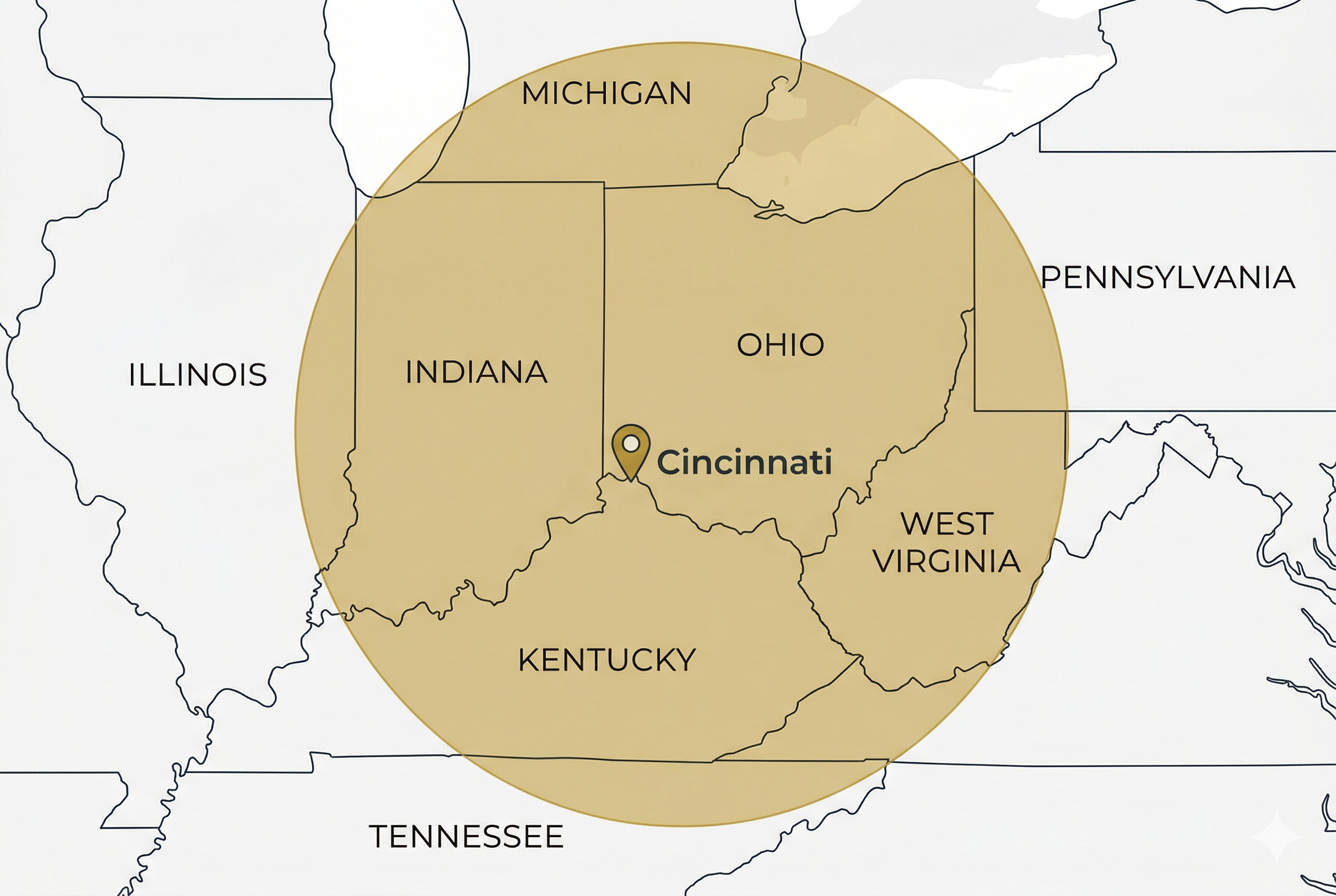
Mark Wieczorek is a Title IX lawyer based in Cincinnati who represents students and faculty at the University of Louisville. Louisville is approximately 100 miles from his office, well within his Midwest service area. As a former prosecuting attorney who has handled hundreds of sex crime-related cases, he knows how investigations are built, where procedural weaknesses exist, and how to protect your rights through every stage of UofL’s disciplinary process.
Call (513) 540-0450 – Free Consultation
How the University of Louisville’s Title IX Process Works
Understanding UofL’s specific procedures is essential to mounting an effective defense. The first thing to understand is that UofL does not use one process. It uses two: one for cases where the Respondent is a student, and a separate one for cases where the Respondent is a faculty member, staff member, or other employee. The procedures, decision-makers, and appeal officers are different in each track. An attorney who only knows one of these tracks is missing half the picture.
The UofL Title IX Office
The UofL Title IX Office is housed in the Office of Legal Compliance and Investigations. The Title IX Director is Tim Beam, located in Grawemeyer Hall, Suite 202. The office can be reached at (502) 852-1198 or titleix@louisville.edu. Reports can be filed in person, by mail, by email, or through the University’s anonymous compliance hotline.
Nearly all University of Louisville employees are mandatory reporters, including the President, Vice Presidents, Deans, Department Chairs, Directors, Coaches, all faculty, anyone in a supervisory or management role, University of Louisville Police Officers, and contracted security personnel. Only specifically designated confidential resources are exempt. That means a passing comment to a professor, a coach, or a residence hall staff member can trigger an investigation before you even realize a report has been filed.
Two Different Procedural Tracks
UofL maintains two separate Title IX policies: the Title IX Student Sexual Misconduct Policy, which governs cases where the Respondent is a student, and the Title IX Employee Sexual Misconduct Policy, which governs cases where the Respondent is a faculty member, staff member, or other employee. The policies share certain features (preponderance of the evidence, Advisor cross-examination, 120-day overall target, recorded live hearings) but differ on the most important question of all: who decides your case.
The table below summarizes the differences. Both tracks are explained in detail in the sections that follow.
| Procedural Element | Student Track | Faculty / Employee Track |
|---|---|---|
| Who decides the case | Three-member Hearing Board (Chair plus two members) | Single Decision-Maker (retired judge or experienced attorney) |
| Where decision-makers come from | Trained pool of UofL students, faculty, and staff | Outside contractors retained by the University |
| How responsibility is determined | Majority vote, no abstentions allowed | Sole determination by the Decision-Maker |
| General Counsel certification before investigation | Not required | Required in writing before an Investigator is assigned |
| Standard of evidence | Preponderance of the evidence | Preponderance of the evidence |
| Investigation timeline | 120 days for the entire process | 60 days for the investigation alone, 120 days total |
| Written hearing decision | Within 10 days of the hearing | Within 10 days of the hearing |
| Appeal officer | Dean of Students or designee | Vice President for Human Resources or designee |
| Appeal deadlines | 10 days to file, 5 days to respond, 14 days to ruling | 10 days to file, 5 days to respond, 14 days to ruling |
Tip: on mobile, swipe the table horizontally to see all three columns.
The Student Track: A Three-Member Hearing Board
If the Respondent is a student, the case is decided by a three-member Hearing Board. The Board is comprised of a Chair and two members chosen from a pool of trained students, faculty, and staff who serve on the student conduct hearing council. The Board hears the evidence, deliberates in closed session, and decides responsibility by majority vote. No abstentions are allowed. If the Board finds the Respondent responsible, it reconvenes to decide sanctions, again by majority vote.
The Chair of the Hearing Board controls the questioning, rules on relevancy of cross-examination questions before they are answered, and drafts the written decision within 10 days of the hearing. Appeals in student cases are decided by the Dean of Students or designee, who has the authority to uphold, alter, remand, or reverse the Hearing Board’s decision.
Knowing that students serve on the Board changes the defense playbook. Tone, pacing, and the way evidence is presented to a panel of three people, including a student peer, looks very different from how it is presented to a single contracted attorney.
The Faculty and Employee Track: A Single Decision-Maker
If the Respondent is a faculty member, staff member, or other employee, the case is decided by a single Decision-Maker. UofL’s Employee Sexual Misconduct Policy defines the Decision-Maker as a retired judge or experienced attorney who has contracted with the University to preside over Title IX hearings. One person hears the evidence, rules on the relevance of every question, and issues the written determination of responsibility and sanctions.
The employee track also has procedural steps that do not exist in the student track. Most importantly, before an investigation can begin, the Title IX Office must obtain the General Counsel’s authorization and written certification. The University’s legal team is engaged in your case before you may have even hired an attorney. The investigation targets completion within 60 days of the formal complaint, and the entire three-phase process targets 120 days.
Appeals in employee cases are decided by the Vice President for Human Resources or designee, not by the Dean of Students. The Appeal Officer can uphold, modify, or remand the case for further consideration or a new hearing.
The Investigation Phase
In both tracks, after a formal complaint is accepted, the Title IX Coordinator assigns a trained Investigator. The Investigator interviews both parties and witnesses, collects evidence including social media and text messages, and records all investigative interviews. Both parties receive written notice of interviews at least 3 days in advance. You may bring an Advisor to investigative meetings, but at this stage the Advisor serves in a support capacity only and cannot speak on your behalf.
Once the investigation concludes, both parties receive a preliminary investigative report and have 10 days to submit written responses. The Investigator then issues a final report containing factual findings only. The Investigator does not determine whether a policy violation occurred. That decision belongs to the Hearing Board (student cases) or the Decision-Maker (employee cases).
The 10-day response window after the preliminary report is one of the most important moments in your case. An experienced attorney uses this period to challenge factual conclusions, identify omissions, and build the record for the hearing.
Cross-Examination Rules at the Live Hearing
UofL hearings are live, on the record, and follow strict cross-examination rules in both tracks:
- Cross-examination of the other party and witnesses must be conducted by your Advisor, not by you directly
- The Decision-Maker or Hearing Board Chair rules on relevance before each question is answered and must explain any exclusion
- Questions about the Complainant’s prior sexual behavior are generally not relevant, with narrow exceptions
- The Decision-Maker or Hearing Board may call additional witnesses and question any party or witness directly
- The hearing may be conducted in person or virtually with parties in separate rooms
- The University records every hearing
A Party who chooses not to answer cross-examination at the hearing cannot have any inference drawn against them on that basis alone. The Decision-Maker or Hearing Board cannot rely on a statement from a Party or witness who refuses to submit to cross-examination at the live hearing.
Standard of Evidence at UofL Title IX Hearings
The University of Louisville uses the preponderance of the evidence standard in both tracks. The decision-maker, or hearing board, only needs to believe it is more likely than not that the conduct occurred. This is a significantly lower bar than the beyond a reasonable doubt standard used in criminal court.
Appeals
Both parties have 10 days after the hearing decision to file an appeal. The other party has 5 days to respond. The Appeal Officer issues a written ruling within 14 days after the appeal deadline expires. Permitted grounds include:
- Procedural irregularity that affected the outcome
- Insufficient information to establish a violation by preponderance (student track also allows challenge to whether the sanction was appropriate)
- New information not reasonably available at the time of the hearing that would likely alter the decision
- Bias or conflict of interest by the Title IX Coordinator, Investigator, Decision-Maker, or Hearing Board
An experienced attorney builds the appeal record from the first day of representation, not after an unfavorable outcome.
Why University of Louisville Title IX Cases Are Different
Louisville presents challenges for respondents that attorneys unfamiliar with this campus often miss.
The two-track system itself is a trap. The student track and the employee track look superficially similar but operate differently in ways that affect strategy. A defense built around persuading a single contracted retired judge looks nothing like a defense built around persuading a three-member hearing board that includes student peers. Choose the wrong frame and you lose ground in the first 30 minutes of the hearing.
For employee cases, General Counsel is involved from the start. UofL requires written certification from General Counsel before an Investigator is even assigned. The university’s legal team is engaged in your case before you may have hired an attorney. That imbalance matters and shapes the early phase of every employee investigation.
Louisville has been under federal oversight for its handling of sexual misconduct. In 2014, the Office for Civil Rights concluded an investigation (Docket 03-13-2040) and UofL entered a Voluntary Resolution Agreement requiring the university to overhaul its complaint procedures, Title IX coordinator structure, and training programs. When a university has been through federal scrutiny, the institutional reflex is to demonstrate aggressiveness in enforcement. That pressure shapes how your case is handled.
The basketball escort scandal put Louisville’s sexual misconduct culture in the national spotlight. Between 2010 and 2014, a former basketball staff member paid for escorts to attend on-campus parties for recruits and players. The NCAA vacated 123 wins, including the 2013 men’s basketball national championship, making Louisville the first NCAA Division I men’s basketball program to forfeit a national title. The scandal forced Louisville to confront institutional failures around sexual misconduct at the highest levels. That institutional memory still influences how the Title IX Office operates today.
UofL is a public university. Due process applies. Unlike private institutions, the University of Louisville is a state actor bound by the Fourteenth Amendment. Students and employees facing discipline have constitutional due process rights enforceable through 42 U.S.C. 1983. If the university violates its own procedures, an experienced attorney can challenge the outcome in federal court. This is a meaningful protection, but only if your attorney understands how to preserve the record for a potential legal challenge.
Cases that do not meet Title IX jurisdiction can still be prosecuted. If a formal Title IX complaint is dismissed because the conduct falls outside Title IX’s scope, UofL can pursue the case under its Code of Student Conduct. That process uses the Conduct Hearing Council, a three-member panel of trained students, faculty, and staff. A Title IX dismissal does not mean the case is over.
As part of his broader Title IX defense practice, Mark Wieczorek represents students and faculty at the University of Louisville and other institutions throughout Ohio and Kentucky. He understands how each university’s process creates unique pressure points and opportunities for the defense.
Call (513) 540-0450 – Speak With Mark Directly
Proven Results at Midwest Universities
Mark’s track record at other Midwest universities speaks directly to the defense he provides Louisville students and faculty.
University of Dayton: Professor Accused of Inappropriate Sexual Contact
Result: Case Dismissed. Full Tenure and Pension Retained.
A tenured professor faced accusations that threatened his career, his pension, and decades of professional work. Mark identified inconsistencies in the complainant’s account, procedural irregularities in the investigation, and evidentiary gaps that the university’s own process failed to address. The case was dismissed entirely. The professor continues to teach today.
University of Cincinnati: Student Accused of Rape and Sexual Assault
Result: Case Dismissed Prior to Hearing.
A UC student faced allegations serious enough to result in immediate expulsion. Mark was retained early, before the investigation had fully taken shape. By challenging the reliability of witness accounts and identifying procedural deficiencies, the case was dismissed before a full hearing.
University of Cincinnati: Student Accused of Rape and Sexual Assault
Result: Not Responsible After Full Hearing.
In a separate matter, a second UC student faced rape and sexual assault allegations that went to a full disciplinary hearing. Mark prepared an exhaustive defense, identified inconsistencies across multiple interviews, and presented a clear, evidence-based narrative to the hearing panel. The student was found not responsible.
Miami University: Student Accused of Title IX Sexual Assault and Hazing
Result: Not Individually Responsible. All Felony Charges Dismissed.
Mark represented an individual charged with Title IX sexual assault and hazing as a fraternity member. Over 20 individuals faced charges. Following a full hearing, the client was found not individually responsible and all felony charges were dismissed.
Disclaimer: Past results do not guarantee future outcomes. Each case is unique and must be evaluated on its own facts and circumstances.
Supportive Measures During Your UofL Title IX Case
While your UofL Title IX case is pending, the University of Louisville is required to offer supportive measures at no cost. These are non-disciplinary and non-punitive, and a formal complaint is not required to receive them. They include:
- Counseling services
- Course deadline extensions and adjustments
- Work and class schedule modifications
- Campus escort services
- Mutual contact restrictions
- Work or housing location changes
- Leaves of absence
- Increased campus security and monitoring
UofL may also pursue interim suspension if an individualized safety and risk analysis determines you pose an immediate threat to the physical health or safety of any individual. Interim suspension can happen before you have a chance to respond to the allegations. For employees, the University retains discretion to place you on paid leave, regardless of whether an immediate safety threat exists, in accordance with The Redbook.
Frequently Asked Questions: Title IX at the University of Louisville
Can I bring a lawyer to a Title IX hearing at the University of Louisville?
Yes. UofL allows each party to have an Advisor of their choosing, including an attorney, at every stage of the process. At the live hearing, only your Advisor may conduct cross-examination on your behalf. You are not permitted to ask questions of the other party or witnesses directly. Choosing your own Title IX attorney as your Advisor ensures someone who knows the procedural rules and is fighting for your interests conducts the questioning.
Does the University of Louisville use a hearing panel or a single decision-maker?
It depends on whether the Respondent is a student or an employee. For student cases, a three-member Hearing Board decides responsibility by majority vote. The Board is comprised of a Chair and two members chosen from a pool of trained students, faculty, and staff who serve on the student conduct hearing council. For employee cases, a single Decision-Maker, who is a retired judge or experienced attorney contracted by the University, presides over the hearing and issues the determination. The procedures are different, and the defense strategy must match.
How long does a Title IX investigation take at the University of Louisville?
UofL targets completing the entire process from formal complaint through hearing and appeal within 120 days. For employee cases, the investigation phase alone targets 60 days. After the investigation, both parties receive the preliminary investigative report and have 10 days to submit a written response. Notice of a hearing is provided at least 10 days from the date the final investigative report is issued, but absent extenuating circumstances no more than 30 days out. The written hearing decision is issued within 10 days of the hearing’s conclusion. Extensions are available for good cause.
What is the standard of evidence at University of Louisville Title IX hearings?
The University of Louisville uses the preponderance of the evidence standard for both student and employee cases. The decision-maker, or hearing board, only needs to find that it is more likely than not that the conduct occurred. This is a significantly lower bar than the beyond a reasonable doubt standard used in criminal courts.
Who hears appeals of Title IX decisions at UofL?
It depends on the track. For student cases, the Dean of Students or designee serves as the appeal officer. For employee cases, the Vice President for Human Resources or designee serves as the appeal officer. In both tracks, an appeal must be submitted within 10 days after the issuance of the hearing decision, the other party has 5 days to respond, and the appeal officer issues a written decision within 14 days after the appeal deadline expires.
Title IX Defense at Other Universities Near Louisville
Mark Wieczorek also represents students and faculty facing Title IX investigations at the University of Cincinnati, Ohio State University, the University of Dayton, Miami University, Xavier University, Indiana University, the University of Illinois, Ohio University, the University of Michigan, Purdue University, Michigan State University, Penn State University, and University of Tennessee. Each university has its own Title IX procedures, hearing formats, and institutional culture. Mark tailors his defense strategy to the specific school and its process.
Do Not Wait. Contact a University of Louisville Title IX Lawyer Now.
Nearly every UofL employee is a mandatory reporter. The Title IX Office can open an investigation within days of a report. Interim suspension can separate you from campus before you have responded to a single allegation. And at Louisville, the procedural track that decides your case depends on whether you are a student or an employee. The wrong defense in the wrong track is no defense at all.
Louisville has been through federal oversight and a national scandal over sexual misconduct in its athletic programs. The institutional pressure to act decisively on Title IX cases has not diminished. If you are a student, faculty member, or staff member at the University of Louisville facing a Title IX investigation, call Mark Wieczorek before you attend any meetings, respond to any emails, or make any statements.