
DePaul University Title IX Attorney: Defense for Lincoln Park and Loop Students
Experienced Title IX defense for DePaul students, faculty, and staff. Former prosecutor. Hundreds of sex crime cases handled.
Call (513) 540-0450 – Free Consultation
If you are a DePaul University student, faculty member, or graduate or professional school student facing a Title IX complaint, the next several months will move faster than you expect. Hiring a DePaul Title IX attorney early is the single biggest factor in how the case unfolds. DePaul’s Office of Gender Equity will assign an investigator within days of the formal complaint. You will be summoned to interviews. You will have ten days to review the evidence before the investigative report is finalized, and at least ten more days between the final report and the live hearing. Then a hearing officer, who may be a single decision maker or a panel of three members at DePaul’s discretion, will rule on responsibility under the preponderance standard, while you sit silent and your advisor conducts the cross examination on your behalf.
Mark Wieczorek is a former Hamilton County prosecutor who defends students, faculty, and coaches accused of sexual misconduct at Midwest universities, including DePaul University. As a DePaul University Title IX lawyer, his job is to put the same procedural pressure on the Office of Gender Equity that the office’s own investigator puts on you, and to do it before the hearing officer is appointed, not after.
There is one fact about DePaul’s Title IX process that is true at no other major Illinois university where Mark practices, and most respondents and most parents calling about a DePaul matter have never been told: DePaul’s Formal Title IX Policy lists only three grounds for appeal. Procedural irregularity. New evidence. Conflict of interest or bias. DePaul does not list disproportionate sanction as a separate appellate ground, the way Northwestern, the University of Chicago, and most peer institutions do. A DePaul respondent who accepts the responsibility determination but contests the sanction has no written appellate ground inside the policy. That single fact reshapes the entire strategic calculus at the investigation and hearing stage, and it is one of the reasons retaining experienced counsel during the investigation matters more at DePaul than at most peer universities.
DePaul’s Title IX Process Runs on the Formal Title IX Sexual Harassment Policy and Procedures
DePaul University’s Formal Title IX Sexual Harassment Policy and Procedures, effective April 8, 2024, controls every Title IX matter at DePaul across its Lincoln Park and Loop campuses. The policy was issued in the wake of the 2024 federal Title IX rule changes and replaces the prior DePaul Title IX policy that operated under the 2020 federal rule. The Vice President for Student Affairs is the policy’s responsible officer, and the Office of Gender Equity, housed at the DePaul Student Center on the Lincoln Park campus, administers the day to day process.
DePaul also maintains two companion policies that operate alongside the Formal Title IX policy. The Anti-Discrimination and Anti-Harassment Policy and Procedures governs conduct that does not satisfy the federal Title IX jurisdictional definition, including conduct that does not meet the severe, pervasive, and objectively offensive threshold, conduct outside the United States, and conduct by visitors or former community members. The Sexual and Relationship Violence Prevention and Response Policy governs sexual and relationship violence categorically, with investigations conducted by the Title IX Coordinator using the procedures detailed in the Anti-Discrimination Policy and sanction ranges drawn from the Code of Student Responsibility. Which of the three policies applies to a particular matter is itself a jurisdictional question that an experienced DePaul Title IX attorney engages with the Office of Gender Equity early in the process. The procedural rights, the hearing structure, and the sanction range vary across the three policies, and the track is not always obvious from the initial notice of investigation.
The Office of Gender Equity, located at the DePaul Student Center, 2250 North Sheffield Avenue, Suite 307, Chicago, Illinois 60614, administers the Title IX process. Reports can be filed by phone at (773) 325-4852, by email at titleixcoordinator@depaul.edu, or through the Office’s online reporting form. Molly Fleck serves as Title IX Coordinator and Director of Gender Equity. The Office reports through Student Affairs, and questions about policy interpretation, jurisdiction, and which of the three sexual misconduct policies applies are coordinated at the Coordinator level before responses are issued.
The Investigation Phase
Once a Formal Complaint is filed, the Office of Gender Equity provides written notice and assigns one or more investigators. DePaul’s Formal Title IX Policy does not commit to a specific numerical timeline target for the investigation phase, but in practice a DePaul Title IX case typically runs four to six months from formal complaint to written determination, with the hearing phase added on top. Within that window, the investigator interviews both parties, identifies and interviews witnesses each party proposes, gathers documentary evidence such as text messages, emails, social media records, surveillance footage, and third party witness statements, and produces an investigative report.
Both parties have the opportunity to review the preliminary investigation report and submit a written response within ten days. The advisor may help build that response, may attend every interview alongside the party, and may consult with the party in writing throughout. Outside the cross examination at the hearing, the advisor plays a passive role and is not permitted to communicate on behalf of the party or insist that communication flow through the advisor. The advisor can still do every other thing an experienced Title IX attorney does during a federal investigation: prepare the party for interviews, build documentary records, identify witness blind spots in the investigator’s draft, and preserve procedural objections on the record.
After the period for written response has expired, the investigator completes a written investigation report that fairly summarizes the steps taken, summarizes the relevant evidence, and lists contested and uncontested facts material to the investigation. DePaul transmits the final investigation report to both parties at least ten days prior to the adjudication. A respondent who retains experienced counsel before the investigation closes has weeks to shape the record. A respondent who waits until after the investigative report issues has days to react. The investigation phase is where most Title IX cases at DePaul are won or lost.
The Hybrid Hearing Officer Structure: Panel or Single Decision Maker at DePaul’s Discretion
DePaul’s hearing structure is unusual among major Illinois Title IX policies. Section VII.A.1 of DePaul’s Formal Title IX Policy provides that, after the hearing process is selected as the form of adjudication, DePaul will designate the hearing officer or officers who will oversee the hearing process and render a determination of responsibility for the allegations in the Notice of Investigation. The Policy reads in full: “The hearing officer(s) may be a panel of three members or a single decision maker.” DePaul does not pre commit to a panel structure the way the University of Chicago does with its five member Title IX Hearing Panel, and does not pre commit to a single hearing officer the way Ball State and Vanderbilt do. DePaul reserves discretion to seat either, on a case by case basis. A respondent at DePaul is procedurally adjudicated under a structure that the institution alone selects per case, and which the respondent does not learn until the hearing officer is designated.
For the respondent, this means cross examination strategy has to be drafted for both possible structures. A single decision maker absorbs evidence differently than a three member panel. A single decision maker can be cross examined on relevance rulings as the hearing unfolds. A three member panel introduces additional procedural surface area around how each member assesses credibility and how the panel deliberates. An experienced DePaul Title IX attorney prepares cross examination for either structure and adjusts in real time when the hearing officer designation arrives in the pre hearing notice.
Compare this to peer Illinois schools. The University of Illinois uses a panel structure. Northwestern uses a hybrid single decision maker plus separate sanctioning panel model. The University of Chicago seats a five member Title IX Hearing Panel with a separate Decisionmaker on Relevance. DePaul reserves discretion to use either a panel of three or a single decision maker. No other Illinois university in Mark’s cluster operates the hearing officer election DePaul uses.
The Optional Administrative Adjudication Track
DePaul’s Formal Title IX Policy also offers a paper based administrative adjudication option that exists nowhere else in Mark’s Illinois practice in the same form. Section VII.B of the Policy provides that in lieu of the hearing process, the parties may consent to have a Formal Complaint resolved by administrative adjudication as a form of informal resolution. Administrative adjudication is voluntary. Both parties must consent in writing within three days of the notice of selection. An administrative officer is appointed, reviews the investigation report and evidence, meets separately with each party, applies preponderance of the evidence, and issues a written determination within a target of thirty days from the initiating written notice.
The election of administrative adjudication forecloses live cross examination and live credibility testing of the complainant and the witnesses. For some respondents, the trade off makes sense: a faster track, no live hearing, no public cross examination, lower visibility, lower volatility. For other respondents, the live hearing track is the only place where credibility cross examination can move a hearing officer off the investigator’s narrative. The election is consequential and is not reversible after the administrative officer issues the determination. A party who consents to administrative adjudication retains the right to withdraw at any time before the determination issues and demand a live hearing instead. The choice should not be made without pre hearing counsel in the room.
The administrative adjudication track is also unavailable in one circumstance. Section VII.B expressly provides that “Other language in this section notwithstanding, informal resolution will not be permitted if the Respondent is a non-student employee accused of engaging in Title IX Prohibited Conduct against a student.” Faculty and staff respondents in those matters proceed on the live hearing track only.
Cross Examination by Advisor Only at the Live Hearing
At the live DePaul hearing, the federal cross examination model applies. Section VII.A.5 of the Policy provides that each party’s advisor may “ask directly, orally, and in real time, relevant questions, and follow up questions, of the other party and any witnesses, including questions that support or challenge credibility.” A party who walks into the DePaul hearing without experienced counsel is a party whose credibility determinative questions never get asked, because DePaul’s Policy assigns the cross to the advisor and does not allow the party to step into that role.
The hearing officer or officers rule on each cross examination question’s relevance and may screen questions for relevance contemporaneously, in addition to resolving any objections the parties raise. Only relevant questions may be asked. Questions that are duplicative or repetitive of those already asked may be deemed not relevant and excluded. The hearing is not a formal judicial proceeding and strict rules of evidence do not apply, but the hearing officer has discretion to modify procedure when good cause exists. Cross examination must be planned question by question, with relevance theory built in, before the hearing convenes. An experienced DePaul Title IX attorney prepares the cross examination during the investigation phase, weeks before the hearing.
Each hearing provides each party the opportunity to address the hearing officer directly and to respond to questions from the hearing officer, the opportunity for each party’s advisor to ask questions of the other party and the witnesses, and the opportunity to raise objections to the evidence with a reason for the ruling provided. Hearings are closed to all persons except the parties, their advisors, the investigators, the hearing officer or officers, the Title IX Coordinator, and other necessary university personnel. Witnesses are separated from one another until their testimony is complete. The hearing is recorded; audio is made available to the parties on reasonable notice.
Sanctions and the Narrow Three Ground Appeal Window
After the hearing officer or officers reach a determination, Section VII.A.7 provides that the hearing officer may consult with appropriate university personnel with disciplinary authority over the respondent, and such personnel will determine any discipline to be imposed. The hearing officer may also consult with the Title IX Coordinator about ongoing remedies for the complainant. DePaul targets issuance of the written determination within fourteen days of the conclusion of the hearing.
Either party has seven days from the date of the dismissal or determination to file a written appeal with the appellate officer designated in the written determination. DePaul’s Formal Title IX Policy recognizes only three grounds for appeal, set out verbatim in Section VIII:
- A procedural irregularity that affected the outcome.
- There is new evidence that was not reasonably available at the time the determination or dismissal was made, that could have affected the outcome.
- The Title IX Coordinator, investigator, hearing officer or officers, or administrative officer had a conflict of interest or bias for or against complainants or respondents generally, or against the individual complainant or respondent, that materially affected the outcome.
The Policy is explicit: “Except as provided for in the Student Conduct Process, no other grounds for appeal are permitted.” Disproportionate sanction is not on the list. Northwestern, the University of Chicago, the University of Notre Dame, and most peer institutions recognize disproportionate sanction as a fourth appellate ground. DePaul does not. This is the narrowest written appellate scope of any major Illinois Title IX policy.
The strategic implication is clear. A DePaul respondent who accepts the responsibility determination and contests only the severity of the sanction has no written appellate ground available within the Title IX policy framework. The Policy concentrates the entire respondent strategy on two questions: did procedural irregularity affect the outcome, and did bias or conflict of interest infect the decision making. Both questions are answered by the record built during the investigation phase, not by the appeal brief. An experienced DePaul Title IX attorney builds that record from the first notice forward, anticipating that the responsibility determination, not the sanction severity, is the only contestable outcome.
The appeal officer reviews the record, may receive a written reply from the other party within seven days, and issues a written decision within a target of fourteen days. There is no further review within the policy framework: “No further review beyond the appeal is permitted.”
Call (513) 540-0450 – Free Consultation
DePaul’s Layered Compliance Framework: Title IX, VAWA, and the Illinois Preventing Sexual Violence in Higher Education Act
DePaul’s posture toward Title IX compliance is unlike most major Midwest universities where Mark practices. DePaul’s Formal Title IX Policy expressly commits the University to compliance with three statutes, not two: federal Title IX of the Education Amendments of 1972 and its implementing regulations, the federal Violence Against Women Reauthorization Act of 2013, and the Illinois Preventing Sexual Violence in Higher Education Act. Most peer university Title IX policies in the Midwest commit only to Title IX and VAWA. DePaul, like Northwestern and the University of Chicago, operates under a three statute framework.
The Illinois Preventing Sexual Violence in Higher Education Act, codified at 110 ILCS 155, imposes additional procedural and substantive duties on Illinois colleges and universities beyond what federal Title IX requires. Among those duties: the Act requires Illinois institutions to adopt a comprehensive policy concerning sexual violence, domestic violence, dating violence, and stalking; to maintain confidentiality protections for survivors; to provide training to staff who interact with survivors; and to use the preponderance of the evidence standard at adjudication. The Act also imposes reporting obligations on Illinois institutions to the Illinois Department of Human Rights.
A DePaul respondent today inherits the procedural consequences of that three statute framework. The Office of Gender Equity staff are trained on, and federally and state monitored for, compliance with all three statutes. That posture cuts in two directions for the respondent. On one hand, it disciplines visible procedural irregularity by Office staff, because compliance is monitored. On the other hand, it raises the visibility of the procedural decisions the Office makes during a respondent’s case, and respondents who push back on the process should expect the Office’s response to be calibrated to the statutory compliance overlay. An experienced DePaul Title IX attorney calibrates the procedural pressure to the institutional posture, preserving the respondent’s appellate record without inviting an institutional overcorrection.
Beyond the three statute framework, DePaul layers a trifurcated written policy structure on top: the Formal Title IX policy, the Anti-Discrimination and Anti-Harassment Policy, and the Sexual and Relationship Violence Prevention and Response Policy. The same alleged conduct can sit inside one, two, or all three of those policies depending on jurisdictional facts: where the conduct occurred, who the parties are, and how the conduct is categorized. The investigator and the Title IX Coordinator decide which policy track is engaged. The procedural rights and the sanction range differ across tracks. Pre hearing counsel reads the policy election in the initial notice and engages the Coordinator if the election is wrong on the facts.
The Seventh Circuit’s Due Process Standard at DePaul
DePaul sits in Cook County, Illinois, federal venue for the United States District Court for the Northern District of Illinois, Eastern Division (Chicago), and appellate venue for the United States Court of Appeals for the Seventh Circuit. The controlling Seventh Circuit Title IX respondent opinion is Doe v. Purdue University, 928 F.3d 652 (7th Cir. 2019). Doe v. Purdue arose at a peer Seventh Circuit Big Ten public university and is persuasive on every Seventh Circuit university, public and private, including DePaul.
The Seventh Circuit in Doe v. Purdue held that a Title IX respondent plaintiff can survive a motion to dismiss by pleading facts that plausibly support an inference of sex based bias in the disciplinary process. The court rejected the proposition that a respondent must plead direct evidence of bias to state a claim under Title IX’s anti discrimination prong. The court also held that Purdue’s process, in which the decision maker failed to interview the complainant, failed to provide the respondent with a copy of the investigative report, and based the responsibility finding on credibility judgments without holding a live hearing, plausibly violated the respondent’s Fourteenth Amendment liberty interest in his reputation and his Title IX procedural rights. The opinion reinstated the John Doe plaintiff’s claims against Purdue.
Doe v. Purdue is the high water mark of Seventh Circuit Title IX respondent procedural authority. The opinion is cited routinely in Seventh Circuit district court Title IX respondent opinions, including in cases arising at DePaul, Loyola University Chicago, the University of Chicago, Northwestern, the University of Illinois, Indiana University, the University of Notre Dame, and Ball State. Federal Title IX respondent litigation against private Seventh Circuit universities like DePaul proceeds under Title IX itself, breach of contract under the student handbook, and intentional infliction of emotional distress, rather than under the Fourteenth Amendment due process clause, which applies to public state actors but not to private institutions. The procedural reform Doe v. Purdue required is built into DePaul’s Formal Title IX Policy: written notice of investigation, an evidence inspection window, an investigative report shared with both parties, and a live hearing with advisor conducted cross examination of all witnesses.
The federal claim against a private Seventh Circuit university like DePaul arises if the Office of Gender Equity fails to honor procedural protections in practice. An undisclosed bias. A relevance ruling that prevents cross examination on a credibility determinative point. An evidentiary withholding. A hearing officer who is not in fact neutral. A policy track election that materially disadvantaged the respondent. Building the record for that federal claim is the work of the investigation phase, not the appeal phase. By appeal time the record is closed.
What Cross Examination at DePaul Looks Like When It Is Done Right
The advisor’s cross examination at the DePaul Title IX hearing is the single most consequential moment in the entire process. The hearing officer or officers rule on each question’s relevance and may screen questions for relevance contemporaneously. Cross has to be planned question by question, with relevance theory built in, before the hearing convenes. Open ended questions get blocked. Compound questions get blocked. Questions outside the scope of the investigative report get blocked. A skilled DePaul Title IX attorney prepares the cross examination during the investigation phase, weeks before the hearing.
The strongest cross examinations at DePaul Title IX hearings work on three axes. Credibility cross focuses on consistency between the complainant’s earlier statements (initial report, investigation interview, evidence review submissions) and hearing testimony. Corroboration cross focuses on whether documentary or third party evidence backs or undermines the complainant’s account, and whether the investigator’s report actually engaged that evidence. Process cross focuses on whether the Office of Gender Equity investigator complied with DePaul’s own Formal Title IX Policy and the federal Title IX regulations in gathering evidence, providing required notices, observing the evidence review and pre hearing windows, and interviewing witnesses.
A DePaul Title IX lawyer who has cross examined under the federal advisor only cross model knows how a trained hearing officer reacts to certain question patterns, where the relevance line tends to fall, and which procedural objections move the needle. That experience compounds across cases. It is also the difference between a cross that builds a clean appellate record under appellate ground one, procedural irregularity, and a cross that does not.
DePaul College of Law, Driehaus Business, Jarvis Computing, and Other Professional Pipeline Respondents
A Title IX matter at DePaul carries different consequences for different populations of DePaul students. For DePaul College of Law students based at the Loop campus, a Title IX finding triggers character and fitness disclosure obligations to every state bar to which the student will eventually apply. The Illinois State Bar Association character and fitness application asks specifically about university disciplinary findings. Other state bars ask the same question. A finding of responsibility on a DePaul Title IX complaint, even a finding that does not result in suspension or expulsion, is a disclosable event that triggers a character and fitness investigation by every bar to which the student applies. DePaul College of Law was established in 1912 and accredited by the American Bar Association in 1925; it is one of the oldest law schools in Illinois, and its graduates apply to bars in every state in the country.
For Driehaus College of Business students, the consequences track a different but equally consequential path. Most Driehaus graduate students hold post degree employment offers conditional on background checks, morality clauses, or character and fitness clauses. A Title IX finding can disrupt a consulting offer, a banking offer, a real estate offer, or a corporate leadership track offer in Chicago’s professional services economy. Driehaus students should not assume that a finding short of expulsion is consequence free outside the classroom.
For Jarvis College of Computing and Digital Media students at the Loop campus, the technology sector employment pipeline includes background checks and disclosure requirements that read DePaul disciplinary findings. A graduate program Title IX finding can disrupt a tech hiring pipeline that already screens disclosure responses. Jarvis is one of the largest computing and digital media programs in the country and its graduates enter major Chicago and national technology firms.
For Theatre School and School of Music students at the Lincoln Park campus, the performance and conservatory pipeline carries reputational consequences that propagate quickly through small national professional networks. The Theatre School is one of the oldest in the country, founded in 1925. A Title IX finding in a performance program can affect casting, ensemble placement, and conservatory transfers.
For DePaul graduate students in clinical psychology, social work, nursing, and other licensed disciplines, character and fitness exposure runs through state professional licensure boards. For DePaul PhD candidates, a Title IX finding is a permanent academic record event that follows the candidate through faculty hiring, tenure review, and federal grant disclosure obligations.
A DePaul Title IX attorney representing a respondent in any of these professional pipeline programs is defending more than the immediate disciplinary outcome. The strategic objective is to control the record for the downstream professional consequence. The same procedural objections that preserve a federal court record under Doe v. Purdue also produce the documentary record that a state bar character and fitness committee, a state licensing board, or a residency program will read years later. Mark’s defense strategy at DePaul accounts for both timelines.
The Lincoln Park and Loop Campus Posture
DePaul operates two principal campuses within the City of Chicago. The Lincoln Park campus, on the north side, anchors the undergraduate residential population, the Office of Gender Equity at 2250 North Sheffield, the College of Liberal Arts and Social Sciences, the College of Science and Health, the College of Education, the College of Communication, the Theatre School, and the School of Music. The Loop campus, downtown, anchors the professional schools: DePaul College of Law, Driehaus College of Business, Jarvis College of Computing and Digital Media, and the continuing and adult learning programs.
Both campuses are governed by the same Office of Gender Equity and the same Formal Title IX Sexual Harassment Policy. The investigator may travel between campuses. The hearing officer or officers may convene the hearing at either campus or virtually. The respondent’s campus location does not affect the policy that applies, but it does affect the practical logistics of attending interviews, evidence reviews, and the hearing. A Lincoln Park respondent and a Loop respondent face the same procedural posture under the same Office, with different on the ground access points.
DePaul is the largest Catholic university in the United States, founded in 1898 by Vincentians and named for Saint Vincent de Paul. The Vincentian heritage shapes a particular institutional culture of access oriented admissions, urban undergraduate enrollment, and professional school programs in the Loop. The Catholic identity is distinct from the University of Notre Dame’s Holy Cross identity and shapes the way DePaul approaches disciplinary procedure, but it does not change the federal procedural protections owed to a respondent under federal Title IX, federal VAWA, and the Illinois Preventing Sexual Violence in Higher Education Act. Mark represents DePaul respondents the same way he represents respondents at any other Seventh Circuit institution, with full procedural pressure on the institution and full attention to the federal court record.
Why a Cincinnati Based Title IX Attorney for a DePaul Matter
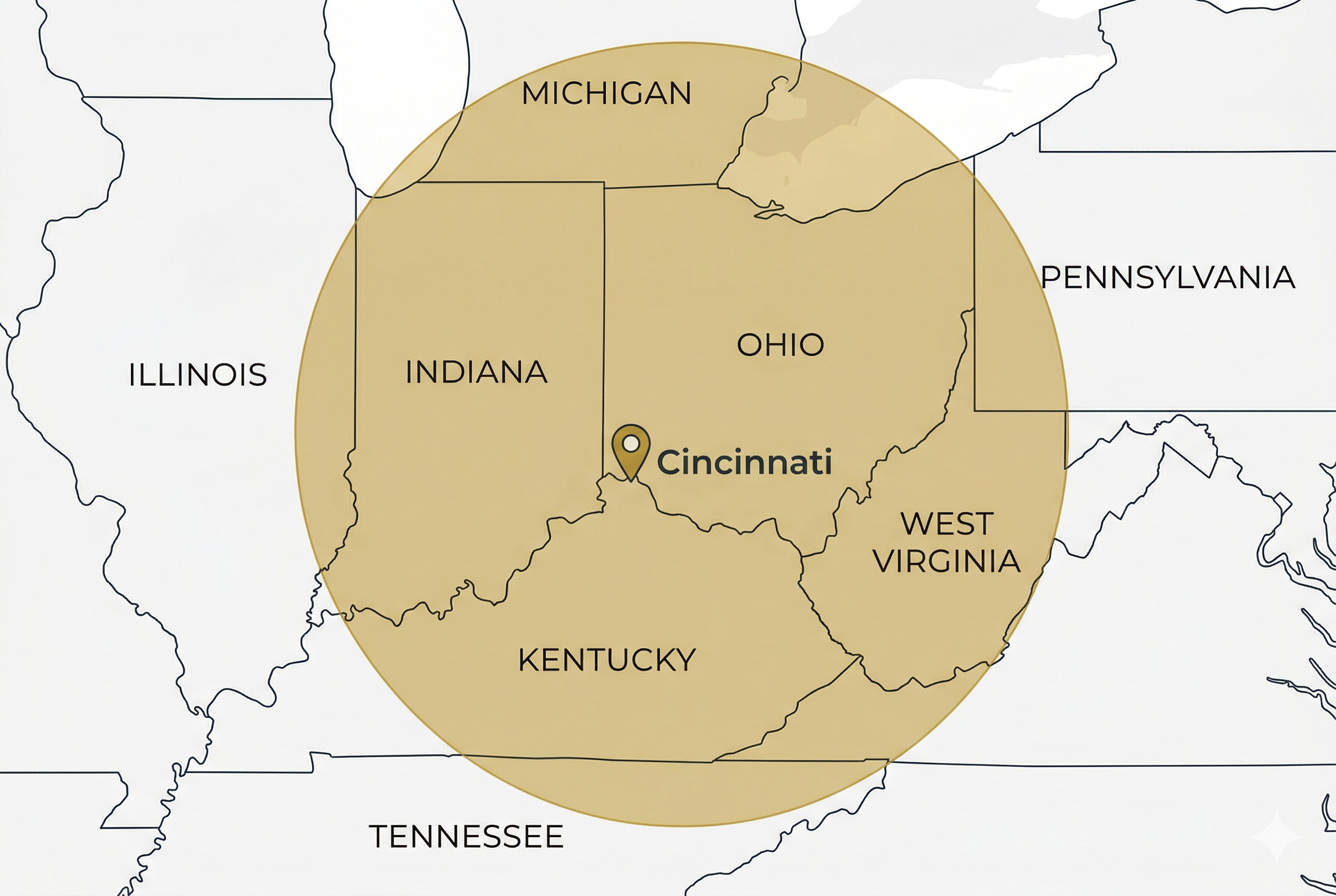
Mark Wieczorek practices Title IX defense across the Midwest from his Cincinnati office. Chicago is roughly three hundred miles northwest, a five hour drive Mark and his investigative team make regularly for Seventh Circuit and Sixth Circuit Title IX matters at DePaul, Northwestern, the University of Chicago, the University of Illinois, Indiana University, Purdue, the University of Notre Dame, Ball State, the University of Cincinnati, Ohio State, the University of Michigan, and Michigan State. Most of the DePaul Title IX process happens in writing and on secure video platforms, not in person. Investigation interviews can be conducted remotely. Document production runs through DePaul’s preferred cloud storage platform. The live hearing can be conducted virtually at the hearing officer’s discretion under Section VII.A.5.
Mark’s Title IX defense practice is built on his prosecutorial background. As a former Hamilton County prosecutor, he learned the investigator’s playbook from inside the system: how investigators frame questions to lock in answers, how they sequence interviews to corner accused parties, how they build a record that survives appellate review. He uses the same playbook in reverse for the defense. DePaul’s investigative report is the document where most cases are won or lost, and the evidence review window is where Mark does the most consequential work.
Mark works the Office of Gender Equity process the way he worked criminal investigations as a prosecutor. Build the record early. Pin down witness inconsistencies. Demand procedural compliance from the investigator. Treat the response window on the preliminary investigation report as the most important deadline of the case. DePaul students, faculty, and professional pipeline respondents who retain Mark get a DePaul University Title IX attorney whose strategy is built around their facts and around the Seventh Circuit framework that controls every DePaul Title IX matter.
Call (513) 540-0450 – Free Consultation
Mark Wieczorek’s Title IX Case Results
Below are real Title IX matters Mark has defended across the Midwest, for students and faculty facing the same kind of allegations you’re navigating right now. They’re a look at what’s possible when the defense is built right from day one.
Mark’s Title IX practice spans Midwest universities. The case results below reflect outcomes for similarly situated student and faculty respondents across his Midwest practice. Past results do not guarantee future outcomes; every Title IX matter turns on the facts of that case and the procedural posture of that institution.
- University of Dayton, faculty respondent. Represented a tenured professor in a Title IX matter. Case dismissed. Tenure retained.
- University of Cincinnati, student respondent. Represented an undergraduate accused of sexual misconduct. Found not responsible after full ARC hearing.
- University of Cincinnati, student respondent. Represented an undergraduate in a separate Title IX matter. Charges dismissed during investigation phase.
- Miami University, fraternity matter. Represented an individual charged with Title IX sexual assault and hazing as part of a fraternity matter where over twenty individuals faced charges. Following full hearing, client found not individually responsible and all felony charges dismissed.
Disclaimer: The above case results are not a guarantee, warranty, or prediction regarding the outcome of your case. Past results afford no guarantee of future results. Every case is different and must be judged on its own merits.
Frequently Asked Questions
Does my Title IX advisor at DePaul have to be an Illinois attorney?
No. DePaul’s Formal Title IX Sexual Harassment Policy and Procedures expressly permits each party to be accompanied by an advisor of choice, and Section III and Section IX.A confirm that the advisor “may be, but is not required to be, an attorney.” The policy contains no Illinois-licensure requirement. Title IX is federal law, and an experienced Title IX attorney from outside Illinois can serve as advisor at a DePaul Title IX hearing on the same footing as an Illinois licensed attorney.
What makes DePaul’s Title IX process different from Northwestern, the University of Chicago, or the University of Illinois?
Three things distinguish DePaul’s Title IX process from its Illinois peers. First, DePaul reserves discretion to seat the hearing officer either as a single decision maker or as a panel of three members, deciding the structure on a case by case basis. Second, DePaul’s policy recognizes only three grounds for appeal: procedural irregularity, new evidence, and conflict of interest or bias. DePaul does not list disproportionate sanction as a separate appellate ground. Third, DePaul offers both parties the option to elect a paper based administrative adjudication track in lieu of a live hearing, by mutual written consent, with a thirty day target for resolution.
How long does a DePaul Title IX investigation take?
DePaul’s Formal Title IX Policy targets a roughly four to six month timeline from formal complaint to written determination, with the hearing held no earlier than ten days from the date both parties receive access to the final investigative report. Each party has ten days to review and respond to the preliminary investigation report, three days to elect the optional administrative adjudication track if consenting, and fourteen days is the target for the written decision after the hearing concludes.
What is the standard of evidence at a DePaul Title IX hearing?
Preponderance of the evidence. DePaul’s Formal Title IX Policy defines preponderance as more likely than not that a policy violation occurred. This is the same standard most universities apply under the federal Title IX regulations and the same standard the Illinois Preventing Sexual Violence in Higher Education Act requires of Illinois colleges and universities.
Can I bring an attorney to my DePaul Title IX investigation interview?
Yes. DePaul’s Formal Title IX Policy permits an advisor of choice, who may be an attorney, to accompany a party to every meeting, interview, evidence review session, and hearing that is part of the investigation, adjudication, and appeal process. The advisor may consult with the party privately. At the live hearing, the advisor, and only the advisor, conducts cross examination of the other party and the witnesses. Retaining experienced counsel before the investigation closes is the single biggest factor in how the hearing unfolds.
What appeals are available after a DePaul Title IX finding?
Either party has seven days from the dismissal or determination to file a written appeal. DePaul’s Formal Title IX Policy recognizes only three grounds for appeal: procedural irregularity that affected the outcome, new evidence that was not reasonably available at the time of the determination, and conflict of interest or bias on the part of the Title IX Coordinator, investigators, hearing officers, or administrative officer. DePaul’s policy does not list disproportionate sanction as a separate appellate ground, which means a respondent who accepts responsibility but contests sanction severity does not have a written appellate ground within the policy. The appeal officer issues a written decision within a target of fourteen days.
Title IX Defense at Other Midwest Universities
Mark Wieczorek defends Title IX matters across the Midwest. Related practice areas at other universities: University of Illinois Title IX defense, Northwestern University Title IX defense, University of Chicago Title IX defense, Indiana University Title IX defense, Purdue University Title IX defense, University of Notre Dame Title IX defense, Ball State University Title IX defense, University of Michigan Title IX defense, Michigan State University Title IX defense, Vanderbilt University Title IX defense, University of Cincinnati Title IX defense.
For an overview of Mark’s work across the Midwest, see Title IX defense practice.
If you need a DePaul University Title IX lawyer who knows the Office of Gender Equity process, the Formal Title IX Sexual Harassment Policy framework, the hybrid hearing officer election, the narrow three ground appeal window, and the Seventh Circuit’s Doe v. Purdue framework, Mark Wieczorek’s prosecutorial background and DePaul specific case strategy is the difference between a stacked process and a fair one.
Do Not Wait. Contact a DePaul University Title IX Attorney Now.
The window to build your defense at DePaul is the investigation phase, not the hearing. By the time the hearing officer convenes the live hearing, the record is largely closed. Every interview, every document response, every objection on the record matters. The evidence review window before the investigative report finalizes is the last unrestricted opportunity for your advisor to shape the proceeding before the live hearing advisor only cross examination rule kicks in. If you have been notified of a Title IX investigation at DePaul, retain experienced Title IX defense counsel today.
Call (513) 540-0450 – Free Consultation
DePaul students and faculty: free consultation, flat fee, no payment plans on the back end. Mark answers his own phone.