
University of Notre Dame Title IX Attorney: Defense for Students and Faculty
Experienced Title IX defense for Notre Dame students, faculty, and staff. Former prosecutor. Hundreds of sex crime cases handled.
Call (513) 540-0450 – Free Consultation
If you are a Notre Dame student, faculty member, or staff member facing a Title IX complaint, the next sixty calendar days will move faster than you expect. Hiring a Notre Dame Title IX attorney early is the single biggest factor in how the case unfolds. Notre Dame’s Office of Institutional Equity will assign an investigator within days of the Formal Complaint. You will be summoned to interviews. You will be given ten calendar days to respond to the evidence, and the final Investigative Report will be provided at least ten calendar days before the Hearing. A Pre-Hearing Meeting will convene three calendar days before the live Hearing. Then a Hearing Board, composed of a Hearing Officer plus two Committee Members, will decide responsibility and sanction in a live hearing where only your advisor (not you) may ask questions of the complainant and the witnesses.
Mark Wieczorek is a former Hamilton County prosecutor who now defends students, faculty, and coaches accused of sexual misconduct at Midwest universities, including the University of Notre Dame. As a University of Notre Dame Title IX lawyer, his job is to put the same procedural pressure on the Office of Institutional Equity that the office’s own investigators put on you, and to do it before the Hearing Officer is appointed, not after.
There is one thing about Notre Dame’s Title IX process that is true at no other Midwest university where Mark practices, and most respondents and most parents who call have never heard of it: the procedures Notre Dame uses today were rewritten after a federal judge in 2017 ruled that Notre Dame’s prior Title IX process gave a dismissed student “no notice at all” of the allegations against him. We will get to that ruling below. It is the most important case in the history of Notre Dame Title IX defense, and what Notre Dame learned from it shapes every Hearing the OIE convenes.
Notre Dame’s Title IX Process Is Built to Move on Notre Dame’s Schedule
The University of Notre Dame’s Procedures for Resolving Concerns of Discriminatory Harassment, Sexual Harassment, and Other Sex-Based Misconduct, updated January 17, 2025, controls every Title IX matter on the Notre Dame campus. Title IX Coordinator Erin N. Oliver, Assistant Vice President of the Office of Institutional Equity, located at 100 Grace Hall, oversees intake. Reports can be filed by phone at 574-631-0444, by email to equity@nd.edu, or through the speakup.nd.edu online portal. The Office of Institutional Equity (OIE) handles every step of the federal Title IX track, from intake through final appeal.
Notre Dame runs two parallel disciplinary tracks, and which track a case lands on determines what an attorney can do. Title IX matters (sexual harassment, sexual assault, dating violence, stalking on the basis of sex) are processed by OIE under the 2025 Procedures. General conduct matters (alcohol, parietals, hazing, theft, non-Title-IX behavior) are processed by the Office of Community Standards under du Lac: A Guide to Student Life, where students “may not proceed through an attorney” and the only permitted support person is a Notre Dame student or employee. The page you are reading addresses the OIE Title IX track, where the 2025 Procedures grant each party an Advisor of choice and where retaining experienced counsel can change the outcome of the case.
The 60-Day Investigation Window
Once a Formal Complaint is filed and accepted, Notre Dame’s Procedures target sixty calendar days to complete the investigation. That target is not a hard cap, but it is the schedule the OIE investigators work to. Within those 60 days a designated investigator interviews both parties and any witnesses they identify, gathers documentary and digital evidence, and produces an Investigative Report. Both parties then get ten calendar days to inspect the evidence and submit a written response, which the investigator considers before finalizing the report. Notre Dame’s Procedures expressly bar Advisors from submitting written responses on behalf of the party, so the response is in the party’s voice but is built with the Advisor’s strategy. The Investigator then drafts the Investigative Report. The final Investigative Report is provided to each party and each party’s Advisor at least ten calendar days before the scheduled Hearing, and parties may submit a written response to the report in advance of the Hearing.
The Hearing Board: 3 Members for Students, 4 for Faculty
Notre Dame does not use a single decision-maker for Title IX cases. Notre Dame’s 2025 Procedures convene a Hearing Board for every Title IX Hearing, and the composition of that Board changes with the identity of the Respondent. For student Respondents, the Hearing Board has three members: one Hearing Officer drawn from the AVP’s standing pool of Hearing Officers, plus two Student Hearing Board Committee Members nominated by the Vice President for Student Affairs and appointed by the University President. Notre Dame’s Procedures expressly state that “Students may not serve as members of the Hearing Board,” so the two Committee Members are administrators or staff, not student peers, despite the committee name.
For faculty Respondents, the Hearing Board has four members: the Hearing Officer, the Associate Provost for Faculty Affairs, and two tenured faculty members drawn from the Faculty Hearing Board Committee. The Procedures restrict Faculty Hearing Board Committee Members to tenured faculty who do not perform a predominately administrative role, which is a meaningful protection for accused faculty: peer review by tenured colleagues is built into the procedural structure, not bolted on at appeal.
The procedural significance is that a Notre Dame respondent’s Advisor is splitting attention across multiple decision-makers during cross-examination, not concentrating on one. Every question, every objection, every credibility moment lands on three or four people at once. The Advisor’s preparation has to account for the dynamic.
The Pre-Hearing Meeting Is the Most Underused Lever in Notre Dame Title IX Defense
Three calendar days before the Hearing, the Hearing Officer convenes a Pre-Hearing Meeting with the parties and their Advisors. Most respondents and most parents calling about a Notre Dame matter assume the Pre-Hearing Meeting is logistical housekeeping. It is not. Notre Dame’s Procedures expressly state that “Advisors will be permitted to participate actively in the Pre-Hearing Meeting.” That phrase is the difference between a Title IX defense that begins on Hearing day and a Title IX defense that begins three days earlier. The Pre-Hearing Meeting agenda includes proceeding structure and logistics, the process for presenting witnesses and evidence, the witness list, expected length of the Hearing, and timing considerations. The Hearing Officer rules on procedural and evidentiary disputes during the Pre-Hearing Meeting that lock in the parameters of the live Hearing.
A Notre Dame Title IX attorney who walks into the Pre-Hearing Meeting prepared can move witnesses on or off the list, shape the relevance ruling on whole categories of evidence, and put procedural objections on the record before any witness is sworn. A Notre Dame respondent who does not have an experienced Advisor at the Pre-Hearing Meeting will accept the Hearing Officer’s defaults on every issue, and those defaults are the OIE’s defaults, not the respondent’s. The Pre-Hearing Meeting is where Mark does the work that the live Hearing’s nonspeaking-Advisor rule prevents him from doing later.
Cross-Examination by Advisor Only at the Live Hearing
At the live Hearing, the rule changes. Notre Dame’s Procedures restrict the Advisor’s speaking role at the Hearing itself to two narrow categories: cross-examining the other party and the witnesses, and addressing the Hearing Officer on procedural or evidentiary issues. Outside those two categories, the Advisor is nonspeaking. The Advisor cannot make opening statements. The Advisor cannot make closing arguments. The Advisor cannot pass notes. The Advisor cannot whisper in the party’s ear during the party’s testimony. Advisors who try to participate beyond the cross-examination and procedural-objection roles are removed from the Hearing.
The cross-examination itself is conducted entirely by the Advisor, not the party. Cross-examination is not optional and not party-led. A party who walks into the Hearing without experienced counsel is a party whose credibility-determinative questions never get asked. The Hearing Officer rules on each question’s relevance before the witness answers. Open-ended questions that lack relevance grounding get blocked. Compound questions get blocked. Questions outside the scope of the Investigative Report get blocked.
This single procedural fact, the requirement that an Advisor and only an Advisor cross-examines, is the most important reason to retain experienced counsel before the investigation ends rather than after. The Advisor at the Hearing should not be meeting the case for the first time on Hearing day. Cross-examination strategy, witness preparation, relevance theory, and the thirty to seventy questions that actually matter are built during the investigation phase, not after the Hearing Officer is appointed.
Sanctions and the VP for Student Affairs Appeal
The Hearing Board issues a written determination after the Hearing, finding by preponderance of the evidence whether a Policy violation occurred and assigning Sanctions. For student respondents, Notre Dame’s Procedures authorize a sanction range that spans the full institutional spectrum: Disciplinary Probation, Loss of Extra-Curricular Privileges, Loss of Specific Privileges within a Residential Community, Loss of Opportunity to Live in Campus Housing, No Contact Order, Temporary Hold on Transcript or Permanent Transcript Notation, Withholding or Delayed Issuance of Degree, Dismissal with the Opportunity to Apply for Readmission, and Permanent Dismissal with no opportunity for readmission. For faculty respondents, sanctions can include Written Warning, Reduction of Individual Salary or Pay, Loss of Opportunity for Merit Increase, Removal from Positions of Leadership, Suspension of Employment, Demotion (including Demotion in Academic Rank), Revocation of Tenure, and Termination from Employment. For tenured faculty, any “Severe Sanction” requires the Hearing Board to make a separate determination that the specific Severe Sanction selected is proportionate to the misconduct.
Either party has ten calendar days from the determination to file a written Request for Appeal on one of four grounds: procedural irregularity affecting the outcome, new evidence not reasonably available at the time of the determination, conflict of interest or bias by the AVP or Investigators or Hearing Board members, and a sanction outside the range. The other party has seven calendar days to respond. For student respondents, the Vice President for Student Affairs (or designee) decides the appeal. For staff respondents, the Vice President for Human Resources (or designee) decides. For faculty respondents, a three-member advisory panel of tenured faculty (elected members of the Academic Council, excluding anyone who served on the Hearing Board) makes a recommendation to the Provost, who then recommends to the President, who decides the appeal. The appeal decision is final and not subject to further review. Building the record for grounds two and three has to start during the investigation, not after the Hearing Board determines. By appeal time the record is closed.
Call (513) 540-0450 – Free Consultation
The 2017 Federal Ruling That Reshaped Notre Dame’s Title IX Process
In May 2017, the Honorable Philip P. Simon of the United States District Court for the Northern District of Indiana granted both a temporary restraining order and a preliminary injunction against the University of Notre Dame in a case brought by an accused student weeks before his graduation. The case, captioned Doe v. University of Notre Dame, 3:17-cv-00298 (N.D. Ind. 2017), is the most consequential Title IX ruling in Notre Dame’s history, and it explains why the Procedures the OIE uses in 2026 read the way they do.
Judge Simon found four procedural defects in Notre Dame’s prior Title IX process. First, the notice letter advising the accused student that the allegations involved violations “of the University’s policies related to sexual assault, sexual misconduct, dating and domestic violence/stalking, and/or conduct that creates a hostile environment” amounted, in the Court’s words, to “no notice at all” of the substance of the allegations against him. Second, the accuser’s supplementary materials were provided to the accused student fewer than three calendar days before the hearing, and Notre Dame would not allow the accused to copy the materials. Third, Notre Dame failed to obtain and review all of the text messages between the parties, even though the texts were directly relevant to credibility. Fourth, while Notre Dame allowed the accused student’s attorney to attend the hearing, the attorney was prohibited from active participation, including from cross-examining witnesses or addressing the panel.
Judge Simon’s ruling, in language Notre Dame respondents and their families should read carefully, held that “Being thrown out of school… is ‘punishment’ in any reasonable sense of that term,” and ordered Notre Dame to administer the accused student’s last two final examinations and to stay further sanctions pending the merits.
Notre Dame’s 2025 Procedures are direct procedural reforms responsive to Judge Simon’s ruling. The four defects map almost exactly to four reforms in the current Procedures: the 10-day written notice with case-specific allegations, the 10-day evidence review window with electronic access for the parties and Advisors, the standing requirement to gather all relevant communications between the parties, and the active Advisor role at the Pre-Hearing Meeting paired with Advisor-conducted cross-examination at the Hearing. Notre Dame did not adopt those reforms by accident. Notre Dame adopted them because in 2017 a federal judge ruled that Notre Dame’s prior process violated the accused student’s procedural rights.
The lesson for any Notre Dame respondent today is that the procedural protections built into the 2025 Procedures exist because the OIE, the Hearing Board, and the Notre Dame general counsel’s office know what happens when those protections are not honored. Every procedural shortcut by an OIE investigator is potentially a federal claim under the same theory Judge Simon credited in 2017. Building the record for that claim is the work of the investigation phase, not the appeal phase.
The Seventh Circuit’s Due Process Standard at Notre Dame
Notre Dame sits in St. Joseph County, Indiana, federal venue for the United States District Court for the Northern District of Indiana and appellate venue for the United States Court of Appeals for the Seventh Circuit. The controlling Seventh Circuit Title IX due-process opinion is Doe v. Purdue University, 928 F.3d 652 (7th Cir. 2019), authored by then-Circuit Judge Amy Coney Barrett and joined by Judges Sykes and St. Eve. Doe v. Purdue is the case that locked in the Seventh Circuit’s procedural-fairness framework for university Title IX cases, and it controls the legal analysis of any Notre Dame Title IX matter that becomes federal litigation.
Judge Barrett wrote that “To satisfy the Due Process Clause, a hearing must be a real one, not a sham or a pretense,” and held that “withholding the evidence on which the university relied in adjudicating his guilt was sufficient to render the process fundamentally unfair.” She further held, citing the Sixth Circuit’s Doe v. Baum decision, that the accused student “was entitled to cross-examine” his accuser. The opinion rejects the lower court’s dismissal at the pleading stage and adopts a relaxed standard for stating a Title IX claim under either an erroneous-outcome or selective-enforcement theory: a respondent need only allege facts plausibly suggesting that gender bias was a motivating factor in the outcome. External pressure on the university (such as Office for Civil Rights enforcement campaigns) combined with case-specific evidence of bias is enough at the pleading stage.
There is a wrinkle for Notre Dame that does not exist for Purdue. Purdue is a public university, and its disciplinary actions trigger the Fourteenth Amendment’s procedural due process clause through Section 1983. Notre Dame is a private Catholic university, and a Section 1983 procedural due process claim against Notre Dame faces the threshold state-action hurdle. The 2017 Doe v. Notre Dame ruling worked around that hurdle by relying on contract and Title IX theories. The same path is available today: Notre Dame’s 2025 Procedures are an enforceable contract between the University and its students and employees, and Title IX itself reaches private universities receiving federal funding (Notre Dame does). A Notre Dame respondent’s federal claim is a contract-plus-Title IX claim, not a Section 1983 due-process claim. The procedural standards are the same. The legal vehicle is different.
What this means in practice: every procedural shortcut by an OIE investigator (an undisclosed bias, a witness interview the respondent’s Advisor never had access to, a relevance ruling that prevented cross-examination on a credibility-determinative point, an evidentiary withholding that mirrors the 2017 case) is potentially a federal claim under Doe v. Purdue‘s Title IX framework and a contract claim under Notre Dame’s own Procedures. The investigation file you build during the OIE process is the same record you would use in federal court in South Bend if the Hearing Board decides against you and the Vice President for Student Affairs affirms.
What Cross-Examination at Notre Dame Looks Like When It Is Done Right
The Advisor’s cross-examination at the Notre Dame Title IX Hearing is the single most consequential moment in the entire process. The Hearing Officer rules on each question’s relevance before the witness answers. Cross has to be planned question by question, with relevance theory built in, before the Pre-Hearing Meeting. Open-ended questions get blocked. Compound questions get blocked. Questions outside the scope of the Investigative Report get blocked. A skilled Notre Dame Title IX lawyer prepares this cross-examination during the investigation phase, weeks before the Hearing Officer is appointed.
The strongest cross-examinations at Notre Dame Title IX Hearings work on three axes: credibility (consistency between the complainant’s earlier statements and Hearing testimony), corroboration (whether documentary or third-party evidence backs or undermines the complainant’s account), and process (whether the OIE investigator complied with Notre Dame’s own Procedures and the federal Title IX regulations in gathering evidence and interviewing witnesses). The third axis is the one most often underused at Notre Dame specifically, because the 2025 Procedures are dense and detailed and the OIE investigators do not always follow them precisely. Process violations preserved on the record become appeal grounds and federal claims.
A Notre Dame Title IX attorney who has cross-examined at Hearing-Board-model Title IX hearings before knows how a Hearing Officer reacts to certain question patterns, where the relevance line tends to fall, and which procedural objections move the needle. That experience compounds across cases.
Why a Cincinnati-Based Title IX Attorney for a Notre Dame Matter
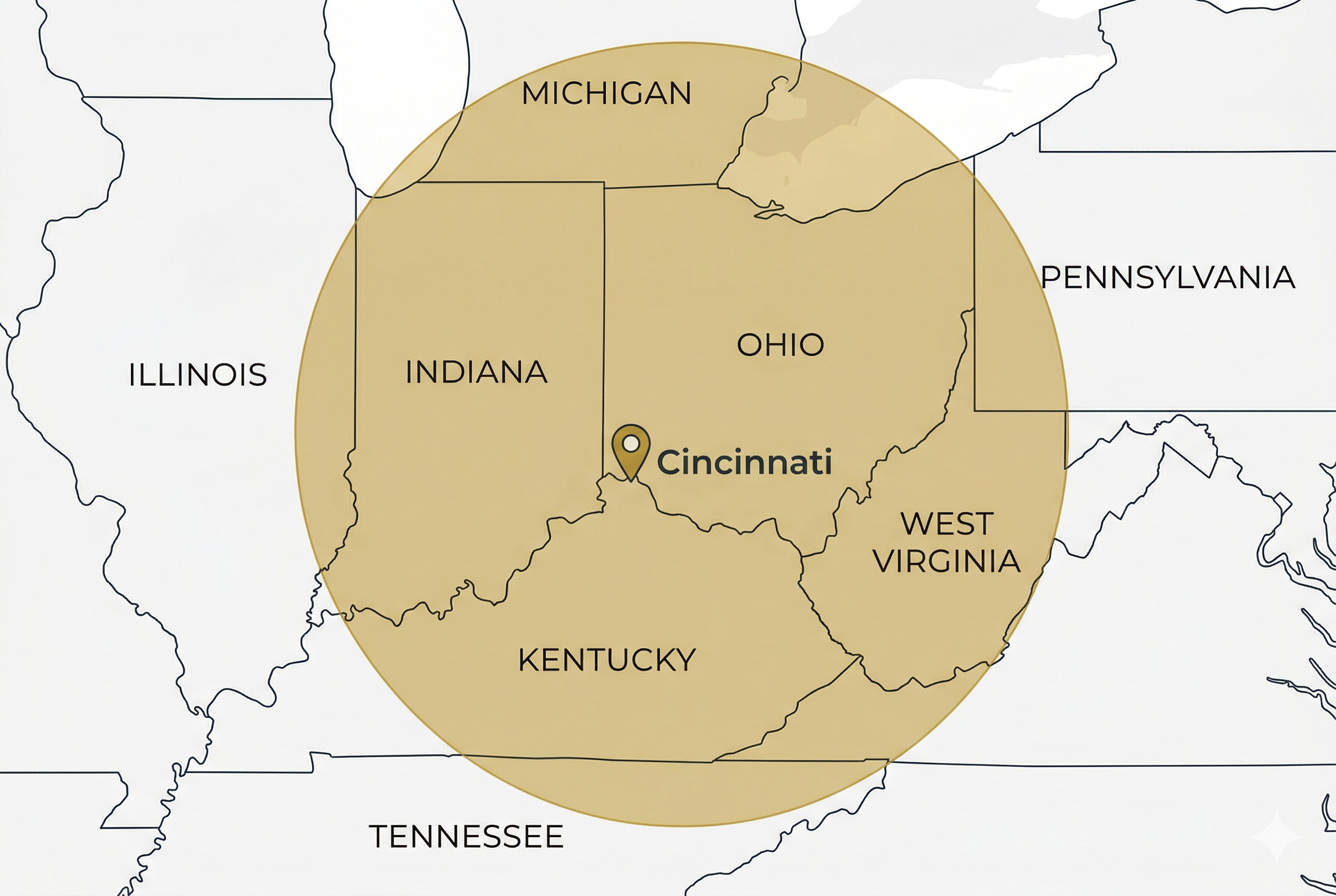
Mark Wieczorek practices Title IX defense across the Midwest from his Cincinnati office. South Bend is roughly 310 miles northwest, a five-hour drive Mark and his investigative team make regularly for Seventh Circuit Title IX matters at Notre Dame, Purdue, and the University of Illinois. Most of the OIE process happens in writing and on secure video platforms, not in person. Investigation interviews can be conducted remotely. Document production runs through OIE’s secure platform. The Pre-Hearing Meeting and the Hearing itself are the in-person events that matter, and the Hearing has been conducted virtually for some recent Notre Dame cases.
Mark’s Title IX defense practice is built on his prosecutorial background. As a former Hamilton County prosecutor, he learned the investigator’s playbook from inside the system: how investigators frame questions to lock in answers, how they sequence interviews to corner accused parties, how they build a record that survives appellate review. He uses the same playbook in reverse for the defense. Notre Dame’s Investigative Report is the document where most cases are won or lost, and the ten-day response window is where Mark does the most damaging work.
Mark works the OIE process the way he worked criminal investigations as a prosecutor. Build the record early. Pin down witness inconsistencies. Demand procedural compliance from the investigator. Treat the response window on the Investigative Report as the most important deadline of the case. Notre Dame students and faculty who retain Mark get a University of Notre Dame Title IX attorney whose strategy was built around their facts, not a generic Title IX template, and whose strategy is also built around the 2017 Doe v. Notre Dame ruling and the procedural reforms that ruling forced into the 2025 Procedures.
Call (513) 540-0450 – Free Consultation
Mark Wieczorek’s Title IX Case Results
Below are real Title IX matters Mark has defended across the Midwest, for students and faculty facing the same kind of allegations you’re navigating right now. They’re a look at what’s possible when the defense is built right from day one.
- University of Dayton, faculty respondent. Represented a tenured professor in a Title IX matter. Case dismissed. Tenure retained.
- University of Cincinnati, student respondent. Represented an undergraduate accused of sexual misconduct. Found not responsible after full ARC hearing.
- University of Cincinnati, student respondent. Represented an undergraduate in a separate Title IX matter. Charges dismissed during investigation phase.
- Miami University, fraternity matter. Represented an individual charged with Title IX sexual assault and hazing as part of a fraternity matter where over 20 individuals faced charges. Following full hearing, client found not individually responsible and all felony charges dismissed.
Disclaimer: The above case results are not a guarantee, warranty, or prediction regarding the outcome of your case. Past results afford no guarantee of future results. Every case is different and must be judged on its own merits.
Frequently Asked Questions
Does my Title IX advisor at Notre Dame have to be an attorney?
No. Notre Dame’s January 17, 2025 Procedures expressly permit each party to be accompanied by “an Advisor of his or her choice” at every stage of the Sexual Harassment Procedures. Most respondents who retain a Notre Dame Title IX attorney do so because the live Hearing requires the Advisor (not the party) to conduct cross-examination, and because the Pre-Hearing Meeting three days before the Hearing is the venue where attorneys can actively participate on agenda, witnesses, and evidentiary objections.
How is Notre Dame’s Title IX process different from a public university Title IX process?
Notre Dame is a private Catholic university in the Seventh Circuit. The controlling federal due-process opinion is Doe v. Purdue, 928 F.3d 652 (7th Cir. 2019), authored by then-Judge Amy Coney Barrett. The controlling Notre Dame-specific federal ruling is the 2017 preliminary injunction in Doe v. University of Notre Dame by Judge Philip P. Simon, in which the Northern District of Indiana found Notre Dame’s prior Title IX process gave the respondent “no notice at all” of the substance of the allegations and barred the Advisor from active participation. Notre Dame’s current 2025 Procedures are direct procedural reforms responsive to that ruling. Title IX cases run through the Office of Institutional Equity. General conduct cases run through the Office of Community Standards under du Lac, and the two tracks are governed by different rules.
How long does a Notre Dame Title IX investigation take?
Notre Dame’s 2025 Procedures target sixty calendar days for the investigation phase. Each party gets ten calendar days to review and respond to the evidence during the investigation. The final Investigative Report is provided at least ten calendar days before the Hearing for parties to review. The Hearing Board issues a written determination after the Hearing. The Vice President for Student Affairs (or designee, for student respondents) decides any appeal within a reasonably prompt timeframe. From Formal Complaint to final appeal decision typically runs four to six months.
What is the standard of evidence at a Notre Dame Title IX hearing?
Preponderance of the evidence, which Notre Dame’s Procedures define as whether it is more likely than not that a violation occurred. This is the same standard most universities use post-2024 Title IX regulations.
Can I bring an attorney to my Notre Dame Title IX investigation interview?
Yes. Notre Dame’s 2025 Procedures permit an Advisor of choice (who may be an attorney) at every stage of the Sexual Harassment Procedures, including the investigation interview, the Pre-Hearing Meeting, and the live Hearing. Outside the Pre-Hearing Meeting and the cross-examination portion of the Hearing, the Advisor’s role is nonspeaking, but the Advisor advises the party in writing throughout, between questions, and during breaks.
What appeals are available after a Notre Dame Title IX finding?
Either party has ten calendar days from notice of the determination to file a written Request for Appeal. The Procedures recognize four grounds: procedural irregularity affecting the outcome, new evidence not reasonably available at the time of the determination, conflict of interest or bias by the AVP or Investigators or Hearing Board members, and a sanction outside the range. The other party has seven calendar days to respond. Student-respondent appeals are decided by the Vice President for Student Affairs (or designee). Staff-respondent appeals are decided by the Vice President for Human Resources (or designee). Faculty-respondent appeals go to a three-member advisory panel of tenured faculty, which recommends to the Provost, who then recommends to the President for the final decision. The appeal decision is final and not subject to further review.
Title IX Defense at Other Midwest Universities
Mark Wieczorek defends Title IX matters across the Midwest. Related practice areas at other universities: University of Cincinnati Title IX defense, Ohio State University Title IX defense, University of Dayton Title IX defense, Xavier University Title IX defense, Indiana University Title IX defense, University of Illinois Title IX defense, University of Michigan Title IX defense, Purdue University Title IX defense, Michigan State University Title IX defense, Penn State University Title IX defense.
For an overview of Mark’s statewide work across every Indiana university, see Title IX defense across Indiana. For an overview of Mark’s work across the Midwest, see Title IX defense practice.
If you need a University of Notre Dame Title IX lawyer who knows the Office of Institutional Equity process, the 3-member Hearing Board structure, and the Pre-Hearing Meeting active-Advisor lever, Mark Wieczorek’s prosecutorial background and Notre Dame-specific case strategy is the difference between a stacked process and a fair one.
Do Not Wait. Contact a University of Notre Dame Title IX Attorney Now.
The window to build your defense at Notre Dame is the investigation phase, not the Hearing. By the time the Hearing Board convenes, the record is largely closed. Every interview, every document response, every objection on the record matters. The Pre-Hearing Meeting three calendar days before the Hearing is the last unrestricted opportunity for your Advisor to shape the proceeding before the live-Hearing nonspeaking rule kicks in. If you have been notified of a Title IX investigation at Notre Dame, retain experienced Title IX defense counsel today.
Call (513) 540-0450 – Free Consultation
Notre Dame students and faculty: free consultation, flat fee, no payment plans on the back end. Mark answers his own phone.