

Indiana University Title IX Attorney: Defense for Students and Faculty

Experienced Title IX defense for Indiana University students, faculty, and staff. Former prosecutor. Hundreds of sex crime cases handled.
Call (513) 540-0450 – Free Consultation
If you are a student, faculty member, or staff member at Indiana University facing a Title IX investigation, you need an attorney who understands how this university actually operates. IU Bloomington is a flagship public research university with roughly 48,000 students, nearly a quarter of the undergraduate population involved in Greek life, and one of the most procedurally complex Title IX policies in the Big Ten. IU’s governing policy, UA-03, runs four different complaint resolution tracks depending on whether the Respondent is a student or an employee and whether the alleged conduct meets federal Title IX jurisdiction. The process moves fast. The consequences are severe. And the university has been under federal Title IX oversight before.
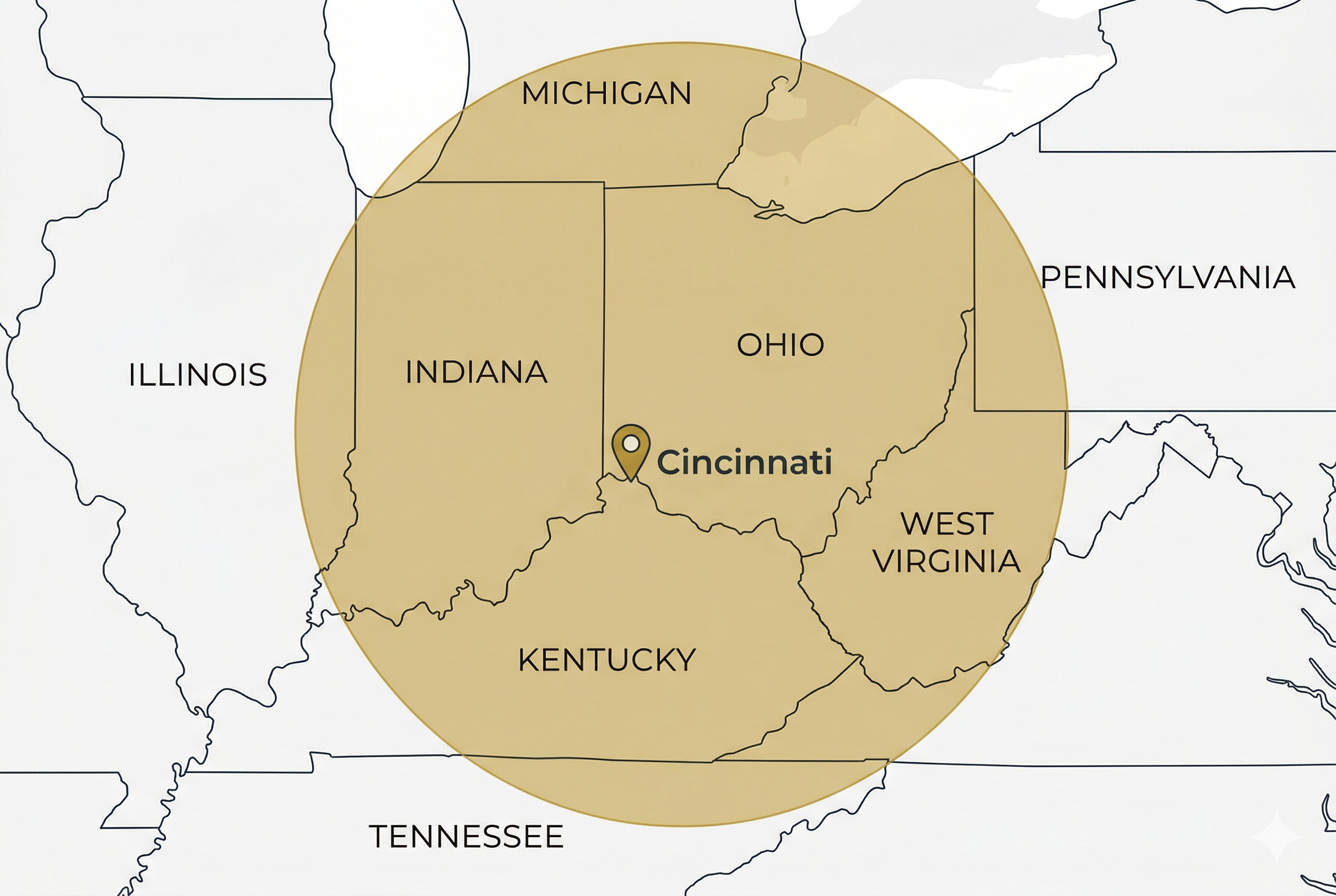
Mark Wieczorek is a Title IX lawyer based in Cincinnati who represents students and faculty at Indiana University. Bloomington is well within his Midwest service area. As a former prosecuting attorney who has handled hundreds of sex crime-related cases, he knows how investigations are built, where procedural weaknesses exist, and how to protect your rights through every stage of IU’s disciplinary process.
Call (513) 540-0450 – Free Consultation
How Indiana University’s Title IX Process Works
Understanding IU’s specific procedures is essential to mounting an effective defense. Unlike universities that run a single Title IX process, IU operates four separate resolution tracks under UA-03: a student Title IX track, an employee Title IX track, a student University track (for conduct that falls outside federal Title IX jurisdiction), and an employee University track. The tracks share certain features (preponderance of the evidence, advisor-conducted cross-examination, recorded live hearings) but diverge on who decides your case, who hears the appeal, and what procedural protections apply at each stage.
The Office of Civil Rights Compliance
IU’s Title IX work is housed in the Office of Civil Rights Compliance (OCRC), located at 420 N. Walnut Street in Bloomington. The office can be reached at (812) 855-7559 or ocrc@iu.edu. The University Title IX Coordinator is Jennifer Kincaid, supported by a team of Deputy Title IX Coordinators covering students, staff, and regional campuses. Separate teams of Student Sexual Misconduct Investigators and Employee Case Investigators handle the two tracks. The Office of Student Conduct, located at 801 N. Eagleson Avenue, runs the student hearing side.
Under UA-03, a broad category of IU employees are Responsible Employees with a mandatory obligation to report sexual misconduct promptly to the Title IX Coordinator. The category includes every employee with teaching responsibility, all academic advisors, all coaches and athletic staff who interact directly with students, all student affairs administrators, all residential hall staff, all supervisors, and any employee in an office that interfaces with students. A passing comment to a professor, a coach, an academic advisor, or a residence hall director can trigger an investigation before you even realize a report has been filed.
Two Title IX Tracks: Student vs. Employee
UA-03 maintains separate Title IX complaint resolution procedures for student respondents and for academic appointee and staff respondents. The tracks apply different decision-makers, different appellate structures, and, for employees, a further Faculty Board of Review layer. The table below summarizes the core differences.
| Procedural Element | Student Track | Academic Appointee & Staff Track |
|---|---|---|
| Who decides responsibility | Three-person hearing panel (at least one member must be a student affairs administrator) | Single Decisional Official |
| Who decides sanctions | Separate Sanctioning Official | Same Decisional Official |
| Standard of evidence | Preponderance of the evidence | Preponderance of the evidence |
| Cross-examination | Conducted by your Hearing Advisor | Conducted by your Hearing Advisor |
| Preliminary report response window | 10 calendar days | 10 calendar days |
| Final report issued before hearing | At least 10 days prior | At least 10 days prior |
| Appeal deadline | 10 calendar days | 10 calendar days |
| Appeal decision timeline | 15 calendar days | 15 calendar days |
| Further appellate layer | Final at Appellate Official | Faculty may request Faculty Board of Review; final determination by President in certain cases |
Tip: on mobile, swipe the table horizontally to see all three columns.
The Student Track: A Three-Person Hearing Panel
If the Respondent is a student, the case is heard by a three-person hearing panel drawn from faculty, staff, graduate students, or trained hearing officers. At least one panel member must be a student affairs administrator. A non-voting Chair manages the hearing, rules on the relevance of every question before it is answered, and is assisted by a Hearing Official. The panel determines responsibility. A separate Sanctioning Official then reviews the finding and imposes sanctions. Appeals go to the Appellate Official and, at that stage, the student track ends.
This structure changes the defense playbook. Presenting evidence to three decision-makers with different institutional perspectives is not the same as persuading a single contracted attorney. The Chair’s relevance rulings are also a live battleground. A well-prepared Hearing Advisor pushes every reasonable question and preserves objections for appeal.
The Academic Appointee and Staff Track: A Single Decisional Official
If the Respondent is a faculty member, staff member, or other academic appointee, the case is decided by a single Decisional Official. One person hears the evidence, rules on the relevance of every question, and issues the written determination of responsibility and sanctions. A Hearing Official assists with relevance rulings at the hearing.
For faculty, there is an additional layer on appeal. After the Appellate Official issues a decision, the faculty Respondent may request review by the Faculty Board of Review (FBR) within 15 days. The FBR typically completes its work within 60 days and issues a recommendation to the Appellate Official. The Appellate Official then issues a final determination within 10 days. If the Appellate Official rejects an FBR modification, the University President makes the final call. This multi-stage structure gives faculty a unique set of appellate opportunities, but it also means that preserving the record from day one is critical.
The Investigation Phase
After a formal complaint is accepted, the Title IX Coordinator assigns a trained Investigator from OCRC. The Investigator conducts interviews with both parties and relevant witnesses and collects documentary and electronic evidence. Parties may bring an advisor to investigative meetings, but at that stage the advisor serves in a support capacity and cannot speak on the party’s behalf.
Once the investigation concludes, both parties receive the Preliminary Investigation Report and have 10 calendar days to review it and submit additional information or evidence. The Investigator then issues a Final Investigation Report, which is provided to the parties at least 10 days before the hearing. Strong advocacy during the 10-day preliminary review window is one of the most important opportunities in the case. An experienced attorney uses that period to challenge factual conclusions, identify omissions, and build the record for the hearing.
Cross-Examination Rules at the Live Hearing
IU hearings are live, on the record, and follow strict questioning rules:
- Each party must have a designated Hearing Advisor who conducts questioning of the other party and witnesses
- A party may not directly question the other party or witnesses
- The Chair (student track) or Decisional Official (employee track) rules on the relevance of each question before it is answered
- Questions about a party’s prior sexual behavior are generally not relevant, with narrow exceptions
- A separate, non-hearing advisor may accompany the party for support but cannot conduct questioning
- Every hearing is recorded
UA-03 does not require the Hearing Advisor to be admitted to practice law in Indiana. There is no Indiana state rule limiting an out-of-state attorney’s ability to serve as advisor at an internal university proceeding. Choosing your own Title IX attorney as your Hearing Advisor puts someone who knows the procedural rules and is working for your interests into the questioning role.
Standard of Evidence at IU Title IX Hearings
Indiana University uses the preponderance of the evidence standard in both the student track and the academic appointee and staff track. The panel or Decisional Official only needs to believe it is more likely than not that the conduct occurred. This is a significantly lower bar than the beyond a reasonable doubt standard used in criminal court.
Appeals
A written appeal must be submitted no later than 10 calendar days after the written decision is sent. The Appellate Official issues a decision within 15 calendar days of receiving the appeal. Grounds under UA-03 include:
- Procedural irregularity that affected the outcome
- New evidence not reasonably available at the time of the original hearing
- Bias or conflict of interest on the part of the Investigator or a panel member or the Decisional Official
- Disproportionate sanctions (available to students who accepted responsibility)
Relief on appeal can include affirmance, reversal, modification of sanctions, or remand for a new hearing. An experienced attorney builds the appellate record from the first day of representation, not after an unfavorable outcome.
Emergency Removal and Interim Action
Upon receipt of a complaint, the Title IX Coordinator or Equity Official can take immediate interim action, including removal from campus, reassignment, administrative leave, or interim suspension, after consulting with the Decisional Official and other university officials. A party may appeal interim action within 10 days of receiving notice. If you have been placed on interim suspension or emergency removal, contact an attorney immediately. The first 10 days set the record for the entire case.
Why Indiana University Title IX Cases Are Different
IU Bloomington presents challenges for respondents that attorneys unfamiliar with this campus often miss.
IU is a public university, and constitutional due process applies. Unlike private institutions, Indiana University is a state actor bound by the Fourteenth Amendment. Students and employees facing discipline have constitutional due process rights enforceable through 42 U.S.C. § 1983. In Doe v. Trustees of Indiana University, 101 F.4th 485 (7th Cir. 2024), the Seventh Circuit held that an IU medical student had a constitutionally protected property interest in his continued enrollment and was entitled to some form of hearing before expulsion. If the university violates its own procedures or fails to provide adequate process, an experienced attorney can challenge the outcome in federal court. That protection is meaningful only if your attorney understands how to preserve the record for a potential legal challenge.
The controlling Seventh Circuit precedent is respondent-friendly. In Doe v. Purdue University, 928 F.3d 652 (7th Cir. 2019), then-Judge Amy Coney Barrett authored an opinion that recognized a stigma-plus liberty interest in continued higher-education enrollment and adopted a plausible inference of sex bias pleading standard for Title IX erroneous-outcome claims. Doe v. Purdue is binding precedent on every federal court in Indiana, including the Southern District of Indiana where IU cases are filed. A well-prepared defense preserves both the due process and the Title IX erroneous-outcome theories from the first interview forward.
IU has been under federal Title IX oversight before. The U.S. Department of Education’s Office for Civil Rights conducted a multiyear Title IX compliance review of IU Bloomington covering case files from 2011 through 2015. OCR examined more than 450 case files, held student focus groups, and interviewed employees. The review concluded with a Resolution Agreement in February 2018 that committed IU to ongoing training, prevention, and policy work. When a university has been through federal scrutiny, the institutional reflex is to demonstrate aggressiveness in enforcement. That pressure shapes how your case is handled.
UA-03 is one of the most procedurally complex Title IX policies in the Big Ten. Four separate complaint resolution procedures, distinct investigator pools for students and employees, a separate Sanctioning Official layer, an Appellate Official, and a Faculty Board of Review track for faculty respondents. An attorney who does not know which of these tracks applies will lose procedural ground in the first week.
The mandatory reporter net at IU is broad and reaches deep. Every employee with teaching responsibility is a Responsible Employee. So are advisors, coaches, residence hall staff, student affairs administrators, and supervisors. A single disclosure to a professor, an academic advisor, or a resident assistant triggers a reporting obligation to the Title IX Coordinator.
The Greek system is a recurring Title IX pressure point. Approximately 24% of IU Bloomington undergraduates are in a fraternity or sorority across 66 chapters. Title IX allegations arising out of Greek life (parties, chapter houses, recruitment events) frequently trigger overlapping institutional responses: Title IX investigation, chapter discipline, and in some cases a criminal inquiry. When the conduct falls outside federal Title IX jurisdiction, IU can also pursue the case under its student University track, meaning a Title IX dismissal does not necessarily end the matter.
As part of his broader Title IX defense practice, Mark Wieczorek represents students and faculty at Indiana University and other institutions throughout the Midwest. He understands how each university’s process creates unique pressure points and opportunities for the defense.
Call (513) 540-0450 – Speak With Mark Directly
Proven Results at Midwest Universities
Mark’s track record at other Midwest universities speaks directly to the defense he provides Indiana University students and faculty.
University of Dayton: Professor Accused of Inappropriate Sexual Contact
Result: Case Dismissed. Full Tenure and Pension Retained.
A tenured professor faced accusations that threatened his career, his pension, and decades of professional work. Mark identified inconsistencies in the complainant’s account, procedural irregularities in the investigation, and evidentiary gaps that the university’s own process failed to address. The case was dismissed entirely. The professor continues to teach today.
University of Cincinnati: Student Accused of Rape and Sexual Assault
Result: Case Dismissed Prior to Hearing.
A UC student faced allegations serious enough to result in immediate expulsion. Mark was retained early, before the investigation had fully taken shape. By challenging the reliability of witness accounts and identifying procedural deficiencies, the case was dismissed before a full hearing.
University of Cincinnati: Student Accused of Rape and Sexual Assault
Result: Not Responsible After Full Hearing.
In a separate matter, a second UC student faced rape and sexual assault allegations that went to a full disciplinary hearing. Mark prepared an exhaustive defense, identified inconsistencies across multiple interviews, and presented a clear, evidence-based narrative to the hearing panel. The student was found not responsible.
Miami University: Student Accused of Title IX Sexual Assault and Hazing
Result: Not Individually Responsible. All Felony Charges Dismissed.
Mark represented an individual charged with Title IX sexual assault and hazing as a fraternity member. Over 20 individuals faced charges. Following a full hearing, the client was found not individually responsible and all felony charges were dismissed.
Disclaimer: Past results do not guarantee future outcomes. Each case is unique and must be evaluated on its own facts and circumstances.
Supportive Measures During Your IU Title IX Case
While your IU Title IX case is pending, Indiana University is required to offer supportive measures at no cost. These are non-disciplinary and non-punitive, and a formal complaint is not required to receive them. They may include:
- Counseling referrals and mental health services
- Academic accommodations including rescheduled exams, extensions, and class changes
- Housing relocation within the residence halls
- Mutual no-contact directives
- Work and class schedule modifications
- Transportation and parking adjustments
- Campus escort services
- Leaves of absence
IU may also take interim action, including removal from campus, administrative leave, or interim suspension, after consulting with the Decisional Official if the Title IX Coordinator determines it is warranted. Interim action can happen before you have a chance to respond to the allegations. A timely appeal of interim action, within 10 days of notice, is often the first real opportunity to push back.
Frequently Asked Questions: Title IX at Indiana University
Can I bring a lawyer to a Title IX hearing at Indiana University?
Yes. Under UA-03, each party may have an advisor of choice, including an attorney, at every stage of the process. At the live hearing, each party must have a designated Hearing Advisor who conducts questioning of the other party and witnesses. You are not permitted to question the other party or witnesses directly. Choosing your own Title IX attorney as your Hearing Advisor puts someone who knows the procedural rules and is working for your interests in the questioning role. UA-03 does not require the advisor to be licensed in Indiana.
Does Indiana University use a hearing panel or a single decision-maker?
It depends on whether the Respondent is a student or an employee. For student cases, a three-person hearing panel composed of faculty, staff, or trained hearing officers decides responsibility, and at least one panel member must be a student affairs administrator. A separate Sanctioning Official imposes sanctions. For academic appointee and staff cases, a single Decisional Official attends the hearing and issues the determination on both responsibility and sanctions. The procedural track matters, and the defense strategy must match it.
What is the standard of evidence at IU Title IX hearings?
Indiana University uses the preponderance of the evidence standard for both students and employees under UA-03. The panel or Decisional Official only needs to find it is more likely than not that the conduct occurred. This is a significantly lower bar than the beyond a reasonable doubt standard used in criminal court.
How much time do I have to appeal a Title IX decision at Indiana University?
Under UA-03, a written appeal must be submitted no later than 10 calendar days after the written decision is sent. The Appellate Official issues a decision within 15 calendar days of receiving the appeal. Grounds include procedural irregularity that affected the outcome, new evidence not reasonably available at the time of the hearing, bias or conflict of interest by the investigator or a panel member, and (for students who accepted responsibility) disproportionate sanctions. Faculty have a further track through the Faculty Board of Review.
Does an out-of-state attorney need to be admitted in Indiana to represent me at an IU Title IX hearing?
No. UA-03 imposes no Indiana-licensing requirement on advisors or Hearing Advisors. A Title IX hearing at Indiana University is an internal administrative proceeding, not a court proceeding, and IU’s policy expressly allows a party to designate an advisor of choice. Mark Wieczorek is licensed in Ohio and regularly represents clients at Midwest universities, including Indiana University.
Title IX Defense at Other Midwest Universities
Mark Wieczorek also represents students and faculty facing Title IX investigations at the University of Cincinnati, Ohio State University, the University of Dayton, Miami University, Xavier University, the University of Louisville, the University of Illinois, Ohio University, the University of Michigan, Purdue University, Michigan State University, Penn State University, University of Tennessee, and Notre Dame. Each university has its own Title IX procedures, hearing formats, and institutional culture. Mark tailors his defense strategy to the specific school and its process.
For an overview of Mark’s statewide work across every Indiana university, see Title IX defense across Indiana.
Do Not Wait. Contact an Indiana University Title IX Lawyer Now.
Nearly every IU employee with teaching responsibility, supervisory authority, coaching duties, or student-facing role is a Responsible Employee required to report Title IX allegations. OCRC can open an investigation within days of a report. Interim action can separate you from classes, housing, or campus before you have responded to a single allegation. UA-03’s four-track structure means the exact procedural path depends on details you may not understand in the first week of a case. The wrong defense in the wrong track is no defense at all.
Indiana University has been through federal Title IX oversight and operates one of the most procedurally detailed policies in the Big Ten. The institutional pressure to act decisively on Title IX cases has not diminished. If you are a student, faculty member, or staff member at Indiana University facing a Title IX investigation, call Mark Wieczorek before you attend any meetings, respond to any emails, or make any statements.