
Indiana Title IX Defense Attorney: Defending Students, Faculty, and Coaches Across Indiana Universities
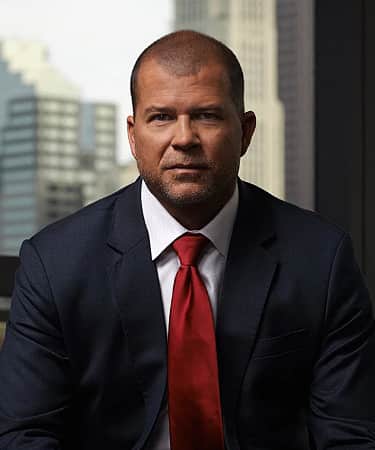
Experienced Indiana Title IX defense for students, faculty, and staff at Indiana’s public and private universities. Former prosecutor. Hundreds of sex crime cases handled.
Call (513) 540-0450 – Free Consultation
If you are an Indiana student, faculty member, or staff member facing a Title IX complaint, the procedural calendar will move faster than you expect. Hiring an Indiana Title IX attorney early is the single biggest factor in how the case unfolds. Indiana universities are bound by the Seventh Circuit, which is the most respondent-protective federal circuit in the country for Title IX wrongful-discipline claims. That framework only helps you if your attorney builds the campus-process record that survives federal review.
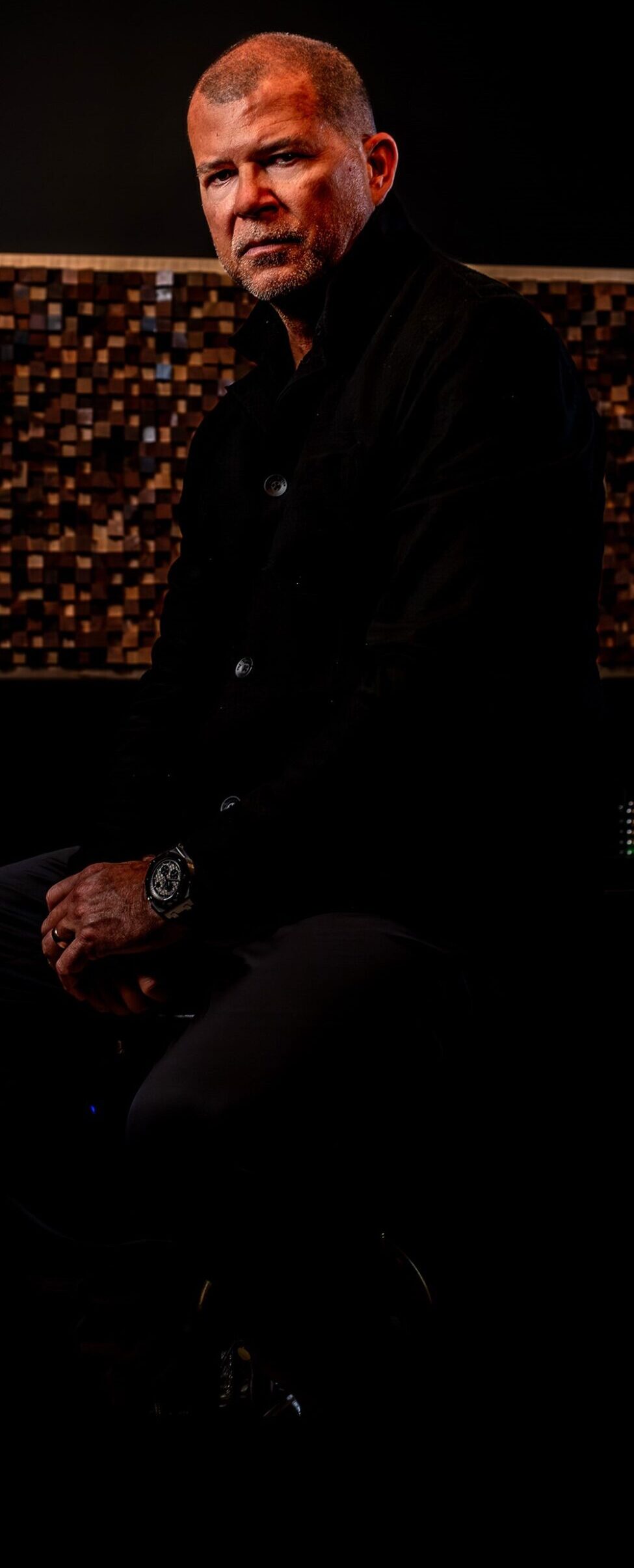
Mark Wieczorek is a former Hamilton County prosecutor who defends students, faculty, and coaches accused of sexual misconduct at Midwest universities, including every major Indiana campus from Bloomington and West Lafayette in the south and west, to South Bend in the north, to Muncie in the east. From his Cincinnati office, Mark drives the Indiana federal courts and Indiana campuses regularly, and most of the Title IX process happens in writing and on secure video platforms rather than in person.
There is one fact about the federal law that governs every Indiana Title IX case that most respondents and most parents who call have never thought through, and it shapes how an experienced attorney builds the case: the Seventh Circuit’s controlling Title IX opinion, Doe v. Purdue University, 928 F.3d 652 (7th Cir. 2019), was authored by then-Circuit Judge Amy Coney Barrett. It is the most influential Title IX respondent-side appellate decision of the past decade, adopted by the Third and Ninth Circuits after the Seventh. Every Indiana Title IX case is decided in the shadow of that framework, whether the respondent is at a public university, a private university, or a regional campus.
Title IX Defense at Indiana’s Major Universities
Mark defends Title IX matters at every major Indiana university. The four campuses with the most published procedural detail and the largest respondent populations are listed below. Each campus runs a slightly different Title IX process with different decision-maker structures and different appeal pathways.
- Indiana University Title IX defense: Indiana University in Bloomington runs Title IX matters through its Office of Civil Rights Compliance under policy UA-03. The hearing structure uses a three-person panel for student respondents and a separate Sanctioning Official. Federal venue: Southern District of Indiana.
- Purdue University Title IX defense: Purdue in West Lafayette runs Title IX matters through its Office of Institutional Equity under Policy III.C.4 and a separate Procedures document. The hearing structure uses a single Hearing Officer. The Vice President for Ethics and Compliance decides appeals. Federal venue: Northern District of Indiana. Purdue is the campus that produced the binding Seventh Circuit opinion authored by then-Judge Barrett.
- University of Notre Dame Title IX defense: Notre Dame in South Bend runs Title IX matters through its Office of Institutional Equity under the 2025 Procedures. The hearing structure uses a three-member Hearing Board for student respondents and a four-member Board for faculty. The 2017 federal preliminary-injunction ruling by Judge Philip P. Simon reshaped Notre Dame’s process; the current procedures are direct reforms responsive to that ruling. Federal venue: Northern District of Indiana.
- Ball State University Title IX defense: Ball State in Muncie runs Title IX matters through the Dean of Students under the Title IX Policy and Procedures effective August 1, 2025. The hearing structure switched from a multi-member panel to a single Hearing Officer in that policy update. Federal venue: Southern District of Indiana. Ball State has lived under continuous federal OCR Title IX enforcement in athletics for more than fifteen years.
Call (513) 540-0450 – Free Consultation
How Title IX Cases Work at Indiana Universities
The federal Title IX statutory framework is uniform across every Indiana campus that receives federal funds. The procedural details are not. Different Indiana universities use different decision-maker structures, different appeal pathways, and different mandatory-reporter definitions. The work of an Indiana Title IX defense attorney is to translate the federal framework into the specific procedural levers each Indiana policy provides.
Public Universities, Private Universities, and the State-Action Distinction
Indiana’s public universities, including the Bloomington and Muncie campuses, the West Lafayette campus, and the regional state campuses, are state actors. Disciplinary actions at those institutions trigger the Fourteenth Amendment’s procedural due-process clause through Section 1983. An Indiana respondent at a public university has both a federal Title IX claim and a federal Section 1983 due-process claim if the campus process fails.
Indiana’s private universities, including the South Bend campus, Butler, Valparaiso, DePauw, Wabash, and Earlham, are not state actors. Section 1983 due-process claims do not reach them. Respondents at private Indiana universities pursue federal Title IX claims under the same Seventh Circuit framework, plus Indiana state-law breach-of-contract claims based on the published Title IX policy. Indiana courts treat the student handbook and Title IX policy package as a binding contract between the institution and the student, so any deviation from the published procedures is actionable as breach of contract in Indiana state court.
The substantive procedural rights are similar. The legal vehicles are different. An Indiana Title IX lawyer building a respondent’s record has to know which vehicle applies and to preserve the right facts for the right claim.
The Seventh Circuit’s Title IX Framework
Indiana respondents have the benefit of the most respondent-protective federal Title IX precedent in the country. Doe v. Purdue University, 928 F.3d 652 (7th Cir. 2019), authored by then-Circuit Judge Amy Coney Barrett, holds that a respondent need only allege facts that raise a “plausible inference” that the university discriminated on the basis of sex. Judge Barrett wrote that “to satisfy the Due Process Clause, a hearing must be a real one, not a sham or a pretense,” and that withholding the evidence on which the university relied was sufficient to render the process fundamentally unfair. External pressure on the university, including Office for Civil Rights enforcement campaigns, combined with case-specific evidence of bias, is enough at the pleading stage.
The Third and Ninth Circuits have adopted the same standard after the Seventh, which means a respondent in Indiana has the same pleading-stage protection as a respondent in Pennsylvania, New Jersey, Delaware, California, Oregon, or Washington. The Sixth Circuit (Ohio, Michigan, Kentucky, Tennessee) reached a similar result through a different doctrinal path in Doe v. Baum and Doe v. Miami University.
A second Seventh Circuit decision shapes the practical posture of any Indiana respondent contemplating federal-court remedies. Doe v. Trustees of Indiana University, 101 F.4th 485 (7th Cir. 2024), holds that respondent plaintiffs in Seventh Circuit Title IX wrongful-discipline suits generally cannot proceed under pseudonym absent a substantial risk of harm beyond the reaction legitimately attached to the truth of events. The practical implication is straightforward and rarely discussed by general-practice attorneys: if a respondent loses the campus Title IX hearing and sues in federal court, the lawsuit will be filed in the respondent’s real name and the case caption will be public. That fact makes the work that happens before the hearing, the investigation-phase record-building and the cross-examination strategy, even more important. The federal-court remedy in the Seventh Circuit is no longer the quiet escape valve some respondents assume it is.
What Indiana Title IX Hearings Have in Common
Despite the variation across campuses, every major Indiana Title IX policy shares a set of common elements that an experienced attorney works through the same way. Each policy permits an advisor of choice who may be an attorney. Each policy requires advisor-conducted cross-examination at the live hearing, not party-conducted. Each policy applies a preponderance-of-the-evidence standard. Each policy provides short response windows (typically ten calendar days each) for evidence review and investigation-report response during the investigation phase. Each policy provides for a written determination by the Hearing Officer or Hearing Panel and a formal appeal process with a short filing window measured in business days.
The Hearing Officer or Hearing Panel rules on each cross-examination question’s relevance before the witness answers. Open-ended questions that lack relevance grounding get blocked. Compound questions get blocked. Questions outside the scope of the investigation report get blocked. The cross-examination is where the case is decided, but the cross-examination is built during the investigation phase, weeks before the hearing convenes.
Federal Venue: Southern and Northern Districts of Indiana
Indiana has two federal districts. The United States District Court for the Southern District of Indiana, with divisions in Indianapolis, Evansville, Terre Haute, and New Albany, covers the southern half of the state. The Bloomington campus and the Muncie campus both sit in the Southern District. Federal Title IX suits arising from those campuses are filed in Indianapolis.
The United States District Court for the Northern District of Indiana, with divisions in South Bend, Lafayette, Fort Wayne, and Hammond, covers the northern half. The South Bend campus and the West Lafayette campus both sit in the Northern District. Federal Title IX suits arising from those campuses are filed in South Bend or Lafayette.
Both districts are bound by Seventh Circuit precedent. The substantive law is identical. The local procedural and scheduling rules differ between districts, and an attorney filing in Indianapolis under the local rules of the Southern District operates differently than an attorney filing in South Bend under the local rules of the Northern District.
Why Indiana Title IX Cases Are Different
Indiana is the home of the most influential Title IX respondent-side appellate decision of the past decade. The institutional posture of every Indiana Title IX office is shaped by that fact. Doe v. Purdue was decided against a public Indiana university in 2019, and every Indiana university’s general counsel office has internalized the procedural lessons. Indiana Title IX offices today are more procedurally careful than Title IX offices in jurisdictions where federal precedent is less developed, but procedural care also means procedural rigor against respondents.
The 2024 Doe v. Trustees of Indiana University no-pseudonym decision adds a second institutional pressure: every Indiana general counsel knows that a respondent who loses at the campus level and sues will be named in the public docket. That fact gives Indiana institutional defendants a reputational incentive to defend campus determinations more aggressively than they might in jurisdictions where pseudonyms are routinely granted. A respondent at an Indiana university faces an institution that knows it can identify any future federal plaintiff by name.
The combined effect is that Indiana Title IX cases are decided more often at the campus level than in federal court. The campus process is the case. Investigation-phase strategy, evidence-response timing, cross-examination preparation, and procedural-objection record-building have to be treated as the case itself, not as a preliminary step before “real” federal litigation.
Mark Wieczorek’s Title IX Case Results
Below are real Title IX matters Mark has defended across the Midwest, for students and faculty facing the same kind of allegations you’re navigating right now. They’re a look at what’s possible when the defense is built right from day one.
- University of Dayton, faculty respondent. Represented a tenured professor in a Title IX matter. Case dismissed. Tenure retained.
- University of Cincinnati, student respondent. Represented an undergraduate accused of sexual misconduct. Found not responsible after full ARC hearing.
- University of Cincinnati, student respondent. Represented an undergraduate in a separate Title IX matter. Charges dismissed during investigation phase.
- Miami University, fraternity matter. Represented an individual charged with Title IX sexual assault and hazing as part of a fraternity matter where over 20 individuals faced charges. Following full hearing, client found not individually responsible and all felony charges dismissed.
Disclaimer: The above case results are not a guarantee, warranty, or prediction regarding the outcome of your case. Past results afford no guarantee of future results. Every case is different and must be judged on its own merits.
What Indiana Universities Will Not Tell You About the Title IX Process
Most respondents and most parents who call about an Indiana matter assume the Title IX Office is a neutral arbiter, that the published policy will be followed precisely, that the campus advisor offered by the institution is a substitute for retained counsel, and that any procedural problems can be fixed on appeal. Each of those assumptions is wrong.
The Title IX Office at every major Indiana university reports up through senior administration with reputational, financial, and federal-compliance stakes in the outcome. Investigators sometimes interview witnesses without the respondent’s advisor having access. Relevance rulings at the hearing block cross-examination questions that would test credibility. Sanctions are imposed by separate decision-makers (Sanctioning Officials, Vice Presidents, Provosts) who do not see the underlying witness testimony.
The mandatory reporter framework at every major Indiana university is broad. Faculty members, academic advisors, resident assistants, graduate teaching assistants, and athletic coaches are all required to report to the Title IX Office when they receive information about potential sexual misconduct. A complainant who confides in any of those employees has triggered Title IX Office notice. By the time the Notice of Allegations reaches the respondent, the institution has often known for days or weeks.
The appeal process at every major Indiana university is narrow and procedurally constrained. Appeals are limited to enumerated grounds (typically four grounds: procedural irregularity, new evidence, conflict of interest or bias, and sanction severity). Building the record for those grounds has to start during the investigation, not after the determination. By appeal time the evidentiary record is closed.
Mark’s Approach to Indiana Title IX Defense
Mark’s Title IX defense practice is built on his prosecutorial background. As a former Hamilton County prosecutor, he learned the investigator’s playbook from inside the system: how investigators frame questions to lock in answers, how they sequence interviews to corner accused parties, how they build a record that survives appellate review. He uses the same playbook in reverse for the defense.
For an Indiana matter specifically, Mark’s approach is to treat the campus process as the federal case it is. The investigation-phase record that gets built in the first ten-calendar-day evidence-response window and the second ten-calendar-day investigation-report response window is the same record that will be cited in any Seventh Circuit federal complaint if the campus process fails. The cross-examination questions that get asked at the live hearing are the same credibility points that any federal motion practice will rely on. The procedural objections preserved on the record become the appeal grounds the campus appeal panel will review and the Seventh Circuit federal claims a future federal court will consider.
Mark works the Title IX process the way he worked criminal investigations as a prosecutor. Build the record early. Pin down witness inconsistencies. Demand procedural compliance from the investigator. Treat the investigation-phase response windows as the most important deadlines of the case. Indiana students and faculty who retain Mark get an Indiana Title IX lawyer whose strategy was built around their facts and the Seventh Circuit framework that protects them, not a generic Title IX template.
Supportive Measures and Interim Restrictions at Indiana Universities
Every major Indiana Title IX policy authorizes the Title IX Coordinator to impose supportive measures or interim restrictions on a respondent at the outset of the case, before any responsibility determination is made. Supportive measures can include no-contact orders, residence-hall relocations, class schedule changes, restricted access to specific campus facilities, and removal from student leadership positions.
These measures are framed as non-punitive and non-disciplinary, but their practical effect on a respondent’s daily campus life is immediate. A respondent who has been told to relocate from a residence hall, drop a class, or avoid a specific campus building during the pendency of an investigation is operating under restrictions that can last months. Each Indiana policy provides limited mechanisms to challenge or modify supportive measures, and the deadlines are short. An Indiana Title IX attorney engaged at the outset can move quickly to challenge restrictions that exceed what the policy authorizes.
Frequently Asked Questions: Title IX at Indiana Universities
Can a lawyer represent me at an Indiana university Title IX hearing?
Yes. Every major Indiana university Title IX policy permits an advisor of choice who may be an attorney. The policy language varies by campus but the substantive right is the same. At the live hearing the advisor (not the party) is required to conduct cross-examination of the other party and the witnesses, which is the procedural reason most Indiana Title IX respondents retain an Indiana Title IX attorney rather than relying on a non-attorney advisor or a friend.
What is the Seventh Circuit’s Title IX framework and why does it matter for Indiana respondents?
Indiana sits in the Seventh Circuit, which is the most respondent-protective federal circuit in the country for Title IX wrongful-discipline claims. The controlling opinion is Doe v. Purdue University, 928 F.3d 652 (7th Cir. 2019), authored by then-Judge Amy Coney Barrett. Doe v. Purdue holds that a respondent need only allege facts that raise a “plausible inference” that the university discriminated on the basis of sex. The Third and Ninth Circuits have since adopted the same standard. A second decision, Doe v. Trustees of Indiana University, 101 F.4th 485 (7th Cir. 2024), holds that respondent plaintiffs in Seventh Circuit Title IX suits generally cannot proceed under pseudonym, which means the federal-court remedy is exposed and the work to win has to happen in the campus process, not after.
Are public and private Indiana universities treated the same under Title IX?
Federal Title IX statutory protections apply to both because every Indiana university receiving federal funds is covered. Constitutional procedural due process under Section 1983 reaches only public universities because of the state-action requirement. Public Indiana universities are state actors and respondents at those schools can pursue both Title IX and Section 1983 due-process claims. Private Indiana universities are not state actors, so respondents at those schools pursue federal Title IX claims and Indiana state-law breach-of-contract claims based on the published policy.
What is the standard of evidence at Indiana Title IX hearings?
Preponderance of the evidence, defined as more likely than not (greater than 50% likely) that the alleged conduct occurred. Every major Indiana university uses this standard. This is the lowest evidentiary standard in any adjudicative process and substantially lower than the clear-and-convincing standard used in some civil matters or the beyond-a-reasonable-doubt standard used in criminal cases.
What is the difference between the Southern and Northern Districts of Indiana for Title IX cases?
Indiana has two federal districts. The Southern District of Indiana covers Indianapolis and southern Indiana, including the Bloomington campus, the Muncie campus, Indiana State University in Terre Haute, and the University of Indianapolis. The Northern District of Indiana covers South Bend, Lafayette, Fort Wayne, and Hammond, including the West Lafayette campus and the South Bend campus. Federal Title IX suits are filed in the district where the campus sits. Both districts are bound by Seventh Circuit precedent including Doe v. Purdue and Doe v. Trustees of Indiana University.
How quickly do I need to retain an Indiana Title IX attorney?
Immediately on receiving the Notice of Allegations. Every Indiana university Title IX policy sets short response windows during the investigation phase, typically ten calendar days to inspect evidence and ten calendar days to respond to the investigation report. Those windows are the most important deadlines of the case because the investigation report is the document the Hearing Officer or Hearing Panel reviews when deciding responsibility. An Indiana Title IX attorney retained after the investigation closes has dramatically less to work with than one retained before the first interview.
Title IX Defense Beyond Indiana
Mark defends Title IX matters across the Midwest. Related practice areas at universities in other states: University of Cincinnati Title IX defense, Ohio State University Title IX defense, University of Dayton Title IX defense, Xavier University Title IX defense, University of Illinois Title IX defense, University of Michigan Title IX defense, Michigan State University Title IX defense, Penn State University Title IX defense, Vanderbilt University Title IX defense, University of Tennessee Title IX defense.
For Mark’s statewide Ohio Title IX work, see Ohio Title IX defense. For an overview of the practice, see Title IX defense practice.
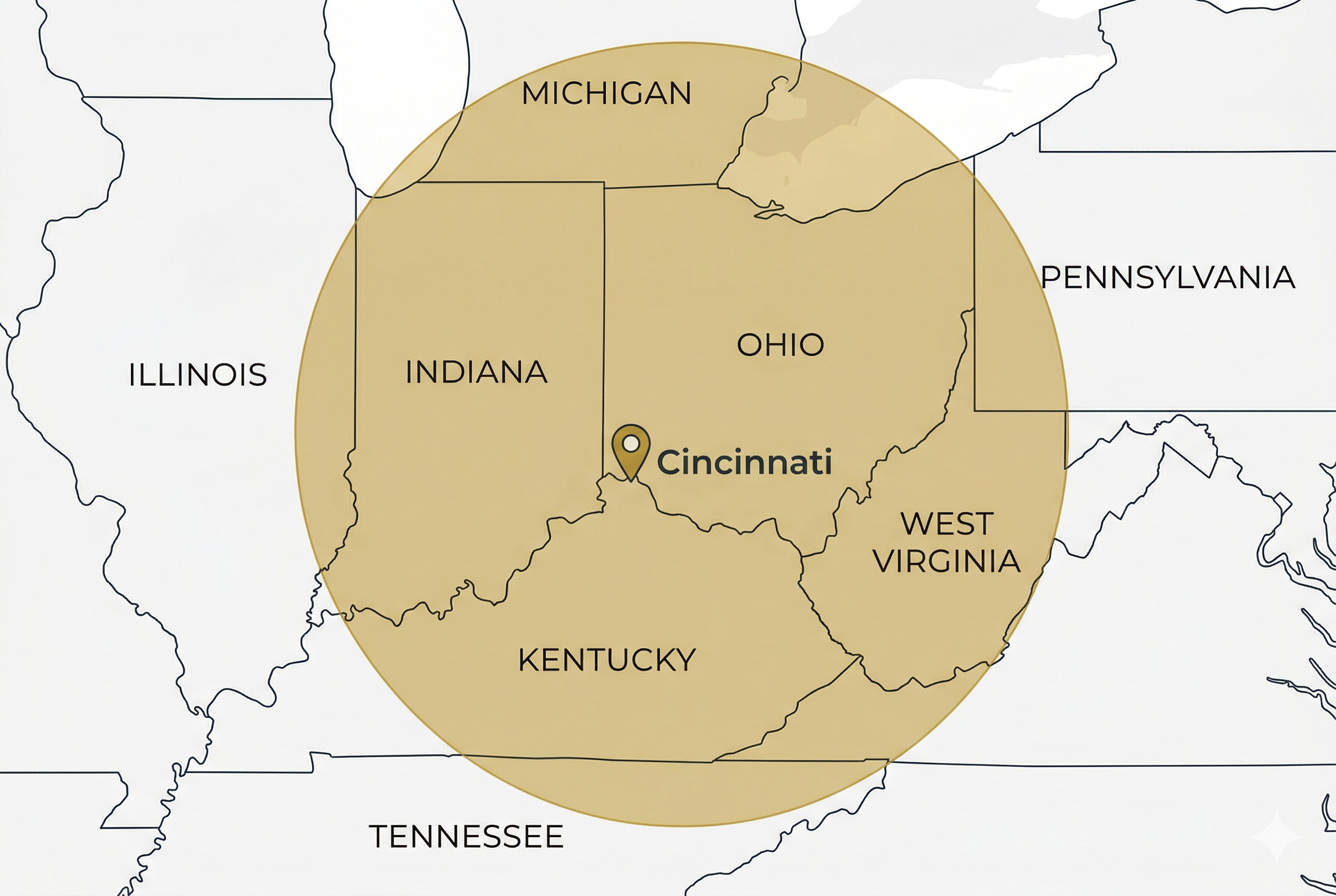
Do Not Wait. Contact an Indiana Title IX Attorney Now.
The window to build your defense at any Indiana university is the investigation phase, not the hearing. By the time the Hearing Officer or Hearing Panel convenes the hearing, the record is largely closed. Every interview, every evidence-review response, every investigation-report response, every objection on the record matters. If you have been notified of a Title IX matter at an Indiana university, retain an experienced Indiana Title IX lawyer today, and protect your record before the campus investigation closes.
Call (513) 540-0450 – Free Consultation
Indiana students and faculty: free consultation, flat fee, no payment plans on the back end. Mark answers his own phone.