
University of Tennessee Title IX Attorney: Defense for Students and Faculty
Experienced Title IX defense for University of Tennessee students, faculty, and staff. Former prosecutor. Hundreds of sex crime cases handled.
Call (513) 540-0450 – Free Consultation
If you are a University of Tennessee student, faculty member, or staff member facing a Title IX complaint, the next 65 business days will move faster than you expect. Hiring a University of Tennessee Title IX attorney early is the single biggest factor in how the case unfolds. UT’s Office of Investigation and Resolution will assign an investigator within days of the Formal Complaint. You will be summoned to interviews. You will be given ten business days to respond to a written investigative report. Then a single trained Title IX Hearing Officer, not a panel, will decide responsibility and sanction in a live hearing where only your advisor (not you) may ask questions of the complainant and the witnesses.
Mark Wieczorek is a former Hamilton County prosecutor who now defends students, faculty, and coaches accused of sexual misconduct at Midwest and Southeastern universities, including UT. As a University of Tennessee Title IX lawyer, his job is to put the same procedural pressure on UT’s Office of Investigation and Resolution that the office’s own investigators put on you, and to do it before the hearing officer is appointed, not after.
There is one thing about Tennessee Title IX defense that is true at no other state where Mark practices, and most respondents and most parents who call have never heard of it: Tennessee Code Annotated section 24-7-102. We will get to it below. It is the most important statute in your defense, and whether you trigger its protection or not is decided in the first phone call you make.
UT’s Title IX Process Is Built to Move on UT’s Schedule
The University of Tennessee, Knoxville’s “Policy on Sexual Harassment, Sexual Assault, Dating and Domestic Violence, and Stalking” (effective August 18, 2025) controls every Title IX matter on the Knoxville campus. Title IX Coordinator Ashley Blamey, located at 1817 Melrose Avenue in Knoxville, oversees intake. The Office of Investigation and Resolution (OIR) at oir.utk.edu handles the investigative phase. The Office of Student Conduct and Community Standards (SCCS) handles the hearing logistics and sanctions enforcement.
Once a Formal Complaint is filed, UT’s Policy targets sixty-five business days to complete the investigation. That is not a hard cap, but it is the schedule the OIR investigators work to. Within those 65 days a designated investigator (never the Title IX Coordinator) interviews both parties and any witnesses they identify, gathers evidence, and produces an investigative report. Both parties get ten business days to inspect the evidence and submit a written response, which the investigator considers before finalizing the report. The investigator then sends the final report to each party and each party’s advisor. Each party has another ten business days to make a written response to the final report, and no hearing takes place until that ten-day window closes, even if a party responds early.
The Single Title IX Hearing Officer Model
UT does not use a panel. UT’s 2025 to 2026 Policy assigns Title IX Prohibited Conduct cases to a single trained Title IX Hearing Officer. Under federal Title IX regulations (34 C.F.R. section 106.6(h)), the federal Title IX procedure preempts the Tennessee Uniform Administrative Procedures Act for Title IX matters. That means UT’s Title IX Hearing is a federal Title IX proceeding, not a state administrative law contested case, and one trained hearing officer carries the full decisional weight from initial determination of responsibility through sanction.
The single decision-maker model is the same procedural posture as Ohio State and Penn State (single decision-maker, no panel). It is structurally different from Miami University’s three-member Community Standards Board, Xavier University’s three-member panel, and West Virginia University’s appointed Decision-Maker who works with a separate sanctioning officer. The procedural significance is that a UT respondent’s advisor is not splitting attention across three panel members during cross-examination. Every question, every objection, every credibility moment lands on one person. That concentrates strategy considerably.
Cross-Examination by Advisor Only
UT’s Policy is explicit: “In a Title IX Hearing, the advisor, and not the party, must ask the other party and any witnesses all relevant questions and follow-up questions.” There is no right of self-representation at a UT Title IX hearing. The advisor cross-examines the complainant, every witness, and the investigator. The hearing officer rules on relevance question by question before any witness answers, and irrelevant questions are not answered.
This single procedural fact, the requirement that an advisor and only an advisor cross-examines, is the most important reason to retain experienced counsel before the investigation ends rather than after. The advisor at the hearing should not be meeting the case for the first time on hearing day. Cross-examination strategy, witness preparation, relevance theory, and the thirty to seventy questions that actually matter are built during the investigation phase, not after the hearing officer is appointed.
Sanctions and the Vice Chancellor Appeal
The Title IX Hearing Officer issues a written Notice of Decision, with a finding by preponderance of the evidence and a sanction, within ten business days of the conclusion of the hearing. For student respondents, the sanction range under UT’s Standards of Conduct spans the full institutional spectrum: warning, formal probation, deferred suspension, suspension (definite or indefinite term), expulsion, transcript notation, residence-hall removal, no-contact directives, mandatory counseling or education, restitution, and revocation of degree if the conduct is discovered after graduation. For faculty respondents, sanctions can include written reprimand, suspension without pay, denial of merit increase, denial or revocation of tenure, and termination of employment.
Either party may appeal the decision to the Vice Chancellor for Student Life. The non-appealing party has five business days from receiving notice of the appeal to file a written response. The Vice Chancellor issues a final written decision within five business days of receipt of the written statements. From Notice of Decision to final appeal decision can be as fast as fifteen business days. The appeal grounds are limited to those mandated by the federal Title IX regulations: procedural irregularity affecting the outcome, new evidence not reasonably available at the time of the determination, conflict of interest or bias by the Title IX Coordinator, investigator, or hearing officer, and (for student respondents only) sanctions outside the range. Building the record for grounds two and three has to start during the investigation, not after the hearing officer decides. By appeal time the record is closed.
Call (513) 540-0450 – Free Consultation
The Statute Most UT Respondents Have Never Heard Of: T.C.A. § 24-7-102
Tennessee Code Annotated section 24-7-102 is buried in the Tennessee evidence code, not in the higher-education code, and it does something no other state’s law does for Title IX respondents at a public university. It says, in plain language, that any written or oral statement a party gives in a student disciplinary proceeding concerning sexual misconduct cannot be admitted in a later civil or criminal trial, hearing, or proceeding for any purpose, and cannot be used for impeachment, without the party’s informed and written consent, IF the statement was made in a disciplinary proceeding in which the party did not have the active assistance of counsel.
Read that sentence twice. The shield runs in only one direction. If you give a statement to a UT Title IX investigator and you have active assistance of counsel during the proceeding, your statement cannot be turned around and used against you in a parallel civil suit or in a Knox County criminal case without your written consent. If you give a statement to a UT investigator and you do not have active assistance of counsel, your statement is fair game later. UT’s investigator can be subpoenaed in a later civil deposition or called as a witness in a later criminal trial, and what you said in the disciplinary process can be replayed verbatim. The statute exists to encourage UT respondents to participate fully in the disciplinary process without sacrificing their criminal-case rights, but only if they retain counsel.
Most UT Title IX respondents and almost every parent who calls about a UT matter have never heard of section 24-7-102. UT’s Title IX policy does not cite it. The OIR will not raise it. UT’s training materials do not mention it. Section 24-7-102 specifically requires active assistance of counsel during the proceeding for the shield to attach. The statute is precise: counsel means an attorney, not a parent, not a faculty mentor, not a non-attorney support person. Anyone less than counsel is not enough to trigger the protection. The shield is the single biggest reason to call a Tennessee Title IX attorney before the first interview, not after the hearing notice arrives.
In practice, the statute changes the calculus on every difficult Title IX defense decision: whether to participate in the OIR interview, whether to write a written response to the investigative report, whether to cross-examine on issues that overlap with conduct under criminal investigation in Knoxville. With section 24-7-102 protection, full participation in the UT process does not blow up a parallel criminal defense. Without section 24-7-102 protection, every word a respondent says in the OIR process is potentially evidence in a Knox County prosecution.
This statute is unique to Tennessee. No equivalent exists in Ohio, Michigan, Indiana, Illinois, Pennsylvania, or West Virginia. Mark Wieczorek’s Tennessee Title IX practice is built around it.
Why UT Has Every Reputational Incentive to Impose Maximum Sanctions
On July 5, 2016, the University of Tennessee paid $2.48 million to settle a Title IX lawsuit brought by eight female students who alleged that UT’s athletics department and administration had created what their complaint called a hostile sexual environment, that UT had interfered with the disciplinary process to favor male athletes accused of sexual assault, and that UT had failed to investigate and remediate sexual assault on campus. The University’s lawyers said publicly that UT settled to avoid up to $5.5 million in further litigation costs. The Athletics Department and the Central Administration split the settlement payment equally. UT President Joe DiPietro announced an independent commission to review existing Title IX programs and recommend reforms.
That settlement is not ancient history. It is the institutional memory inside Andy Holt Tower and the OIR’s training materials, and it is the reason the modern OIR exists at oir.utk.edu as a freestanding office rather than as a function of the Title IX Coordinator’s office. Every OIR investigator, every Title IX Hearing Officer, every Vice Chancellor for Student Life who decides a UT Title IX appeal understands that UT will pay an enormous public price if a matter is decided in a way that looks like the school protected an accused student or accused employee, especially an accused athlete. That posture matters in your case. Investigators do not credit ambiguity in the respondent’s favor. Hearing officers do not split close calls toward not responsible. Appeal officers do not reverse on procedural close calls.
The institutional lesson UT took from the 2016 settlement is over-prosecute. That is the operating environment your Title IX defense has to overcome. A University of Tennessee Title IX attorney who has not absorbed this background will walk in expecting normal civil due-process intuition to apply. It does not.
The Sixth Circuit’s Due Process Standard Cuts in Your Favor
The University of Tennessee, Knoxville sits in the Eastern District of Tennessee, federal venue for the United States Court of Appeals for the Sixth Circuit. That is the same federal circuit as Cincinnati, Ohio State, the University of Cincinnati, and the University of Michigan. The Sixth Circuit is one of the most accused-student-favorable circuits in the federal system on Title IX procedural due process, and the controlling Sixth Circuit precedent applies directly to UT.
The marquee Sixth Circuit case is Doe v. Baum, 903 F.3d 575 (6th Cir. 2018). The Sixth Circuit held that when a public university’s disciplinary case turns on credibility, the university must give the accused student or his agent the opportunity to cross-examine the accuser and adverse witnesses in the presence of the decision-maker. Doe v. Baum is the case that locked in the live-hearing-and-cross-examination requirement for public universities in this circuit and is binding precedent for the University of Tennessee. Every procedural shortcut by an OIR investigator that limits cross-examination, that prevents the respondent’s advisor from probing a credibility-determinative point, or that excludes a relevant witness on weak grounds is potentially a Doe v. Baum violation.
The companion Sixth Circuit case is Doe v. Miami University, 882 F.3d 579 (6th Cir. 2018). Miami University held that an accused student stating a Title IX claim need only allege facts supporting a plausible inference that the school discriminated on the basis of sex. The Sixth Circuit explicitly declined to require respondents to plead the harder “erroneous outcome” theory at the pleadings stage. Miami University and Baum together are the two most accused-respondent-favorable opinions any circuit issued in the post-2014 Title IX wave.
What this means in practice: every procedural shortcut by a UT Office of Investigation and Resolution investigator (an undisclosed bias, a witness interview the respondent’s advisor never had access to, a relevance ruling that prevented cross-examination on a credibility-determinative point) is potentially a federal claim under Baum, and a Section 1983 due-process claim against the public University on top of the Title IX claim. The investigation file you build during the OIR process is the same record you would use in federal court in Knoxville if the hearing officer decides against you and the Vice Chancellor affirms.
What Cross-Examination at UT Looks Like When It Is Done Right
The advisor’s cross-examination at the UT Title IX Hearing is the single most consequential moment in the entire process. The hearing officer rules on each question’s relevance before the witness answers. Cross has to be planned question by question, with relevance theory built in, before the hearing convenes. Open-ended questions get blocked. Compound questions get blocked. Questions outside the scope of the investigation report get blocked. A skilled University of Tennessee Title IX lawyer prepares this cross-examination during the investigation phase, weeks before the hearing officer is appointed.
The strongest cross-examinations at UT Title IX hearings work on three axes: credibility (consistency between the complainant’s earlier statements and hearing testimony), corroboration (whether documentary or third-party evidence backs or undermines the complainant’s account), and process (whether the OIR investigator complied with UT’s own Policy and Appendix C in gathering evidence and interviewing witnesses). The third axis is the one most often underused. Investigators are human and UT’s Policy is dense. Process violations preserved on the record become appeal grounds and federal claims under Doe v. Baum.
A University of Tennessee Title IX attorney who has cross-examined at single-decision-maker Title IX hearings before knows how a Title IX Hearing Officer reacts to certain question patterns, where the relevance line tends to fall, and which procedural objections move the needle. That experience compounds across cases.
Why a Cincinnati-Based Title IX Attorney for a UT Matter
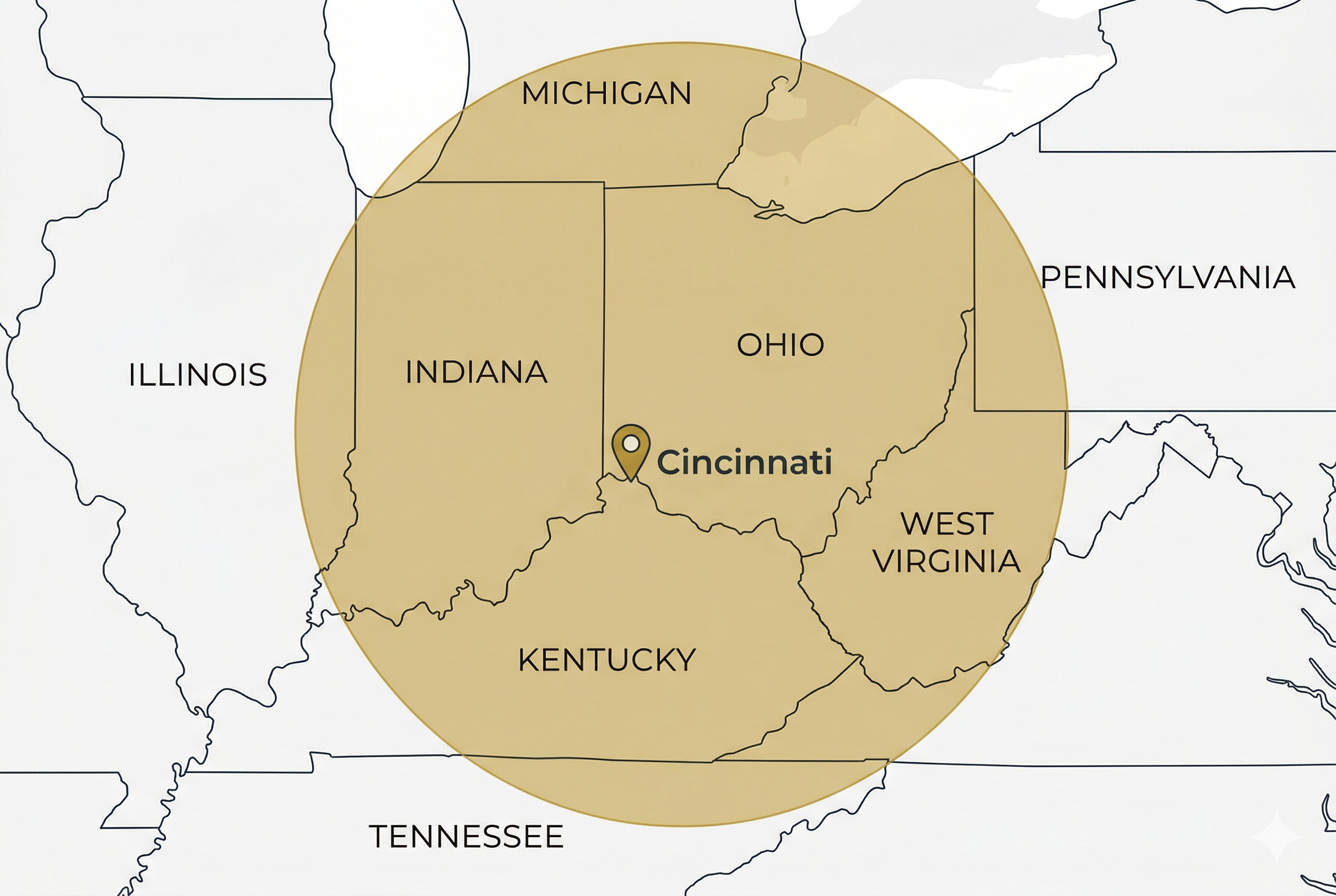
Mark Wieczorek practices Title IX defense across the Midwest and Southeast from his Cincinnati office. Knoxville is roughly 340 miles south, a five-and-a-half-hour drive Mark and his investigative team make regularly for Sixth Circuit Title IX matters. Most of the OIR process happens in writing and on secure video platforms, not in person. Investigation interviews can be conducted remotely. Document production runs through OIR’s secure platform. The single in-person event that matters is the hearing itself.
Mark’s Title IX defense practice is built on his prosecutorial background. As a former Hamilton County prosecutor, he learned the investigator’s playbook from inside the system: how investigators frame questions to lock in answers, how they sequence interviews to corner accused parties, how they build a record that survives appellate review. He uses the same playbook in reverse for the defense. UT’s investigative report is the document where most cases are won or lost, and the ten-day response window is where Mark does the most damaging work.
Mark works the OIR process the way he worked criminal investigations as a prosecutor. Build the record early. Pin down witness inconsistencies. Demand procedural compliance from the investigator. Treat the response window on the investigative report as the most important deadline of the case. UT students and faculty who retain Mark get a University of Tennessee Title IX attorney whose strategy was built around their facts, not a generic Title IX template, and whose strategy is also built around T.C.A. § 24-7-102 from the first phone call.
Call (513) 540-0450 – Free Consultation
Mark Wieczorek’s Title IX Case Results
Below are real Title IX matters Mark has defended across the Midwest, for students and faculty facing the same kind of allegations you’re navigating right now. They’re a look at what’s possible when the defense is built right from day one.
- University of Dayton, faculty respondent. Represented a tenured professor in a Title IX matter. Case dismissed. Tenure retained.
- University of Cincinnati, student respondent. Represented an undergraduate accused of sexual misconduct. Found not responsible after full ARC hearing.
- University of Cincinnati, student respondent. Represented an undergraduate in a separate Title IX matter. Charges dismissed during investigation phase.
- Miami University, fraternity matter. Represented an individual charged with Title IX sexual assault and hazing as part of a fraternity matter where over 20 individuals faced charges. Following full hearing, client found not individually responsible and all felony charges dismissed.
Disclaimer: The above case results are not a guarantee, warranty, or prediction regarding the outcome of your case. Past results afford no guarantee of future results. Every case is different and must be judged on its own merits.
Frequently Asked Questions
Does my Title IX advisor at the University of Tennessee have to be an attorney?
No. UT’s 2025 to 2026 Title IX Policy expressly states that a party’s advisor “may be, but is not required to be, an attorney.” Most respondents who retain a University of Tennessee Title IX attorney do so because the UT Title IX Hearing requires the advisor (not the party) to ask all relevant questions of the other party and witnesses, and that cross-examination is where the case is decided. There is also a second reason that is unique to Tennessee: T.C.A. § 24-7-102 only shields a respondent’s disciplinary statements from later civil or criminal use if the respondent had active assistance of counsel during the proceeding.
What does Tennessee Code 24-7-102 do for me at a UT Title IX hearing?
T.C.A. § 24-7-102 makes any written or oral statement you give in a UT student disciplinary proceeding concerning sexual misconduct inadmissible in a later civil or criminal trial, hearing, or proceeding (and unusable for impeachment), without your written consent, but only if you had active assistance of counsel during the disciplinary proceeding. If you participate in the OIR process without counsel, your statements to UT investigators can be used against you in a parallel Knox County criminal case or a later civil suit. The statute is not in UT’s Title IX Policy. The OIR will not raise it. Whether it protects you is decided by who is on the phone with you before your first interview.
How long does a University of Tennessee Title IX investigation take?
UT’s 2025 to 2026 Title IX Policy targets sixty-five business days for the investigation phase. Each party gets ten business days to respond to the evidence during the investigation, and another ten business days to respond to the final investigative report before the hearing. The hearing officer issues a Notice of Decision within ten business days of the conclusion of the hearing. The Vice Chancellor for Student Life decides any appeal within five business days of receiving the parties’ written statements. From Formal Complaint to final appeal decision typically runs four to six months.
What is the standard of evidence at a UT Title IX hearing?
Preponderance of the evidence, the lower civil standard. UT’s Policy defines this as whether it is more likely than not that the respondent violated the Code by engaging in Prohibited Conduct. This is the same standard most universities use post-2024 Title IX regulations.
Can I bring an attorney to my UT Title IX investigation interview?
Yes. UT’s 2025 to 2026 Title IX Policy permits an advisor (who may be an attorney) to be present at every meeting, every investigative interview, and every hearing. The Policy is explicit that the advisor’s presence at all stages of the disciplinary proceeding is a respondent’s right. The advisor may consult quietly with the party during the interview, but only the party answers the investigator’s questions. Cross-examination of witnesses and the investigator is reserved for the live hearing, where only the advisor (not the party) may ask questions.
What appeals are available after a UT Title IX finding?
The Vice Chancellor for Student Life decides Title IX appeals at UT. Both parties may submit written statements in support of or in opposition to the decision within five business days of notice that the other party filed a Notice of Appeal. The Vice Chancellor issues a final written decision within five business days of receipt of those statements. Appeal grounds are narrow and limited to those mandated by the federal Title IX regulations: procedural irregularity affecting outcome, new evidence not reasonably available at the time of determination, conflict of interest or bias by the Title IX Coordinator or investigators or hearing officer, and (for student respondents only) sanctions outside the range.
Title IX Defense at Other Midwest Universities
Mark Wieczorek defends Title IX matters across the Midwest and Southeast. Related practice areas at other universities: University of Cincinnati Title IX defense, Ohio State University Title IX defense, University of Dayton Title IX defense, Miami University Title IX defense, Xavier University Title IX defense, University of Louisville Title IX defense, Indiana University Title IX defense, University of Illinois Title IX defense, Ohio University Title IX defense, University of Michigan Title IX defense, Purdue University Title IX defense, Michigan State University Title IX defense, Penn State University Title IX defense, West Virginia University Title IX defense, Vanderbilt University Title IX defense.
For an overview of Mark’s work across the Midwest, see Title IX defense practice.
If you need a University of Tennessee Title IX lawyer who knows UT Knoxville’s Office of Investigation and Resolution process, the single Title IX Hearing Officer hearing model, and how T.C.A. § 24-7-102 protection attaches when a respondent is represented during the disciplinary proceeding, Mark Wieczorek’s prosecutorial background and UT-specific case strategy is the difference between a stacked process and a fair one.
Do Not Wait. Contact a University of Tennessee Title IX Attorney Now.
The window to build your defense at UT is the investigation phase, not the hearing. By the time the Title IX Hearing Officer convenes the hearing, the record is largely closed. Every interview, every document response, every objection on the record matters. T.C.A. § 24-7-102 protection turns on whether you had counsel during the proceeding, which means it turns on whether you call before the first interview or after. If you have been notified of a Title IX investigation at UT, retain experienced Title IX defense counsel today.
Call (513) 540-0450 – Free Consultation
University of Tennessee students and faculty: free consultation, flat fee, no payment plans on the back end. Mark answers his own phone.