
Wayne State University Title IX Attorney: Defense for Detroit Students and Faculty
Experienced Title IX defense for Wayne State students, faculty, and staff. Former prosecutor. Hundreds of sex crime cases handled.
Call (513) 540-0450 – Free Consultation
If you are a Wayne State student, faculty member, or graduate or professional student facing a Title IX complaint, the next ninety days will move faster than you expect. Hiring a Wayne State Title IX attorney early is the single biggest factor in how the case unfolds. Wayne State’s Office of Equal Opportunity will assign an investigator within days of the formal complaint. You will be summoned to interviews. You will be given the opportunity to review the evidence before the investigative report is finalized and again before the live hearing. Then a decision-maker, or in some cases a panel of decision-makers, will rule on responsibility and sanction in a live hearing where only your advisor (not you) may ask questions of the complainant and the witnesses.
Mark Wieczorek is a former Hamilton County prosecutor who defends students, faculty, and coaches accused of sexual misconduct at Midwest universities, including Wayne State University. As a Wayne State University Title IX lawyer, his job is to put the same procedural pressure on the Office of Equal Opportunity that the office’s own investigators put on you, and to do it before the decision-maker is appointed, not after.
There is one thing about Wayne State’s Title IX process that is true at no other major Michigan public university where Mark practices, and most respondents and most parents calling about a Wayne State matter have never been told: the Title IX policy under which you will be investigated, heard, and judged is an Interim policy that was last substantively revised in September 2022, and its language does not specify whether your hearing will be decided by a single hearing officer or by a panel. We will get to what that means for your defense below. It is the most important procedural fact a Wayne State respondent can know walking into the process, and it shapes every strategic decision an experienced Title IX attorney will make on your behalf.
Wayne State’s Title IX Process Runs on Wayne State’s Interim Policy
Wayne State University’s Interim Title IX Sexual Misconduct Policy and Procedures, codified as Policy 10.13 in the University’s Administrative Policies and Procedures Manual, controls every Title IX matter at Wayne State. The policy was issued effective August 14, 2020, in response to the federal Title IX final rule of that year. It was last substantively revised on September 19, 2022. Through the August 2024 final Title IX rule, the January 9, 2025 federal court vacatur of that rule, and the federal Office for Civil Rights’ return to enforcing the 2020 rule, Wayne State has continued to operate under the same Interim policy, with no comprehensive rewrite reflected in the policy text.
The Office of Equal Opportunity, located at 656 W. Kirby Street, Suite 4249, in the Faculty Administration Building on Wayne State’s Detroit campus, administers the Title IX process. Reports can be filed by phone at (313) 577-9999, by email at titleix@wayne.edu, or through the Office’s online reporting portal at titleix.wayne.edu. Brandy Banks serves as the Title IX Coordinator and Director of the Office of Equal Opportunity. The Office reports through Wayne State’s General Counsel structure, and questions about policy interpretation, jurisdiction, and procedure are coordinated with Wayne State’s general counsel before responses are issued.
Wayne State runs two parallel disciplinary tracks for sex-based and sexually-charged conduct, and which track a case lands on determines what an attorney can do. Federal Title IX matters that meet the regulatory definition of sexual harassment, sexual assault, dating violence, domestic violence, or stalking on the basis of sex are processed by the Office of Equal Opportunity under Policy 10.13. Other sex-related conduct that does not meet the federal Title IX jurisdictional definition (off-campus conduct that does not affect a Wayne State program or activity, conduct involving non-Wayne State complainants outside Wayne State’s program, or conduct that does not meet the severe-pervasive-and-objectively-offensive threshold) may be processed by the Dean of Students Office under the Student Code of Conduct or by Human Resources under the employee discipline framework. The page you are reading addresses the Office of Equal Opportunity Title IX track under Policy 10.13, where the Interim Policy expressly grants each party an advisor of choice.
The Investigation Phase
Once a formal complaint is accepted, the Office of Equal Opportunity assigns an investigator. The Interim Policy does not impose a fixed day-count on the investigation, but commits the Office to a reasonably prompt timeframe. In practice, Wayne State Title IX investigations typically run sixty to one hundred twenty calendar days from formal complaint to written determination. Within that window, the investigator interviews both parties, identifies and interviews witnesses each party proposes, gathers documentary evidence (text messages, emails, social media records, surveillance footage, third-party witness statements), and produces an investigative report.
Both parties have the opportunity to inspect the evidence and submit a written response before the investigative report is finalized. The advisor may help build that response, may attend every interview alongside the party, and may consult with the party in writing throughout. The advisor cannot communicate on behalf of the party outside the cross-examination at the hearing, and cannot insist that communications flow through the advisor, but the advisor can do every other thing an experienced Title IX attorney does during a federal investigation: prepare the party for interviews, build documentary records, identify witness blind spots in the investigator’s draft, and preserve procedural objections on the record.
Wayne State’s investigation phase is where most Title IX cases at the university are won or lost. By the time the case reaches the live hearing, the investigative report has set the factual record and the decision-maker is reading from that record. A Wayne State respondent who retains experienced counsel before the investigation closes has weeks to shape the record. A Wayne State respondent who waits until after the investigative report issues has days to react.
The Decision-Maker Question: Single Officer or Panel?
Wayne State’s Interim Policy is unusual among major Midwest Title IX policies in that it does not specify whether a Title IX hearing is decided by a single hearing officer or by a panel. The policy uses the phrase “decision-maker(s),” with the parenthetical plural, and provides only that the decision-maker (or decision-makers) cannot be the same person as the Title IX Coordinator or the investigator and shall issue a written determination after the live hearing. The structural call is left to administrative discretion at the time the hearing is convened.
Compare this to peer Midwest publics. Ball State University’s August 2025 Title IX Policy expressly designates a single hearing officer for every case under Section 7.3.1. The University of Notre Dame convenes a three-member Hearing Board for student respondents and a four-member Board for faculty respondents. Indiana University uses a three-person panel. Wayne State respondents do not know in advance which structure will apply to their case until the Office of Equal Opportunity makes the call.
The procedural significance is that defense preparation must account for both possibilities. Cross-examination strategy designed for a single hearing officer is not the same as cross-examination strategy designed for a three-person panel. The relevance objections that move a single decision-maker are different from the objections that move three. An experienced Wayne State Title IX lawyer will press for early disclosure of the structural decision and will prepare the cross examination for whichever model the Office of Equal Opportunity selects, while preserving on the record any procedural objection to the late or undisclosed structural choice.
Cross-Examination by Advisor Only at the Live Hearing
At the live hearing, Wayne State’s Interim Policy follows the federal cross-examination model. Cross-examination is conducted “directly, orally, and in real time by the party’s advisor of choice and never by a party personally.” A party who walks into the hearing without experienced counsel is a party whose credibility-determinative questions never get asked, because Wayne State’s Policy assigns the cross to the advisor and does not allow the party to step into that role.
The decision-maker rules on each cross-examination question’s relevance before the witness answers, and must “explain any decision to exclude” a question. Open-ended questions that lack relevance grounding get blocked. Compound questions get blocked. Questions outside the scope of the investigative report get blocked. Cross-examination must be planned question by question, with relevance theory built in, before the hearing convenes.
The Interim Policy includes the federal rape shield protection: questions about a complainant’s sexual predisposition or prior sexual behavior are not relevant, except to prove that someone other than the respondent committed the alleged conduct or to prove prior consensual conduct between the respondent and the complainant. The decision-maker enforces those exclusions.
The Interim Policy also includes a respondent-protective refusal-to-submit provision: the decision-maker “cannot draw an inference about the determination regarding responsibility based solely on a party’s or witness’s absence from the live hearing or refusal to answer.” That language preserves a Wayne State respondent’s ability to decline to testify under oath at the hearing without converting the silence into a finding of responsibility.
Sanctions and the Presidential-Designee Appeal
After the live hearing, the decision-maker issues a written determination, finding by preponderance of the evidence whether a policy violation occurred and assigning sanctions. For student respondents, the sanction range runs from disciplinary warning and educational requirements through housing restrictions, no-contact orders, suspension, and expulsion with a permanent transcript notation. For faculty and staff respondents, sanctions can include written warning, training requirements, salary action, removal from leadership roles, suspension without pay, and termination, with tenure-process considerations applying to tenured faculty.
Either party has seven days from the determination to file a written appeal request. The Wayne State Interim Policy recognizes four grounds for appeal:
1. Procedural irregularity materially affecting the outcome.
2. New evidence not previously available.
3. Decision-maker bias or conflict of interest.
4. Mistake of applicable law or policy definitions.
The President or designee serves as the appeals officer and cannot be the original decision-maker, the investigator, or the Title IX Coordinator. The appeals officer decides within five days whether grounds are met and issues a written decision within fourteen days of completing the review.
The fourth appellate ground, mistake of applicable law or policy definitions, is the most strategically distinctive feature of Wayne State’s appeal procedure. Most peer Midwest universities limit appellate review to procedural irregularity, new evidence, decision-maker bias, and sometimes sanction severity. Wayne State expressly preserves an appellate path for respondents who can show that the decision-maker misapplied federal Title IX law or misapplied a policy definition. Given the regulatory churn since 2020 (the 2020 federal rule, the August 2024 final rule, the January 2025 vacatur, the OCR return to the 2020 framework), the federal-law-misapplication appellate space at Wayne State is meaningful, and an experienced Wayne State Title IX lawyer will build that record during the investigation and hearing phases so the appellate ground is preserved.
Call (513) 540-0450 – Free Consultation
Wayne State’s Federal Title IX Enforcement History: The School of Medicine and the OCR Resolution Agreement
Wayne State’s posture toward federal Title IX enforcement is unlike any other major Midwest university where Mark practices. The federal Office for Civil Rights’ Title IX attention at Wayne State has historically centered on the School of Medicine and on retaliation conduct, rather than on athletics-program disparities (Ball State), singular abuser scandals (Michigan State, Penn State, the University of Michigan), or athletic-department systemic failure (Vanderbilt). Wayne State respondents and their families should understand that institutional posture, because it shapes how the Office of Equal Opportunity responds to procedural pushback by the respondent.
In 2020, Wayne State entered into a voluntary Resolution Agreement with the federal Office for Civil Rights, docketed as OCR Resolution Agreement #15-18-2287. The Resolution Agreement required Wayne State to provide Title IX training, by a competent authority on Title IX, to all School of Medicine administrators and to the Title IX Coordinator. The required training had to address, at minimum, Title IX’s prohibition on retaliation against individuals who seek to assert their rights under Title IX. The Agreement set a completion deadline of November 6, 2020, and the University was obligated to document and report compliance to OCR.
A respondent at Wayne State today inherits the institutional consequence of that Resolution Agreement. The Title IX Coordinator and the School of Medicine administrators have been federally trained, and federally monitored, on the prohibition against retaliating against parties who assert Title IX rights. That posture cuts in two directions for the respondent. On one hand, it disciplines visible bad behavior by Office of Equal Opportunity staff, because OCR is watching. On the other hand, it raises the visibility of any respondent who pushes back on the process, because the Office’s response to that pushback also becomes a Title IX-monitored event. An experienced Wayne State Title IX attorney calibrates the procedural pressure to the institutional posture, preserving the respondent’s appellate and federal-court record without inviting an institutional overcorrection.
There is also a Wayne State-specific federal Title IX precedent that respondents should know: Varlesi v. Wayne State University, decided in the United States District Court for the Eastern District of Michigan. Varlesi is a federal Title IX deliberate-indifference case in which Wayne State was found liable to a student plaintiff under the Title IX framework and a substantial federal jury verdict was entered against the University. Varlesi is not a wrongful-discipline respondent case in the Doe v. Baum tradition, but it is direct evidence that Wayne State has lost a federal Title IX action in the same federal courthouse where a Title IX wrongful-discipline action by a respondent would be filed. Wayne State is not procedurally invulnerable to Title IX-respondent litigation; it has lost Title IX cases in its home federal court.
The Sixth Circuit’s Due Process Standard at Wayne State
Wayne State sits in Wayne County, Michigan, federal venue for the United States District Court for the Eastern District of Michigan, Detroit Division, and appellate venue for the United States Court of Appeals for the Sixth Circuit. The controlling Sixth Circuit Title IX due-process opinion is Doe v. Baum, 903 F.3d 575 (6th Cir. 2018). Doe v. Baum arose at the University of Michigan and is binding on every public Michigan university, including Wayne State.
The Sixth Circuit in Doe v. Baum held that “if a public university has to choose between competing narratives to resolve a case, the university must give the accused student or his agent an opportunity to cross-examine the accuser and adverse witnesses in the presence of a neutral fact-finder.” The court held that the cross-examination right is grounded in both the Fourteenth Amendment Due Process Clause and Title IX itself, and that the cross-examination must occur in the presence of a neutral fact-finder where credibility is the issue. The opinion vacated the district court’s dismissal and reinstated the John Doe plaintiff’s federal claims against the University of Michigan.
Doe v. Baum was extended in Doe v. Michigan State University (6th Cir. 2021), which held that Michigan State’s pre-Baum sexual misconduct procedures were constitutionally inadequate where credibility controlled. The Sixth Circuit returned again to the question in Doe v. University of Michigan, No. 22-1654 (6th Cir. 2023), which addressed mootness, ripeness, and standing in the context of accused students who had pursued federal claims while their University of Michigan disciplinary processes were ongoing. The aggregate of Sixth Circuit authority is the most respondent-protective federal cross-examination framework in the United States.
Wayne State, as a Michigan public university, is bound by Doe v. Baum. Every Wayne State Title IX respondent inherits the procedural protection the Sixth Circuit articulated in Doe v. Baum, regardless of whether the respondent personally tests the protection in federal court. Wayne State’s Interim Policy already provides for advisor-conducted cross-examination at the live hearing, which is the procedural reform Doe v. Baum required. The federal claim arises if the Office of Equal Opportunity fails to honor that procedural protection in practice (an undisclosed bias, a relevance ruling that prevents cross-examination on a credibility-determinative point, an evidentiary withholding, a decision-maker who is not in fact neutral). Building the record for that federal claim is the work of the investigation phase, not the appeal phase. By appeal time the record is closed.
What Cross-Examination at Wayne State Looks Like When It Is Done Right
The advisor’s cross-examination at the Wayne State Title IX hearing is the single most consequential moment in the entire process. The decision-maker rules on each question’s relevance before the witness answers and must explain any decision to exclude on the record. Cross has to be planned question by question, with relevance theory built in, before the hearing convenes. Open-ended questions get blocked. Compound questions get blocked. Questions outside the scope of the investigative report get blocked. A skilled Wayne State Title IX attorney prepares the cross-examination during the investigation phase, weeks before the hearing.
The strongest cross-examinations at Wayne State Title IX hearings work on three axes. Credibility cross focuses on consistency between the complainant’s earlier statements (initial report, investigation interview, evidence-review submissions) and hearing testimony. Corroboration cross focuses on whether documentary or third-party evidence backs or undermines the complainant’s account, and whether the investigator’s report actually engaged that evidence. Process cross focuses on whether the Office of Equal Opportunity investigator complied with Wayne State’s own Interim Policy and the federal Title IX regulations in gathering evidence, providing required notices, and interviewing witnesses. The third axis is the one most often underused at Wayne State specifically, because Policy 10.13 is dense, the Interim label has invited inconsistent application, and the Office of Equal Opportunity investigators do not always follow the policy precisely. Process violations preserved on the record become appeal grounds (under appellate ground one or four) and federal claims under Doe v. Baum.
A Wayne State Title IX lawyer who has cross-examined under the federal advisor-only cross model knows how a Sixth Circuit decision-maker reacts to certain question patterns, where the relevance line tends to fall, and which procedural objections move the needle. That experience compounds across cases.
Wayne State Law Students, Medical Students, and Other Professional Pipeline Respondents
A Title IX matter at Wayne State carries different consequences for different populations of Wayne State students. For Wayne State Law students, a Title IX finding triggers character-and-fitness disclosure obligations to every state bar to which the student will eventually apply. The Michigan State Bar character-and-fitness application asks specifically about university disciplinary findings. Other state bars ask the same question. A finding of responsibility on a Wayne State Title IX complaint, even a finding that does not result in suspension or expulsion, is a disclosable event that triggers a character-and-fitness investigation by every bar to which the student applies.
For Wayne State School of Medicine students, the same dynamic applies on the medical-licensure side. State medical licensure boards request and review university disciplinary findings as part of the licensure investigation. The American Association of Medical Colleges’ Medical Student Performance Evaluation, which is used in residency placement, includes professional and disciplinary information from the dean of students’ office. A Title IX finding in medical school can affect residency match outcomes, fellowship eligibility, and ultimately licensure.
For Wayne State graduate students in pharmacy, nursing, social work, and education, the same character-and-fitness exposure runs through state professional licensure boards. For Wayne State Ph.D. candidates, the Title IX finding is a permanent academic-record event that follows the candidate through faculty hiring, tenure review, and grant disclosure obligations.
A Wayne State Title IX attorney representing a respondent in any of these professional pipeline programs is defending more than the immediate disciplinary outcome. The strategic objective is to control the record for the downstream professional consequence. The same procedural objections that preserve a federal-court record under Doe v. Baum also produce the documentary record that a state bar character-and-fitness committee, a medical licensure board, or a residency program will read years later. Mark’s defense strategy at Wayne State accounts for both timelines.
Why a Cincinnati-Based Title IX Attorney for a Wayne State Matter
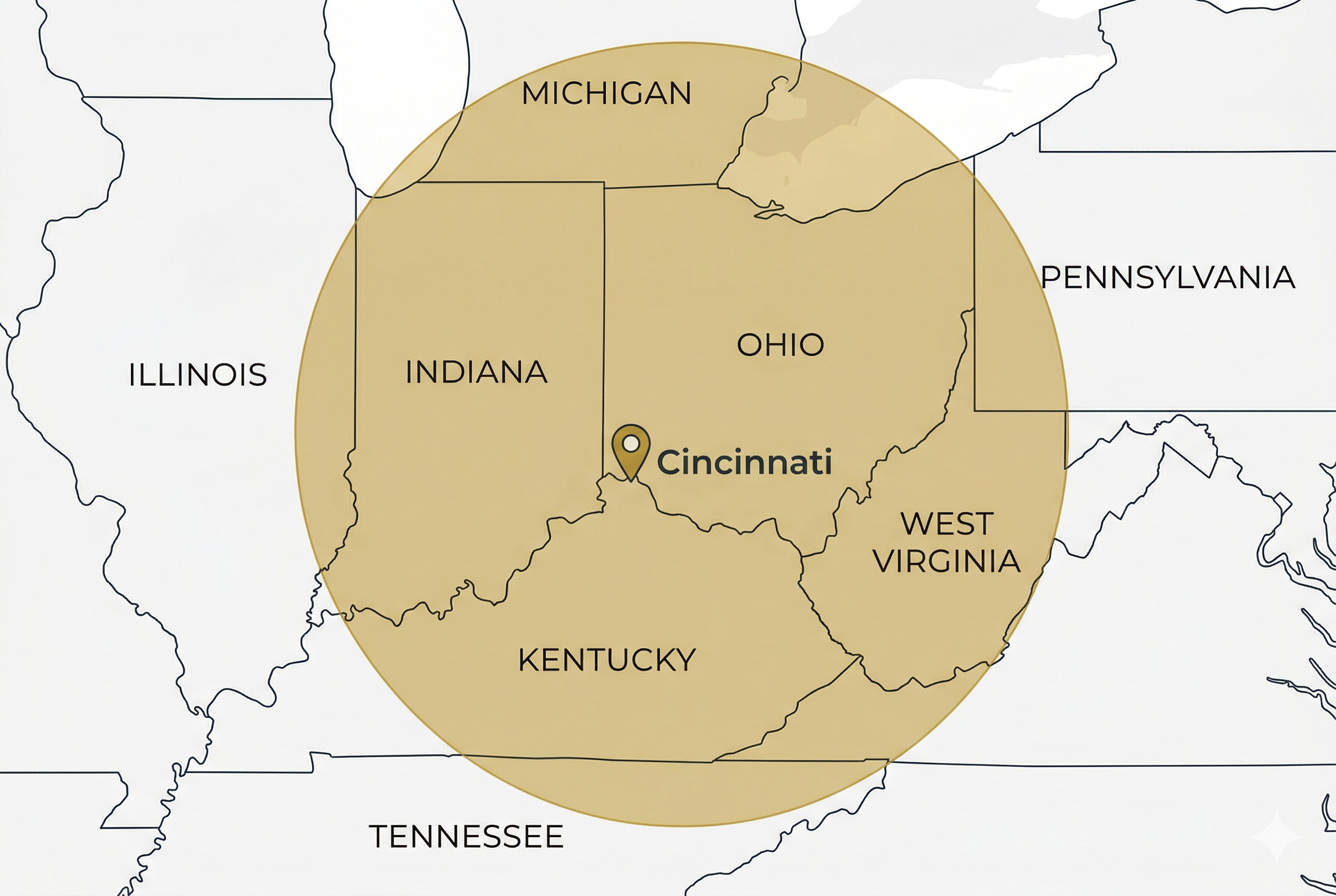
Mark Wieczorek practices Title IX defense across the Midwest from his Cincinnati office. Detroit is roughly two hundred fifty miles north, a four-hour drive Mark and his investigative team make regularly for Sixth Circuit Title IX matters at Wayne State, the University of Michigan, Michigan State, the University of Cincinnati, Ohio State, the University of Dayton, Xavier, and Vanderbilt. Most of the Wayne State Title IX process happens in writing and on secure video platforms, not in person. Investigation interviews can be conducted remotely. Document production runs through the Office of Equal Opportunity’s secure portal. The live hearing has been conducted virtually for some recent Wayne State matters at the University’s option.
Mark’s Title IX defense practice is built on his prosecutorial background. As a former Hamilton County prosecutor, he learned the investigator’s playbook from inside the system: how investigators frame questions to lock in answers, how they sequence interviews to corner accused parties, how they build a record that survives appellate review. He uses the same playbook in reverse for the defense. Wayne State’s investigative report is the document where most cases are won or lost, and the evidence-review window is where Mark does the most consequential work.
Mark works the Office of Equal Opportunity process the way he worked criminal investigations as a prosecutor. Build the record early. Pin down witness inconsistencies. Demand procedural compliance from the investigator. Treat the response window on the investigative report as the most important deadline of the case. Wayne State students, faculty, and professional-pipeline respondents who retain Mark get a Wayne State University Title IX attorney whose strategy is built around their facts and around the Sixth Circuit framework that controls every Wayne State Title IX matter.
Call (513) 540-0450 – Free Consultation
Mark Wieczorek’s Title IX Case Results
Below are real Title IX matters Mark has defended across the Midwest, for students and faculty facing the same kind of allegations you’re navigating right now. They’re a look at what’s possible when the defense is built right from day one.
Mark’s Title IX practice spans Midwest universities. The case results below reflect outcomes for similarly situated student and faculty respondents across his Midwest practice. Past results do not guarantee future outcomes; every Title IX matter turns on the facts of that case and the procedural posture of that institution.
- University of Dayton, faculty respondent. Represented a tenured professor in a Title IX matter. Case dismissed. Tenure retained.
- University of Cincinnati, student respondent. Represented an undergraduate accused of sexual misconduct. Found not responsible after full ARC hearing.
- University of Cincinnati, student respondent. Represented an undergraduate in a separate Title IX matter. Charges dismissed during investigation phase.
- Miami University, fraternity matter. Represented an individual charged with Title IX sexual assault and hazing as part of a fraternity matter where over twenty individuals faced charges. Following full hearing, client found not individually responsible and all felony charges dismissed.
Disclaimer: The above case results are not a guarantee, warranty, or prediction regarding the outcome of your case. Past results afford no guarantee of future results. Every case is different and must be judged on its own merits.
Frequently Asked Questions
Does my Title IX advisor at Wayne State have to be a Michigan attorney?
No. Wayne State’s Interim Title IX Sexual Misconduct Policy and Procedures (Policy 10.13) expressly permits each party to be accompanied by an advisor of choice, and Exhibit B clarifies that the advisor “may be, but is not required to be, an attorney.” The policy contains no Michigan-licensure requirement. Title IX is federal law, and an experienced Title IX attorney from outside Michigan can serve as advisor at Wayne State Title IX hearings on the same footing as a Michigan-licensed attorney.
What makes Wayne State’s Title IX process different from the University of Michigan or Michigan State?
Three things distinguish Wayne State. First, Wayne State still operates under an Interim Title IX policy that was last substantively revised in September 2022, while peer Michigan publics have rewritten their procedures multiple times in response to the August 2024 final rule and its January 2025 vacatur. Second, Wayne State’s policy does not specify whether a Title IX hearing is decided by a single hearing officer or by a panel, leaving the structure to administrative discretion at the time the hearing convenes. Third, Wayne State’s federal Title IX enforcement attention has historically centered on the School of Medicine and on retaliation conduct, under OCR Resolution Agreement #15-18-2287, rather than on athletics-program disparities, singular sexual abuse scandals, or athletic-department systemic failure.
How long does a Wayne State Title IX investigation take?
Wayne State’s Interim Policy does not impose a fixed day-count on the investigation phase; it commits the Office of Equal Opportunity to a reasonably prompt timeframe. In practice, Wayne State Title IX investigations typically run sixty to one hundred twenty calendar days from formal complaint to written determination, with appeals adding another three to five weeks. Each party has the opportunity to inspect and respond to the evidence before the investigative report is finalized and again before the live hearing convenes.
What is the standard of evidence at a Wayne State Title IX hearing?
Preponderance of the evidence. Wayne State’s Interim Policy defines preponderance as more likely than not, based on all the admissible evidence and reasonable inferences drawn from the evidence, that the respondent violated the policy as alleged. This is the same standard most universities apply under both the 2020 and 2024 federal Title IX regulations.
Can I bring an attorney to my Wayne State Title IX investigation interview?
Yes. Wayne State’s Interim Policy permits an advisor of choice (who may be an attorney) to accompany a party wherever the party is entitled to be present, including intake meetings, investigation interviews, evidence-review sessions, and the live hearing. The advisor may consult with the party privately during those proceedings. At the live hearing, the advisor (and only the advisor) conducts cross-examination of the other party and the witnesses, so retaining experienced counsel before the investigation closes is the single biggest factor in how the hearing unfolds.
What appeals are available after a Wayne State Title IX finding?
Either party has seven days from the determination to file a written appeal request. Wayne State’s Interim Policy recognizes four grounds for appeal: procedural irregularity materially affecting the outcome, new evidence not previously available, decision-maker bias or conflict of interest, and mistake of applicable law or policy definitions. The President or designee serves as the appeals officer and cannot be the original decision-maker, the investigator, or the Title IX Coordinator. The appeals officer decides within five days whether grounds are met and issues a written decision within fourteen days of completing the review. The fourth appellate ground, mistake of applicable law or policy definitions, is broader than the appellate sets at most peer Midwest institutions.
Title IX Defense at Other Midwest Universities
Mark Wieczorek defends Title IX matters across the Midwest. Related practice areas at other universities: University of Michigan Title IX defense, Michigan State University Title IX defense, University of Cincinnati Title IX defense, Ohio State University Title IX defense, University of Dayton Title IX defense, Xavier University Title IX defense, Vanderbilt University Title IX defense, University of Tennessee Title IX defense, Ohio University Title IX defense, Penn State University Title IX defense, University of Illinois Title IX defense.
For an overview of Mark’s work across the Midwest, see Title IX defense practice.
If you need a Wayne State University Title IX lawyer who knows the Office of Equal Opportunity process, the Interim Policy 10.13 framework, the undefined decision-maker structure, and the Sixth Circuit’s Doe v. Baum cross-examination right, Mark Wieczorek’s prosecutorial background and Wayne State-specific case strategy is the difference between a stacked process and a fair one.
Do Not Wait. Contact a Wayne State University Title IX Attorney Now.
The window to build your defense at Wayne State is the investigation phase, not the hearing. By the time the decision-maker convenes the live hearing, the record is largely closed. Every interview, every document response, every objection on the record matters. The evidence-review window before the investigative report finalizes is the last unrestricted opportunity for your advisor to shape the proceeding before the live-hearing advisor-only cross-examination rule kicks in. If you have been notified of a Title IX investigation at Wayne State, retain experienced Title IX defense counsel today.
Call (513) 540-0450 – Free Consultation
Wayne State students and faculty: free consultation, flat fee, no payment plans on the back end. Mark answers his own phone.