
Title IX Hearing Process: A Step-by-Step Guide
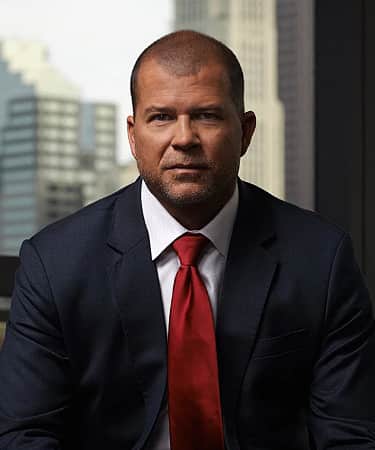
Experienced Title IX defense for students and faculty at Midwest universities. Former prosecutor. Hundreds of sex crime cases handled.
Call (513) 540-0450 – Free Consultation
If you are reading this, someone you love is likely facing a Title IX investigation. Maybe it is your son who got the email yesterday telling him he is under investigation for sexual misconduct. Maybe it is your child, whose name appeared in a complaint they did not see coming. Maybe it is you, a professor or coach told this morning that you have been placed on administrative leave pending an investigation. The first thing you need to know is that the process you are about to enter is unlike anything you have experienced before. The second thing you need to know is that what you do in the next 72 hours will shape the next several months of your life.
This guide walks you through the Title IX hearing process step by step, in plain language, so you understand what to expect and where the decisions that matter most actually get made. It is written by the team at The Wieczorek Law Firm, a Cincinnati-based criminal defense and Title IX defense practice serving students, faculty, coaches, and administrators at universities across the Midwest. If you want to talk to an attorney directly, call (513) 540-0450. The consultation is free.
What This Guide Covers
- What the notice of investigation actually means
- Step one: the investigation phase
- Step two: evidence review and why it matters
- Step three: how universities prepare for the hearing
- Step four: what actually happens at a Title IX hearing
- Cross-examination: the heart of your defense
- Step five: the decision-maker’s determination
- Sanctions: what universities can impose
- Step six: the appeals process
- When Title IX crosses with criminal investigation
- Finding the right Title IX defense attorney
- Frequently asked questions
Before the Process Begins: What the Notice Actually Means
The Title IX process starts with a written notice. The notice tells you that a formal complaint has been filed, identifies (in general terms) the allegations, and explains that an investigation will follow. The language is bureaucratic and easy to misread.
What it actually means is this: the university has already classified the situation as serious enough to enter formal proceedings. By the time you receive the notice, the Title IX Office has reviewed the complaint, decided it meets the threshold for an investigation, and begun documenting the matter. In many cases, the complainant has already been interviewed. The university has already started building a record.
The notice is also where the clock starts. Federal Title IX regulations under 34 CFR Part 106 establish specific timeframes the university must follow, but those timeframes also bind you. Response deadlines for evidence submission, witness lists, and interview scheduling typically run in business days, not calendar days, and they are tight.
The single most important sentence in the notice is the one most people skim past: the part that explains your right to an advisor of your choice, including an attorney. Most universities will tell you that you can be accompanied by an advisor. Few universities will tell you that the choice of advisor often determines the outcome of the case.
Campus-provided advisors are constrained by the university’s institutional interests. They are trained on the university’s procedures and are usually well-intentioned, but they are not your advocate in the way an experienced Title IX defense attorney is. Mark Wieczorek built his Title IX defense practice on this distinction. As a former prosecuting attorney who trained law enforcement on sexual assault investigations, he understands exactly how cases are constructed against accused students and faculty, and he knows where the pressure points are.
Speak With Mark Directly – (513) 540-0450
Step One: The Investigation Phase
After the notice, the university assigns an investigator. The investigator’s job is to gather evidence: interview the complainant, interview the respondent (that is you), interview witnesses, collect documents, review electronic communications, and request any physical evidence that may be relevant. The investigation phase typically runs 30 to 90 business days, although universities frequently extend it.
The investigator interview is one of the most consequential events in the entire process. It is also one of the most misunderstood. Most respondents walk in believing that if they simply tell the truth and explain themselves, the matter will resolve favorably. That assumption is the source of most damaging admissions in Title IX cases.
The investigator is not your friend. The investigator is not neutral in the way you imagine neutral to mean. The investigator is documenting what you say, comparing it against what others said, and looking for inconsistencies. Statements that feel natural and exculpatory in conversation can look devastating in a written report read months later by a decision-maker who never met you.
This is why preparation for the investigator interview matters more than almost anything else in the process. An experienced Title IX defense attorney will sit with you, review what you remember, identify which facts help you and which facts hurt you, anticipate the investigator’s questions, and prepare you to answer in a way that protects your interests while remaining truthful. That preparation is the difference between an interview that helps your case and an interview that becomes the centerpiece of the complaint against you.
Investigation procedures vary somewhat by university. Some institutions use single investigators; others use investigation teams. Some require all interviews to be recorded; others rely on the investigator’s notes. The specific procedural rules at your school matter, which is why we maintain detailed practice pages for the universities we serve most frequently across the Midwest. If you are facing an investigation at Ohio State University, Indiana University, University of Michigan, Penn State, University of Illinois, or any of the other schools listed at the end of this guide, the specific procedural details are worth understanding before your interview.
Step Two: Evidence Review and Why It Matters
Once the investigation concludes, the investigator produces a written report summarizing the evidence collected. Before the hearing, both parties have the right to review all evidence directly related to the allegations. This is required by federal Title IX regulations, and it is one of the most important procedural protections you have.
What this means in practice is that you and your advisor will receive the full investigative file, including witness statements, electronic communications, photographs, video, and any expert reports. You typically have 10 business days to respond, which means submitting your own written response, identifying inaccuracies, providing additional context, and flagging any evidence that the investigator should have included but did not.
The evidence review window is also where defense strategy crystallizes. An experienced Title IX defense attorney reading the investigative file is doing something very different from what you are doing. The attorney is identifying procedural irregularities, inconsistencies in witness statements, gaps in the timeline, evidence that was collected but not properly attributed, and any indication that the investigation deviated from the university’s own policy.
Those findings become the basis for your hearing strategy. They also become the basis for any future appeal. Procedural deficiencies identified during evidence review and properly documented in your written response create a record that can be cited later if the hearing produces an unfavorable outcome. Skipping this step or treating it as a formality is one of the most common mistakes accused respondents make.
Step Three: How Universities Prepare for the Hearing
In the weeks between evidence review and the hearing, both sides prepare. The university’s Title IX office prepares the case file for the decision-maker. The complainant typically works with their advisor (often a victim’s advocate or attorney) to prepare testimony and identify witnesses. The university prepares any witnesses it intends to call.
Your preparation should be more intensive than the university’s. An experienced Title IX defense attorney will take you through your own testimony multiple times, prepare you for direct and cross-examination, review every document you may need to reference, identify which witnesses to call and what they should be prepared to say, draft opening and closing statements, and anticipate every line of questioning the complainant’s advisor is likely to use.
Mock cross-examination is particularly important. Title IX hearings are adversarial proceedings with cross-examination rights established by federal Title IX regulations and reinforced in the Sixth Circuit by Doe v. Baum, 903 F.3d 575 (6th Cir. 2018). That ruling applies to public universities in Ohio, Michigan, Tennessee, and Kentucky and has shaped due process expectations at private institutions across the Midwest as well. If you are facing a hearing at University of Cincinnati, University of Michigan, University of Tennessee, or another school in the Sixth Circuit, the binding precedent on cross-examination is directly relevant to your defense.
Step Four: What Actually Happens at a Title IX Hearing
The hearing is the formal proceeding where the decision-maker hears testimony, reviews evidence, and reaches a determination on responsibility. Hearings typically last anywhere from four to twelve hours, depending on the complexity of the case and the number of witnesses. Some universities conduct hearings in a single day; others split them across multiple days.
The structure varies by institution. Some universities use a single hearing officer who serves as both decision-maker and process administrator. Ohio State, Purdue, and University of Tennessee follow this model. Others use three-person panels with faculty, staff, and sometimes student representatives. Indiana University, Penn State, and Miami University follow variations of the panel approach. A few institutions use external hearing officers contracted from outside the university entirely.
Regardless of structure, the hearing will follow a recognizable sequence. The university or hearing officer makes an opening statement explaining the procedure. The complainant presents their case, either personally or through their advisor, including direct testimony from the complainant and any witnesses. The respondent’s advisor (your attorney) then cross-examines the complainant and the university’s witnesses. The respondent presents their case, with direct testimony from you and from any witnesses you have called. The complainant’s advisor cross-examines you and your witnesses. Both sides offer closing statements. The decision-maker then deliberates, often in private over several days.
One critical detail: in most Title IX hearings, the respondent (you) cannot personally question the complainant. The cross-examination must be conducted by your advisor. This is one of the most important reasons to have an experienced attorney rather than a campus-provided advisor or a family friend with no Title IX experience. The cross-examination of the complainant is frequently the moment where the case is won or lost.
Cross-Examination: The Heart of Your Defense
Federal Title IX regulations and Sixth Circuit precedent guarantee the right of the respondent’s advisor to cross-examine the complainant and any adverse witnesses at the hearing. This is not a formality. It is, in many cases, the single most consequential moment in the entire process.
Effective Title IX cross-examination requires skills that are not learned in casual practice. The cross-examining attorney must know how to identify inconsistencies between the complainant’s hearing testimony and prior statements made during the investigation. The attorney must know how to handle hostile witnesses without appearing aggressive in a way that alienates the decision-maker. The attorney must know how to introduce documents, communications, and timelines that contradict or contextualize the complainant’s testimony, while staying within the bounds the hearing officer permits.
Mark Wieczorek’s prosecutorial background is directly relevant here. As a former prosecutor who spent years questioning witnesses in criminal trials, he developed a methodical approach to cross-examination that is uncommon in attorneys who have only worked on the defense side. Cross-examination in a Title IX hearing is not the same as criminal cross-examination, but the skills transfer in important ways: identifying inconsistencies, pacing questions to control the witness, knowing when to push and when to retreat, and building a record that supports your defense both at the hearing and on any subsequent appeal.
The complainant’s advisor will also cross-examine you. Preparation for being cross-examined matters as much as preparation for cross-examining. Most respondents have never been formally questioned by a hostile party in a recorded proceeding. The instinct to over-explain, to defend, to argue, to fill silences with additional information, is universal. An experienced Title IX attorney prepares you to answer concisely, truthfully, and without volunteering information that hurts your case.
Step Five: The Decision-Maker’s Determination
After the hearing, the decision-maker deliberates. The standard of evidence in Title IX cases is preponderance of the evidence, meaning the decision-maker must determine whether it is more likely than not that the alleged conduct occurred. This is a substantially lower standard than the beyond-a-reasonable-doubt standard used in criminal court. It is one of the reasons Title IX cases produce different outcomes than parallel criminal proceedings even when the underlying facts are identical.
The written determination typically follows the hearing within 10 to 30 business days. It will explain the decision-maker’s findings on each allegation, identify what evidence supported the finding, and (if responsibility is found) impose sanctions. The written determination becomes the official record of the case and is what your transcript, future employers, and (in some cases) law enforcement may eventually see.
The wording of the determination matters. A “not responsible” finding on every allegation results in dismissal of the case with no record. A finding of responsibility, even on a single allegation, generates a disciplinary record that follows the respondent. Universities also vary on how they report findings to subsequent institutions and on whether dismissed cases generate any record at all. The specific language of the determination is something an attorney reviews carefully both for your immediate situation and for any appeal.
Sanctions: What Universities Can Impose
If the decision-maker finds you responsible, sanctions are imposed. The range is broad and depends on the severity of the conduct, the university’s policy, and any aggravating or mitigating factors the decision-maker considered. Common sanctions include:
- Warning or formal reprimand – a written record but no further restriction
- Probation – continued enrollment with conditions and monitoring
- Loss of housing or campus privileges – exclusion from dorms, dining halls, athletic facilities, or other areas
- Suspension – removal from the university for a defined period, often one or two academic terms
- Expulsion – permanent separation from the university with notation on the academic transcript
- For faculty and staff: termination, loss of tenure, loss of pension, and exclusion from future academic employment
Sanctions are often the most aggressive part of the Title IX process. Universities under public pressure to demonstrate enforcement frequently impose maximum sanctions even in close cases. The line between a successful defense and a life-altering outcome can be a single procedural ruling, a single piece of evidence properly contextualized, or a single cross-examination question that exposes the weakness in the complaint.
Step Six: The Appeals Process
Both parties have the right to appeal the determination. The grounds for appeal are typically limited to procedural irregularities that affected the outcome, new evidence not reasonably available at the time of the hearing, and conflicts of interest or bias on the part of the decision-maker. Most universities require appeals to be filed within 5 to 10 business days of the written determination.
Appeals are decided by a different officer or panel than the one that conducted the original hearing. The appeals officer reviews the record, the written determination, and the appeal brief filed by each party. New testimony is rarely permitted. The appeals officer can affirm the original finding, modify the sanction, reverse the finding, or remand the case for a new hearing.
The appeals process is also where the procedural record built during the investigation and the hearing pays off. An appeal that simply argues the decision-maker was wrong almost never succeeds. An appeal that identifies specific procedural violations, with citations to the university’s own policy and to the record built during the investigation, has a meaningfully higher success rate. This is why the procedural work done by your attorney during the investigation and the hearing matters even if you ultimately win at the hearing level. You are also building the record that protects you if the hearing goes the wrong way.
When Title IX Crosses With Criminal Investigation
In some cases, a Title IX matter runs in parallel with a criminal investigation by local police or the prosecuting attorney’s office. This is most common in alleged sexual assault cases, but it can also arise in stalking, harassment, or domestic violence cases. The parallel proceedings raise significant legal complications.
Statements you make in the Title IX process are not automatically protected from disclosure in a criminal proceeding. Anything you say to a Title IX investigator, in a hearing, or in a written response can potentially be subpoenaed by law enforcement. This is one of the most underappreciated risks in the Title IX process and one of the most important reasons to have an attorney who understands both Title IX defense and criminal defense.
The Wieczorek Law Firm handles both. Mark Wieczorek’s practice includes criminal defense for clients facing sex crimes charges, OVI, drug crimes, and related matters in Cincinnati and across Ohio. When a Title IX case includes parallel criminal exposure, the strategic decisions about what to say in the Title IX process are made with full awareness of how those statements may be used in a subsequent criminal proceeding. Attorneys who only handle one side of this equation can inadvertently put their clients in a worse position on the other side.
If you are facing both a Title IX investigation and a criminal investigation, do not respond to either without first speaking with an attorney who understands the intersection. The 72 hours after the parallel notice arrive are decisive.
Finding the Right Title IX Defense Attorney
There is no universal answer to what makes a good Title IX defense attorney. There are, however, several qualifications worth looking for when you are evaluating who to retain.
First, look for direct Title IX hearing experience, not just general education law experience. Title IX hearings have specific procedural rules, specific evidentiary standards, and specific dynamics that differ from civil litigation, criminal litigation, or administrative law generally. Attorneys without direct hearing experience often miss the procedural openings that experienced Title IX defense attorneys know to exploit.
Second, look for prosecutorial or trial experience. Cross-examination of a hostile witness in a Title IX hearing is closer to what happens in a criminal trial than what happens in most civil or administrative proceedings. Attorneys with significant trial experience tend to perform better in this part of the process.
Third, look for flat-fee billing rather than hourly. Title IX cases run for months. Hourly billing creates pressure to limit your attorney’s time at exactly the moments preparation matters most. Mark Wieczorek’s Title IX defense is offered on a flat-fee basis specifically to remove that pressure. The fee is defined at the outset and does not change based on how many hours the case actually consumes.
Fourth, look for an attorney who serves your specific institution. The Wieczorek Law Firm maintains active defense practices at universities across the Midwest. We have built detailed practice pages explaining the specific Title IX procedures, decision-maker structures, and recent procedural developments at:
- Ohio: University of Cincinnati, Ohio State University, University of Dayton, Miami University, Xavier University, Ohio University
- Indiana: Indiana University, Purdue University, University of Notre Dame, Ball State University
- Michigan: University of Michigan, Michigan State University, Wayne State University
- Illinois: University of Illinois Urbana-Champaign, Northwestern University, University of Chicago, DePaul University
- Other Midwest: University of Louisville, Penn State University, West Virginia University, University of Tennessee, Vanderbilt University
For an overview of Mark’s full Title IX defense practice, see our Title IX defense practice page.
Frequently Asked Questions About the Title IX Hearing Process
How long does the entire Title IX process take from notice to final determination?
Federal Title IX regulations require universities to resolve formal complaints in a reasonable timeframe, typically 90 to 180 days from the notice of investigation, although extensions are common. The investigation phase usually runs 30 to 90 business days. Evidence review adds another 10 business days minimum. Hearing preparation, the hearing itself, and the written determination together typically add another 30 to 60 days. Appeals add another 15 to 45 days. A full case from notice to final appeal decision often runs 6 to 9 months.
Can I refuse to participate in the investigation or hearing?
You can decline to participate, but doing so almost always hurts your case. Universities are permitted to proceed with the case without your participation and to reach a determination based on the evidence available. Declining to participate is rarely the right strategic choice. Choosing carefully what to say and when, with the guidance of an experienced attorney, is almost always a better path than non-participation.
Will the Title IX finding show up on my transcript or background check?
If the determination finds you responsible, the disciplinary record is typically maintained in your educational record and may be disclosed to subsequent institutions, employers conducting background checks (depending on the scope), and licensing boards (in some professions). A “not responsible” finding does not generate a disciplinary record at most institutions, though policies vary. The specifics depend on your university’s record-retention policies and the scope of any future background check.
If I am a faculty member, what happens to my tenure?
Faculty Title IX cases that result in a responsibility finding can trigger termination proceedings under the university’s faculty conduct policies. Tenure does not protect against termination for cause, and a Title IX responsibility finding is typically considered grounds for cause. The collateral consequences for tenured faculty are severe: loss of tenure, loss of pension contributions, loss of health benefits, and effective exclusion from future academic employment. This is why faculty Title IX defense often requires aggressive procedural challenges at every stage of the process.
What is the difference between Title IX and a criminal investigation?
Title IX is a federal civil rights regulation enforced by universities, not law enforcement. The standard of evidence is preponderance of the evidence (more likely than not), not the beyond-a-reasonable-doubt standard used in criminal court. Sanctions are educational and employment consequences, not criminal penalties. A Title IX matter can proceed alongside a parallel criminal investigation, and statements made in one proceeding can sometimes be used in the other.
Should I have my parents or family involved in the process?
For college students, parental involvement is often appropriate, particularly when parents are paying for the legal defense. However, the student is the respondent and the legal decisions are ultimately the student’s to make. An experienced Title IX defense attorney will coordinate with the family while maintaining the appropriate attorney-client relationship with the respondent.
What happens at the hearing if I become emotional?
Most respondents experience some emotional reaction during the hearing, and decision-makers expect this. What matters is preparation: knowing what testimony you will give, practicing your responses to anticipated cross-examination, and having an attorney present who can request brief recesses when needed. Emotional reactions do not by themselves determine outcomes, but unprepared answers given under stress can.
How much does Title IX defense cost?
Costs vary widely across firms and depend on the scope and complexity of the case. The Wieczorek Law Firm offers Title IX defense on a flat-fee basis, with the fee defined at the start of representation and not changing based on hours worked. Specific fees depend on the complexity of the case and the stage at which representation begins. For a confidential discussion of your specific situation and a clear quote, call (513) 540-0450.
Do Not Wait: Speak With a Title IX Defense Attorney
If you or your child has received a Title IX notice of investigation, the next 72 hours matter more than almost any other window in the process. The decisions you make about whether to give a statement to investigators, whether to communicate with the complainant or witnesses, whether to retain an attorney now or wait, and what you tell your university shape the trajectory of the entire case.
The Wieczorek Law Firm offers free initial consultations for Title IX defense matters across the Midwest. Mark Wieczorek will speak with you personally, explain the process specific to your university, answer your questions about strategy and cost, and tell you honestly whether our practice is the right fit for your situation. There is no obligation and no charge for the consultation.
Call (513) 540-0450 Now – Free Consultation
You do not have to figure this out alone. That is exactly why we are here.