
University of Illinois Urbana-Champaign Title IX Attorney: Defense for Students and Faculty

Experienced Title IX defense for University of Illinois students, faculty, and staff. Former prosecutor. Hundreds of sex crime cases handled.
Call (513) 540-0450 – Free Consultation
If you are a student, faculty member, or staff member at the University of Illinois Urbana-Champaign facing a Title IX investigation, you need an attorney who understands how this campus actually operates. UIUC is a Big Ten flagship, a member of the Association of American Universities, and the largest public university in Illinois. Fall 2025 enrollment reached a record 60,848 students. Roughly 23% of undergraduates belong to a fraternity or sorority across approximately 90 chapters. The procedural rules that govern a UIUC Title IX hearing are spread across three separate documents, adjudicated by three different offices, and decided in most student cases by a three-person panel that is required by policy to include a student. That is not a process a generalist attorney can navigate from memory.
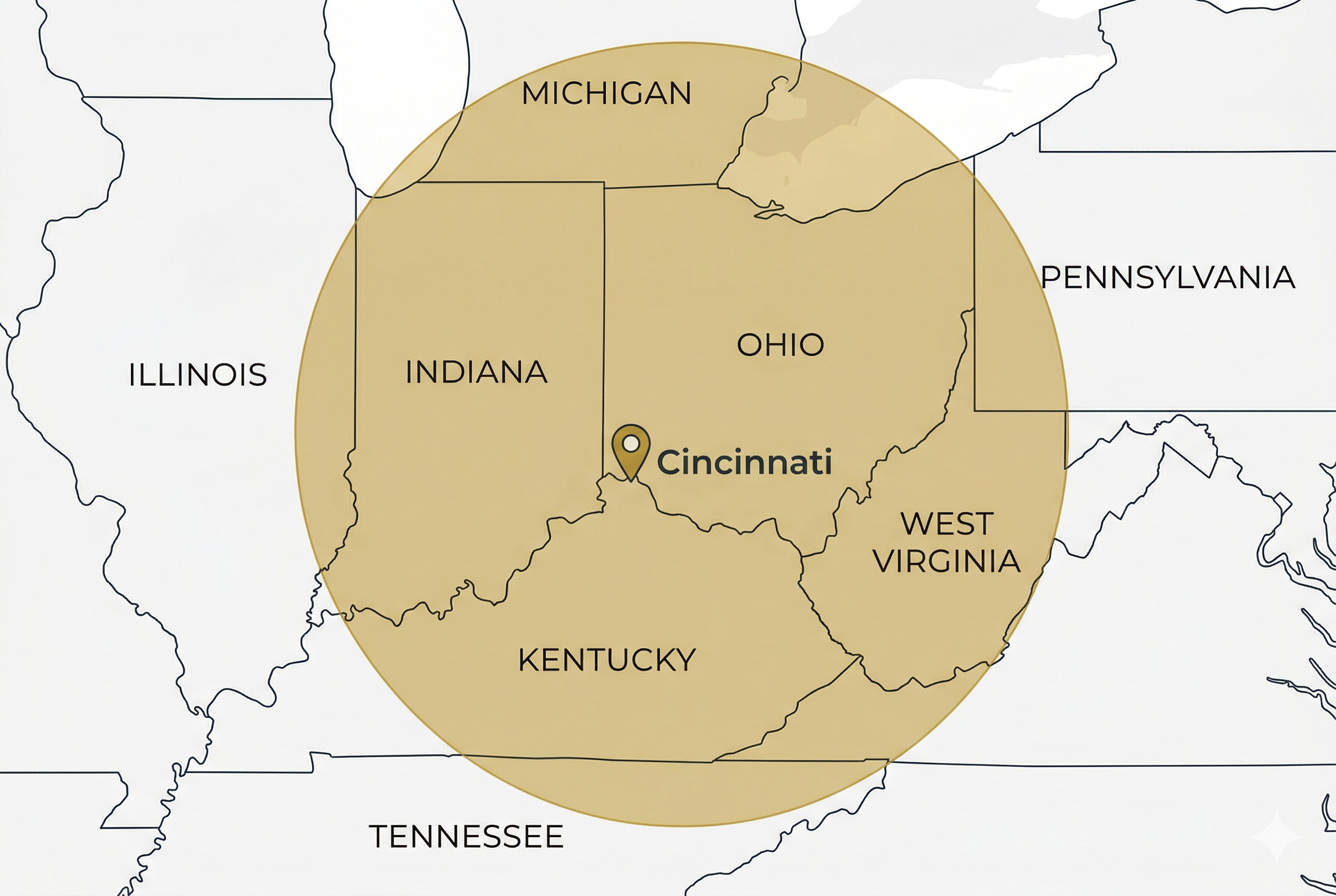
Mark Wieczorek is a Title IX lawyer based in Cincinnati who represents students and faculty at the University of Illinois. Champaign is a four-hour drive from his office, well within his Midwest service area. As a former prosecuting attorney who has handled hundreds of sex crime-related cases, he knows how investigations are built, where procedural weaknesses exist, and how to protect your rights through every stage of the UIUC disciplinary process.
Call (513) 540-0450 – Free Consultation
How the University of Illinois Title IX Process Works
Three documents control a UIUC Title IX case. The Campus Administrative Manual policy HR-79 sets the definitions of sexual misconduct and establishes who falls within the policy’s reach. The Office for Access and Equity (OAE) “Procedures for Addressing Title IX Sexual Harassment Complaints,” effective November 11, 2025, controls investigation intake, the formal grievance process, and the employee track. The Office for Student Conflict Resolution (OSCR) Student Discipline Appendix E controls the student hearing, including how the panel is chosen, what questions are allowed, how sanctions are imposed, and how appeals work. An attorney who reads only one of the three has missed the rules that will decide your case.
The Offices Involved in Your Case
UIUC splits Title IX responsibilities across three offices. The Title IX Office, located at 614 E. Daniel Street, Suite 303 in Champaign, is the Title IX Coordinator’s office and the intake point for Title IX reports. The current Title IX Coordinator is Danielle Fleenor, J.D./Ph.D. The Title IX Office can be reached at (844) 616-7978 or titleixcoordinator@illinois.edu. The Office for Access and Equity (OAE), located on the third floor of 614 E. Daniel Street, is the broader civil-rights compliance office that publishes the formal Title IX procedures, handles the investigation for employee Respondents, and sets discrimination and harassment policy for the campus. The Office for Student Conflict Resolution (OSCR) runs the student hearing once the investigation is complete. Different people, different offices, different jobs. The first strategic question in any case is which of the three is driving the file at any given moment.
Under HR-79, a broad category of UIUC employees are required reporters who must forward disclosures of sexual misconduct to the Title IX Coordinator. The category includes faculty with teaching responsibility, academic advisors, coaches and athletic staff, residence hall staff, and supervisors. A passing comment to a professor or an RA can trigger an investigation before you know a report has been filed.
Two Title IX Tracks: Student Respondent vs. Employee Respondent
UIUC operates a student track under OSCR Appendix E and a separate employee track under OAE’s procedures. The tracks share the preponderance of the evidence standard and the advisor-conducted cross-examination structure, but they diverge on the identity of the decision-maker, the composition of the appeal body, and what further institutional layers exist. The table below summarizes the core differences.
| Procedural Element | Student Track (OSCR Appendix E) | Employee Track (OAE Procedures) |
|---|---|---|
| Who decides responsibility | Three-person voting panel from the Subcommittee on Sexual Misconduct, including at least one student member, plus a non-voting staff Chair | OAE decision-maker under the formal grievance process |
| Who decides sanctions | The same three-person panel | OAE decision-maker, with employment action by appointing unit |
| Standard of evidence | Preponderance of the evidence, by simple majority vote | Preponderance of the evidence |
| Cross-examination | Conducted by your Advisor | Conducted by your Advisor |
| Investigation timeline target | 60 business days from complaint to written decision | Reasonable time under OAE procedures |
| Appeal filing window | Five business days | Per OAE procedures |
| Appeal body | Three-member Appeal Committee from the Subcommittee on Student Discipline (including a faculty member and a student), separate from the panel that decided the case | Faculty Respondents have further rights under the Statutes and unit procedures |
| Finality | Appeal Committee decision is final and binding | Varies by employment classification |
Tip: on mobile, swipe the table horizontally to see all three columns.
The Student Track: A Three-Person Panel With a Required Student Member
If the Respondent is a student, Appendix E sends the case to a three-member voting panel drawn from the Subcommittee on Sexual Misconduct (SSM). At least one voting member must be a student. A non-voting staff Chair, separately trained in sexual misconduct, runs the hearing and rules on the relevance of every question before it is answered. The panel determines responsibility by simple majority vote under the preponderance standard. The panel also imposes sanctions directly, which can range from educational requirements to separation from the university.
Appendix E contains a defense opportunity that many parties miss. Before the panel is finalized, OSCR shares the full SSM roster with both parties and invites formal challenges to any panelist based on objectivity or conflict of interest. A prepared attorney reviews each potential panelist’s publicly available record, including social media, prior roles, and published writing, and raises every good-faith challenge on the record. Challenges that are raised and rejected become appellate grounds if the panel’s composition produces an unfavorable outcome. Challenges that are never raised are forfeit.
This panel structure also changes the defense playbook. Persuading three decision-makers with different institutional perspectives (staff, faculty, and student) is not the same work as persuading a single hearing officer. The Chair’s real-time relevance rulings are a live battleground. A well-prepared Advisor pushes every reasonable question, documents every objection, and preserves the record for appeal.
The Employee Track: Adjudication Through OAE
If the Respondent is a faculty member, staff member, or other employee, the case is handled under OAE’s 11.11.25 formal grievance process rather than Appendix E. Faculty Respondents carry additional procedural rights under the University Statutes and their academic unit’s own procedures, which can include a further review by a faculty body. The employee track is structurally separate from the student panel, but the substantive investigation rules, preponderance standard, and advisor-conducted cross-examination are the same. An attorney representing a UIUC faculty or staff Respondent must map the case to both the OAE procedures and the Statutes simultaneously from day one.
The Investigation Phase
After a formal complaint is accepted, the matter is assigned to a trained Investigator. For student cases, OSCR oversees the investigation. For employee cases, OAE runs it. The Investigator conducts interviews with both parties and with witnesses, collects documentary and electronic evidence, and prepares a written report. Parties may bring an Advisor to investigative meetings, but at that stage the Advisor serves in a support capacity and cannot speak on the party’s behalf.
Appendix E sets a target of 60 business days from receipt of the complaint to written notification of the panel’s decision, with extensions in 10-day increments for good cause. Extension requests and the reasons given for them are a critical part of the record. Unjustified delays are appellate ammunition. Strong advocacy during the pre-hearing window is one of the most important opportunities in the case. An experienced attorney uses that period to challenge factual conclusions, identify omissions, request additional witnesses, and build the record for the hearing.
Cross-Examination Rules at the Live Hearing
UIUC hearings are live, on the record, and follow strict questioning rules:
- Neither the complainant nor the respondent may directly question the other party or any witness
- Each party’s Advisor of Choice conducts cross-examination of the investigator, the other party, and witnesses
- The Chair rules on the relevance of each question before it is answered and may require rewording of questions intended to disparage, intimidate, or harass
- Questions about a party’s prior sexual behavior are generally not relevant, with narrow exceptions
- Every hearing is recorded
Choosing your own Title IX lawyer as your Advisor places a trained questioner, working for your interests, into the cross-examination seat. A lawyer who has prepared the case, understands the procedural rules, and has worked through every piece of evidence conducts the questioning that protects your record. This is one of the most consequential moments of the hearing.
Standard of Evidence at UIUC Title IX Hearings
The University of Illinois applies the preponderance of the evidence standard in both the student track and the employee track. The panel needs only to conclude that the conduct more likely than not occurred. Appendix E specifies that the three-person student panel decides by simple majority vote. Preponderance is a significantly lower bar than the beyond a reasonable doubt standard used in criminal court, and it makes evidentiary preparation, witness credibility, and the relevance rulings of the Chair disproportionately important.
Appeals
A Notice of Appeal must be filed within five business days of the date the panel’s decision is issued. The appeal is heard by a three-member Appeal Committee drawn from the Subcommittee on Student Discipline, a body separate from the panel that decided the case. The committee must include a faculty member and a student. Enumerated grounds include:
- Procedural irregularity that would change the outcome
- New evidence not reasonably available at the time of the determination
- Conflict of interest or bias by the Title IX Coordinator, an investigator, or a panel member
- Inappropriate sanction
The Appeal Committee’s decision is final and binding. There is no chancellor-level or provost-level further appeal. That structure places extraordinary weight on the record built during the investigation, the relevance objections raised at the hearing, and the bias challenges preserved before the panel was seated. An attorney who waits until after an unfavorable outcome to think about appeal has already lost most of the appellate record.
Emergency Removal and Interim Action
UIUC can impose immediate interim measures upon receipt of a complaint. Those measures can include removal from campus, administrative leave, reassignment, no-contact directives, and interim suspension. Interim action is imposed before the investigation has produced any finding. Timing matters. If you have been placed on interim suspension or emergency removal, contact a Title IX attorney immediately. The first week of a case sets the record for everything that follows.
Why University of Illinois Title IX Cases Are Different
UIUC presents challenges for Respondents that attorneys unfamiliar with this campus often miss.
UIUC is a state actor, and constitutional due process applies. Unlike private institutions, the University of Illinois is bound by the Fourteenth Amendment. Students and employees facing discipline have due process rights enforceable through 42 U.S.C. § 1983 in the U.S. District Court for the Central District of Illinois, with appeal to the U.S. Court of Appeals for the Seventh Circuit. If the university violates its own procedures or fails to provide adequate process, a prepared attorney can challenge the outcome in federal court. That protection is meaningful only if your attorney understands how to preserve the record for a potential legal challenge.
The controlling Seventh Circuit precedent is respondent-friendly. In Doe v. Purdue University, 928 F.3d 652 (7th Cir. 2019), then-Judge Amy Coney Barrett authored an opinion recognizing a stigma-plus liberty interest in continued higher-education enrollment and adopting a plausible inference of sex bias pleading standard for Title IX erroneous-outcome claims. In Doe v. Trustees of Indiana University, 101 F.4th 485 (7th Cir. 2024), the Seventh Circuit held that a state university student had a constitutionally protected property interest in his continued enrollment and was entitled to a meaningful opportunity to be heard before expulsion. Both decisions are binding on every federal court in Illinois. A well-prepared defense preserves the due process theory and the Title IX erroneous-outcome theory from the very first interview.
Champaign is its own federal-court venue, with local history. In Sun v. Xu (C.D. Ill. 2023), a federal jury in the Central District of Illinois returned a defense verdict in a case brought by former UIUC students against a former professor and the university, and ordered the plaintiffs to pay $800,000 in damages on a defamation counterclaim. The verdict is a local illustration that jurors in Champaign are capable of rigorously evaluating credibility and holding accusers accountable when the evidence does not support the allegations.
UIUC has been under federal civil-rights oversight before. The U.S. Department of Education Office for Civil Rights resolved a Title IX complaint against UIUC in Case No. 05-16-2331, which alleged the university had failed to promptly and equitably respond to complaints of sexual violence. UIUC has additional OCR history in shared-ancestry and discrimination complaints. When a university has been through federal scrutiny, the institutional reflex is to demonstrate aggressiveness in enforcement. That pressure shapes how your case is handled.
UIUC’s procedures are split across three documents and three offices. HR-79 sets definitions. The 11.11.25 OAE Procedures control intake, employee-track investigation, and the formal grievance process. OSCR Appendix E controls the student hearing, the panel composition, the cross-examination rules, and the appeal. An attorney who reads only one of the three has missed the rules that will decide your case. A generalist may approach UIUC as if it were structured like most universities. It is not.
The Greek system is a recurring Title IX pressure point. Approximately 23% of UIUC undergraduates are in a fraternity or sorority across approximately 90 chapters. Title IX allegations arising out of Greek life, parties, chapter houses, and recruitment events frequently trigger overlapping institutional responses: a Title IX investigation, chapter discipline, and in some cases a criminal inquiry.
The University of Illinois Police Department runs a parallel investigation. UIPD is a sworn state police agency with a detective assigned to sexual misconduct cases. UIPD’s investigation proceeds independently of the Title IX case. Statements made in a Title IX interview can be obtained in a criminal case. That exposure is the single biggest reason to consult a lawyer before the first interview, not after it.
As part of his broader Title IX defense practice, Mark Wieczorek represents students and faculty at the University of Illinois and other institutions throughout the Midwest. He understands how each university’s process creates unique pressure points and opportunities for the defense.
Call (513) 540-0450 – Speak With Mark Directly
Proven Results at Midwest Universities
Mark’s track record at other Midwest universities speaks directly to the defense he provides University of Illinois students and faculty.
University of Dayton: Professor Accused of Inappropriate Sexual Contact
Result: Case Dismissed. Full Tenure and Pension Retained.
A tenured professor faced accusations that threatened his career, his pension, and decades of professional work. Mark identified inconsistencies in the complainant’s account, procedural irregularities in the investigation, and evidentiary gaps that the university’s own process failed to address. The case was dismissed entirely. The professor continues to teach today.
University of Cincinnati: Student Accused of Rape and Sexual Assault
Result: Case Dismissed Prior to Hearing.
A UC student faced allegations serious enough to result in immediate expulsion. Mark was retained early, before the investigation had fully taken shape. By challenging the reliability of witness accounts and identifying procedural deficiencies, the case was dismissed before a full hearing.
University of Cincinnati: Student Accused of Rape and Sexual Assault
Result: Not Responsible After Full Hearing.
In a separate matter, a second UC student faced rape and sexual assault allegations that went to a full disciplinary hearing. Mark prepared an exhaustive defense, identified inconsistencies across multiple interviews, and presented a clear, evidence-based narrative to the hearing panel. The student was found not responsible.
Miami University: Student Accused of Title IX Sexual Assault and Hazing
Result: Not Individually Responsible. All Felony Charges Dismissed.
Mark represented an individual charged with Title IX sexual assault and hazing as a fraternity member. Over 20 individuals faced charges. Following a full hearing, the client was found not individually responsible and all felony charges were dismissed.
Disclaimer: Past results do not guarantee future outcomes. Each case is unique and must be evaluated on its own facts and circumstances.
Supportive Measures During Your UIUC Title IX Case
While your University of Illinois Title IX case is pending, UIUC is required to offer supportive measures at no cost. These are non-disciplinary and non-punitive, and a formal complaint is not required to receive them. They may include:
- Counseling referrals and mental health services
- Academic accommodations, including rescheduled exams, extensions, and class changes
- Housing relocation within the residence halls
- Mutual no-contact directives
- Work and class schedule modifications
- Transportation and parking adjustments
- Campus escort services
- Leaves of absence
UIUC may also take interim action, including removal from campus, administrative leave, or interim suspension, if the Title IX Coordinator determines it is warranted. Interim action can happen before you have a chance to respond to the allegations. If you are notified of interim action, contact a Title IX attorney the same day.
Frequently Asked Questions: Title IX at the University of Illinois
Can I bring a lawyer to a Title IX hearing at the University of Illinois?
Yes. Under UIUC’s Title IX Procedures and Student Discipline Appendix E, each party may designate an Advisor of Choice, and the policy expressly allows that advisor to be an attorney. At the live hearing, the parties themselves are not permitted to question the other party or witnesses directly. Instead, each party’s Advisor conducts cross-examination. Choosing your own attorney as your Advisor places a trained questioner, working for your interests, into that role.
Does the University of Illinois use a hearing panel or a single decision-maker?
For student Respondents, UIUC uses a three-person voting panel drawn from the Subcommittee on Sexual Misconduct, and at least one panel member must be a student. A non-voting staff Chair manages the hearing and rules on relevance. For employee Respondents, adjudication runs through the Office for Access and Equity under its own procedures. The procedural track matters, and the defense strategy must match it.
What is the standard of evidence at a UIUC Title IX hearing?
UIUC applies the preponderance of the evidence standard in both the student track and the employee track. A three-person student panel decides by simple majority vote. That standard only requires the decision-maker to conclude that the conduct more likely than not occurred. It is a significantly lower bar than the beyond a reasonable doubt standard used in criminal court.
How much time do I have to appeal a University of Illinois Title IX decision?
Student Respondents have five business days from the date of notice of the Panel’s decision to submit a Notice of Appeal. The appeal is decided by a three-member Appeal Committee drawn from the Subcommittee on Student Discipline, separate from the panel that decided the case. Enumerated grounds include procedural irregularity that would change the outcome, new evidence not reasonably available at the time of the determination, conflict of interest or bias by the Title IX Coordinator, investigator, or panel member, and inappropriate sanction. The Appeal Committee’s decision is final and binding.
Does the University of Illinois Police share information with the Title IX Office?
The University of Illinois Police Department is a sworn state police agency with a detective assigned to sexual misconduct investigations. UIPD runs a parallel track to the university’s Title IX process and the two investigations can proceed at the same time. A criminal report, a Title IX report, or both can be filed in the same matter. Statements made during the Title IX investigation are routinely discoverable in the criminal case. That is one of the single most important reasons to consult an attorney before attending any interview or responding to any email.
Title IX Defense at Other Midwest Universities
Mark Wieczorek also represents students and faculty facing Title IX investigations at the University of Cincinnati, Ohio State University, the University of Dayton, Miami University, Xavier University, the University of Louisville, Indiana University, Ohio University, the University of Michigan, Purdue University, Michigan State University, Penn State University, University of Tennessee, and Notre Dame. Each university has its own Title IX procedures, hearing formats, and institutional culture. Mark tailors his defense strategy to the specific school and its process.
Do Not Wait. Contact a University of Illinois Title IX Lawyer Now.
Under HR-79, a wide category of UIUC employees are required reporters who must forward any disclosure of sexual misconduct to the Title IX Coordinator. A Title IX investigation can open within days of a report. Interim action can separate you from classes, housing, or campus before you have responded to a single allegation. UIUC’s three-document, three-office structure and five-business-day appeal window mean the procedural path of your case is set in the first week. The wrong defense in the wrong track is no defense at all.
UIUC has been through federal civil-rights oversight, operates under one of the Big Ten’s more procedurally layered Title IX frameworks, and runs a parallel police investigation on a campus of more than 60,000 students. The institutional pressure to act decisively on Title IX cases has not diminished. If you are a student, faculty member, or staff member at the University of Illinois facing a Title IX investigation, call Mark Wieczorek before you attend any meetings, respond to any emails, or make any statements.