
Ball State University Title IX Attorney: Defense for Students and Faculty
Experienced Title IX defense for Ball State students, faculty, and staff. Former prosecutor. Hundreds of sex crime cases handled.
Call (513) 540-0450 – Free Consultation
If you are a Ball State student, faculty member, or staff member facing a Title IX complaint, the procedural calendar will move faster than you expect. Hiring a Ball State Title IX attorney early is the single biggest factor in how the case unfolds. The Title IX Office under Dean of Students and Title IX Coordinator T.J. Brecciaroli will issue the Notice of Allegations within days of receiving a Formal Complaint. You will be summoned to interviews. You will be given ten calendar days to inspect the evidence and ten calendar days to respond to the investigation report. The live hearing will be scheduled no earlier than ten calendar days from the Hearing Officer’s written notice, and at that hearing only your advisor (not you) may ask cross-examination questions of the complainant and the witnesses. Under Ball State’s August 1, 2025 Title IX Policy and Procedures, the Hearing Officer who decides the case is a single decision-maker, not a panel, which means every question, every relevance objection, and every credibility moment lands on one person’s ruling.
Mark Wieczorek is a former Hamilton County prosecutor who defends students, faculty, and coaches accused of sexual misconduct at Midwest universities, including Ball State University. As a Ball State University Title IX lawyer, his job is to put the same procedural pressure on the Title IX Office that the office’s own investigators put on you, and to do it before the Hearing Officer is appointed, not after.
There is one fact about Ball State’s Title IX posture that most respondents and most parents who call have never thought through, and it shapes how an experienced attorney builds the case: Ball State has lived under continuous federal Office for Civil Rights Title IX enforcement in athletics for more than fifteen years. Two Resolution Agreements with the U.S. Department of Education (2010 and 2019, the latter docketed as OCR Case #05-19-2303) and a pending 2023 administrative complaint create an institutional incentive structure where every Title IX matter is processed under the shadow of ongoing federal monitoring. The Title IX Office that processes a student-conduct hearing is the same office that reports to OCR on athletics compliance. Respondents pay the price for that institutional posture.
Ball State’s Title IX Process Moved to a Single Hearing Officer on August 1, 2025
Ball State University’s Title IX Policy and Procedures, effective August 1, 2025, controls every Title IX matter at Ball State. T.J. Brecciaroli, Associate Vice President for Student Affairs, Dean of Students, and Title IX Coordinator, oversees intake. The office is located in Administration Building 238 at 2000 W. University Avenue, Muncie, Indiana 47306. Reports can be filed by phone at 765-285-1545, by email to titleix@bsu.edu, or through the bsu.edu/saysomething portal. Deputy Title IX Coordinators handle student matters (Brandy Rocheleau), employee matters (Erik Ippel), and athletics compliance (Lindsey Blom, Senior Associate Athletic Director).
The August 1, 2025 Policy replaced a 2022 Interim Policy that used a multi-member Hearing Panel. The new Policy assigns every Title IX hearing to a single Hearing Officer. Section 7.3.1 reads: “Upon conclusion of the investigation, the University will promptly appoint a hearing officer that will render a determination of responsibility for the allegations in the formal complaint at the conclusion of the hearing process.” That is one person, not three. Every credibility ruling, every relevance objection, every sanction lands on the Hearing Officer’s ruling. The Doe v. Purdue framework for procedural-fairness review at 7th Circuit public universities was custom-built for single-decider Title IX hearings of exactly this type.
The Investigation Phase
Once a Formal Complaint is filed and accepted, Ball State’s Policy directs the investigator to complete the investigation in a reasonably prompt timeframe. The Policy does not set a hard day count for the overall investigation, which means the schedule is controlled by the investigator’s pace. The investigator interviews both parties and the witnesses each party identifies, gathers documentary and digital evidence, and produces an investigation report. Each party then has ten calendar days to review the evidence and submit a written response under Section 7.2.4. Each party has ten additional calendar days to respond to the investigation report itself under Section 7.2.5. The investigator considers those responses and finalizes the report before the Hearing Officer is appointed.
Ball State’s Policy expressly excludes certain categories of evidence at the investigation stage. Sexual history of the complainant is categorically inadmissible under Section 7.2.2 and the investigator may exclude it without the parties’ input. The investigator’s decision on what to include in the final report largely determines what the Hearing Officer sees. The two ten-day response windows are the points at which a Ball State Title IX attorney does the most damaging work, building the procedural and factual record that will frame the entire hearing.
The Single Hearing Officer Model
Ball State’s 2025 Policy is unusually clear about who decides. The Hearing Officer is appointed by the University after the investigation concludes. The Hearing Officer alone determines responsibility under the preponderance standard. The Hearing Officer alone rules on relevance during cross-examination. The Hearing Officer alone issues the written determination.
The procedural significance of single-decision-maker hearings is concentration. There is no second member of a panel to vote against a contested credibility ruling. There is no third faculty member to disagree on a sanction. One person hears every cross-examination question, rules on every relevance objection, and writes the final determination. The advisor’s preparation has to account for that concentration. Every question Mark asks at a Ball State hearing is calibrated to one Hearing Officer, with one set of biases, one threshold for relevance, and one written record.
Cross-Examination by Advisor Only at the Live Hearing
Ball State’s Policy Section 7.3.5 requires that cross-examination be conducted “directly, orally, and in real time” by each party’s advisor. The advisor asks the questions. The party may not ask cross-examination questions personally. The Hearing Officer “will independently and contemporaneously screen questions for relevance” and rule on objections with stated rationale. Hearings are conducted via Zoom by default, audio-recorded, and closed to the public.
The Policy’s rape-shield rule applies at the hearing as well as in the investigation. Complainant sexual history is categorically inadmissible. The Hearing Officer blocks questions about sexual history without requiring a relevance argument from the complainant’s advisor.
One important departure from the prior federal Title IX framework: Section 7.3.6 provides that “the hearing officer will not draw an inference about the determination regarding responsibility based solely on a party or a witness’s absence from the live hearing and/or refusal to submit to questioning by the parties’ advisors.” Statements may still be considered even if the witness refuses to submit to cross. This is more respondent-protective than the 2020 federal rule version and creates strategic opportunities for an experienced advisor in framing what witness statements can and cannot bear.
The cross-examination itself is where the case is won or lost. The Hearing Officer rules on each question’s relevance before the witness answers. Open-ended questions that lack relevance grounding get blocked. Compound questions get blocked. Questions outside the scope of the investigation report get blocked. Cross-examination strategy, witness preparation, relevance theory, and the questions that actually matter are built during the investigation phase, weeks before the Hearing Officer is even appointed.
Sanctions and the Three-Person Appeal Panel
The Hearing Officer issues a written determination within ten business days of the hearing’s conclusion under Section 7.3.9. Sanctions range across the institutional spectrum, up to and including expulsion and notation on the academic transcript.
Either party has five business days from receipt of the determination to file an appeal under Section 7.4. The appeal officer for student respondents is the Vice President for Student Affairs (or designee). The appeal officer for employee respondents is the Vice President of Business Affairs (or designee). The appeal officer convenes a three-person panel, including the appeal officer, to evaluate the matter. The panel issues its decision within fifteen business days.
Section 7.4 lists four exclusive grounds for appeal: procedural irregularity affecting the outcome, new evidence not reasonably available at the time of the determination, conflict of interest or bias on the part of the Title IX Coordinator or investigator or Hearing Officer that affected the outcome, and an unduly harsh sanction (respondent appeal) or insufficient sanction (complainant appeal). Building the record for grounds two and three has to start during the investigation, not after the Hearing Officer rules. By appeal time the record is closed. The three-person appeal panel decides on that closed record, and the panel’s decision is final.
Call (513) 540-0450 – Free Consultation
Fifteen Years of Federal OCR Title IX Enforcement at Ball State
Most respondents and most parents who call about a Ball State matter assume Ball State is a quiet mid-sized Midwestern campus with a routine Title IX office. That assumption is wrong on the procedural posture that matters. Ball State has been the subject of continuous Department of Education Office for Civil Rights Title IX enforcement in athletics for more than fifteen years, across three distinct chapters.
The first chapter ran from 2008 through 2010, when OCR opened a Title IX athletics investigation, conducted an on-site visit, and required Ball State to sign a multi-area resolution agreement covering compliance in ten distinct athletics areas, including budgeting, recruitment, equipment, and the documented departures of women’s-team coaches over the prior five years. The resolution agreement was notable at the time for the breadth of its operational requirements.
The second chapter culminated in OCR Resolution Agreement Case #05-19-2303, signed in 2019-2020. The agreement targeted medical and training services and facilities for female student athletes. Ball State committed to equivalent treatment, benefits, and opportunities and to a documented assessment of medical personnel availability, insurance coverage, weight and training facilities, conditioning facilities, and athletic trainer qualifications. Compliance reporting was required in April 2021 and September 2021.
The third chapter opened in September 2023 when Champion Women, the advocacy organization led by former Olympic swimmer Nancy Hogshead-Makar, filed a class-style OCR administrative complaint alleging that Ball State is providing women with unequal athletic participation opportunities, unequal athletic scholarship dollars, and unequal treatment and benefits. The complaint cites Ball State’s own Equity in Athletics Disclosure Act data showing female undergraduate enrollment grew from approximately fifty-two percent to approximately sixty-one percent of the student body between 2003 and 2022, while female athletic participation stayed roughly flat at fifty-one to fifty-four percent of athletes.
When an institution has lived under federal Title IX enforcement letters for fifteen years, its incentive structure on every Title IX matter, including student conduct hearings, tilts toward visible enforcement. The Title IX Office that decides a student-conduct hearing is the same office that reports to OCR on the institution’s compliance posture. Respondents at institutions under chronic federal monitoring face a procedural environment in which institutional caution favors finding responsibility. The work of a Ball State Title IX defense attorney is to counter that institutional pressure with an investigation-stage record and a hearing-stage cross-examination that the Hearing Officer cannot dismiss.
The Seventh Circuit’s Title IX Framework at Ball State
Ball State sits in Delaware County, Indiana, federal venue for the United States District Court for the Southern District of Indiana, Indianapolis Division. The controlling appellate court is the United States Court of Appeals for the Seventh Circuit.
The most important Seventh Circuit Title IX opinion for any Ball State respondent is Doe v. Purdue University, 928 F.3d 652 (7th Cir. 2019), authored by then-Circuit Judge Amy Coney Barrett. Doe v. Purdue sets the controlling Seventh Circuit pleading standard for Title IX wrongful-discipline suits: a respondent need only allege facts that raise a “plausible inference” that the university discriminated on the basis of sex. Judge Barrett wrote that “To satisfy the Due Process Clause, a hearing must be a real one, not a sham or a pretense,” and held that withholding the evidence on which the university relied was sufficient to render the process fundamentally unfair. The opinion adopted a relaxed standard for stating a Title IX claim under either an erroneous-outcome or selective-enforcement theory, and external pressure on the university (such as Office for Civil Rights enforcement campaigns) combined with case-specific evidence of bias is enough at the pleading stage. The Doe v. Purdue framework is custom-built for single-decision-maker Title IX hearings exactly like Ball State’s 2025 model.
A second Seventh Circuit decision shapes the practical posture of any Ball State respondent contemplating federal-court remedies. Doe v. Trustees of Indiana University, 101 F.4th 485 (7th Cir. 2024), holds that respondent plaintiffs in Seventh Circuit Title IX wrongful-discipline suits generally cannot proceed under pseudonym absent a substantial risk of harm beyond the reaction legitimately attached to the truth of events. The practical implication is straightforward and rarely discussed: if a Ball State respondent loses the Title IX hearing and sues in federal court, the lawsuit will be filed in the respondent’s real name and the case caption will be public. That fact makes the work that happens before the hearing, the investigation-phase record-building and the cross-examination strategy, even more important. The federal-court remedy in the Seventh Circuit is no longer the quiet escape valve some respondents assume it is.
A Ball State-specific federal opinion underscores how courts review Ball State’s Title IX adjudications. In Adam Ross v. Ball State University, No. 1:18-cv-01258 (S.D. Ind. 2020), United States District Judge James R. Sweeney II granted Ball State summary judgment on a male student’s Title IX wrongful-discipline claim. The case was decided under the prior 2014-2020 Office for Civil Rights guidance, not under Ball State’s current 2025 Policy. The current single-Hearing-Officer model has not yet been tested in federal court against Ball State. A future respondent’s Title IX claim under the 2025 Policy would be filed in the same Southern District of Indiana courthouse in Indianapolis, before judges including Judge Sweeney, applying the binding Doe v. Purdue framework as the controlling Seventh Circuit precedent.
What this means in practice: every procedural shortcut by a Ball State investigator (an undisclosed bias, a witness interview the respondent’s advisor never had access to, a relevance ruling at the hearing that prevented cross-examination on a credibility-determinative point, an evidentiary withholding that mirrors the 2017-era cases) is potentially a Seventh Circuit Title IX claim under Doe v. Purdue. The investigation file built during the response windows is the same record used in federal court in Indianapolis if the Hearing Officer decides against the respondent and the three-person appeal panel affirms.
Ball State’s Mandatory Reporter Framework Covers Almost Every Employee
Most respondents and most parents calling about a Ball State matter assume the Title IX Office only gets notice when the complainant files a Formal Complaint. That assumption is wrong at Ball State. Section 4.2 of the 2025 Policy defines almost every Ball State employee, plus every employed student, as a Mandatory Reporter. The Policy states: “All University employees, except the confidential employees listed in the next section, are mandatory reporters under this policy. This includes graduate and undergraduate student employees when serving in their employment capacity.”
Only five categories of confidential employees fall outside the Mandatory Reporter framework: Counseling Center staff, Health Promotion and Advocacy staff, Healthy Lifestyle Center staff, Student Health Center staff, and the Student Legal Services Attorney. Everyone else is required to report. Faculty (including adjunct and lecturers). Academic advisors. Resident assistants and graduate hall directors. Teaching assistants. Coaches and athletic trainers. Administrative staff. Office of Student Conduct staff. University Compliance staff. Greek life advisors. Career services staff.
The reporting obligation is immediate and includes (at minimum) the names of the parties, the time, the date, the location, and the description of the alleged behavior. Mandatory reporters who fail to report may face administrative discipline.
The practical significance is that a Ball State respondent often learns about a Title IX matter through institutional channels rather than from the complainant. A complainant who confides in a TA, in a coach, in a Resident Assistant, or in a faculty advisor has triggered Title IX Office notice. By the time the Notice of Allegations reaches the respondent, the institution has often known for days or weeks. The investigation phase, the document responses, and the cross-examination strategy all have to be built into that compressed window. The Student Legal Services Attorney is a confidential resource at Ball State, but the Student Legal Services Attorney is not a Title IX defense attorney and cannot represent a respondent in the hearing.
What Cross-Examination at Ball State Looks Like When It Is Done Right
The advisor’s cross-examination at the Ball State Title IX hearing is the single most consequential moment in the entire process. The Hearing Officer rules on each question’s relevance before the witness answers, with stated rationale on objections. Cross has to be planned question by question, with relevance theory built in, weeks before the pre-hearing conference. Open-ended questions get blocked. Compound questions get blocked. Questions outside the scope of the investigation report get blocked.
The strongest cross-examinations at Ball State Title IX hearings work on three axes: credibility (consistency between the complainant’s earlier statements and hearing testimony), corroboration (whether documentary or third-party evidence backs or undermines the complainant’s account), and process (whether the investigator complied with Ball State’s 2025 Policy in gathering evidence, interviewing witnesses, and assembling the report that the Hearing Officer reviews). The third axis is the one most often underused at Ball State, because the Policy is dense and detailed and the investigators do not always follow it precisely. Process violations preserved on the record become appeal grounds and federal Seventh Circuit claims.
A Ball State Title IX lawyer who has cross-examined at single-Hearing-Officer Title IX hearings knows how a Hearing Officer reacts to certain question patterns, where the relevance line tends to fall, and which procedural objections move the needle. That experience compounds across cases.
Why a Cincinnati-Based Title IX Attorney for a Ball State Matter
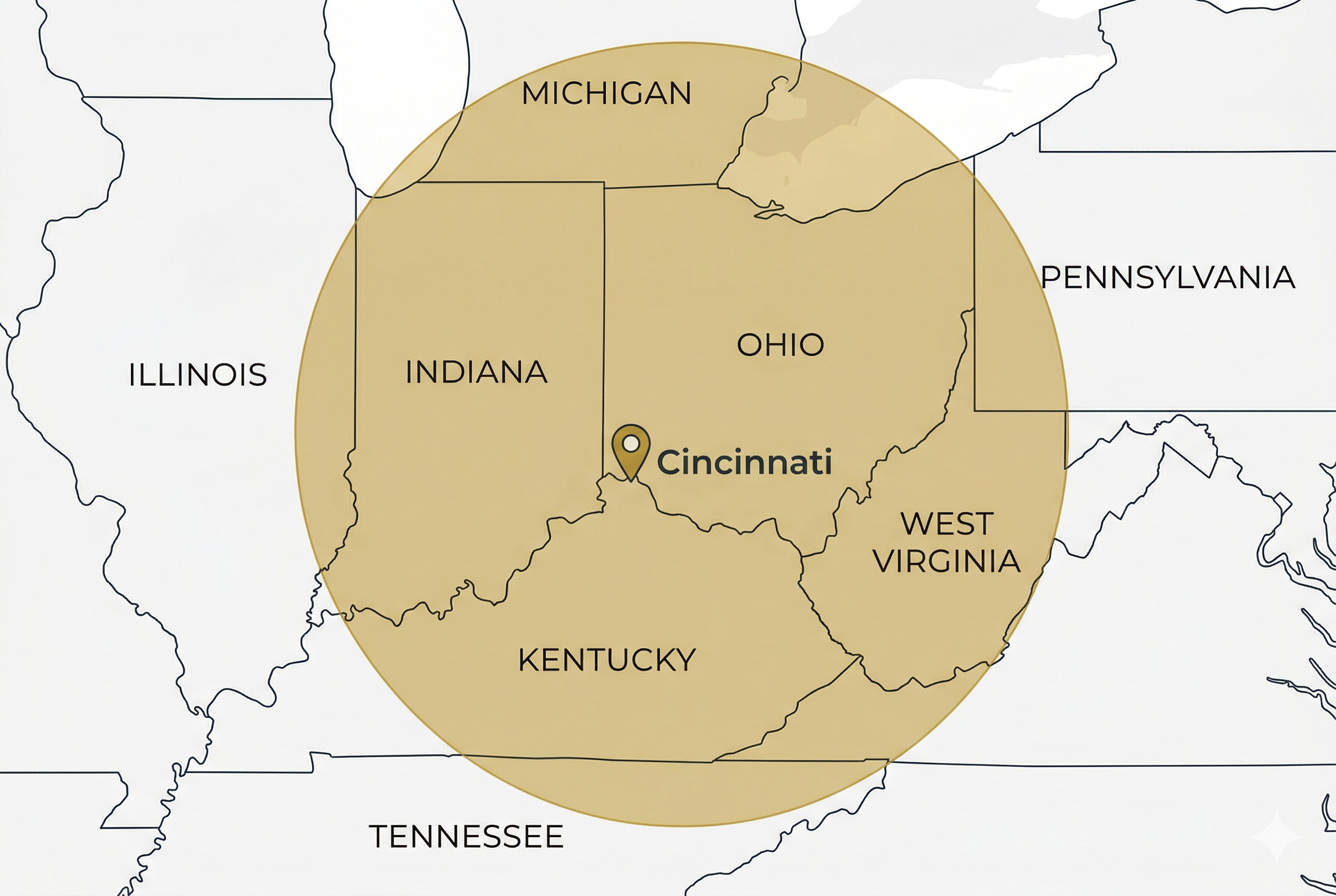
Mark Wieczorek practices Title IX defense across the Midwest from his Cincinnati office. Muncie is roughly 115 miles northwest, a two-hour drive Mark and his investigative team make for Seventh Circuit Title IX matters at Ball State, Indiana University, Purdue, and the University of Notre Dame. Most of the Title IX Office process happens in writing and on secure video platforms, not in person. Investigation interviews can be conducted remotely. Document production runs through Ball State’s secure platform. The pre-hearing conference and the live hearing itself are the events that matter, and Ball State’s 2025 Policy conducts hearings via Zoom by default.
Mark’s Title IX defense practice is built on his prosecutorial background. As a former Hamilton County prosecutor, he learned the investigator’s playbook from inside the system: how investigators frame questions to lock in answers, how they sequence interviews to corner accused parties, how they build a record that survives appellate review. He uses the same playbook in reverse for the defense. Ball State’s investigation report is the document where most cases are won or lost, and the two ten-day response windows are where Mark does the most damaging work.
Mark works the Title IX Office process the way he worked criminal investigations as a prosecutor. Build the record early. Pin down witness inconsistencies. Demand procedural compliance from the investigator. Treat the response windows on the evidence file and the investigation report as the most important deadlines of the case. Ball State students and faculty who retain Mark get a Ball State University Title IX attorney whose strategy was built around their facts, not a generic Title IX template, and whose strategy is built around the Seventh Circuit Doe v. Purdue framework and the institutional posture that fifteen years of federal OCR monitoring has created at Ball State.
Call (513) 540-0450 – Free Consultation
Mark Wieczorek’s Title IX Case Results
Below are real Title IX matters Mark has defended across the Midwest, for students and faculty facing the same kind of allegations you’re navigating right now. They’re a look at what’s possible when the defense is built right from day one.
- University of Dayton, faculty respondent. Represented a tenured professor in a Title IX matter. Case dismissed. Tenure retained.
- University of Cincinnati, student respondent. Represented an undergraduate accused of sexual misconduct. Found not responsible after full ARC hearing.
- University of Cincinnati, student respondent. Represented an undergraduate in a separate Title IX matter. Charges dismissed during investigation phase.
- Miami University, fraternity matter. Represented an individual charged with Title IX sexual assault and hazing as part of a fraternity matter where over 20 individuals faced charges. Following full hearing, client found not individually responsible and all felony charges dismissed.
Disclaimer: The above case results are not a guarantee, warranty, or prediction regarding the outcome of your case. Past results afford no guarantee of future results. Every case is different and must be judged on its own merits.
Frequently Asked Questions
Does my Title IX advisor at Ball State have to be an attorney?
No. Ball State’s 2025 Title IX Policy and Procedures Section 5.3 expressly states that the advisor “may be, but is not required to be, an attorney.” Most Ball State respondents retain a Ball State Title IX attorney because the live hearing requires the advisor (not the party) to conduct cross-examination of the other party and the witnesses, and because the Single Hearing Officer rules on each question’s relevance before the witness answers.
How is Ball State’s Title IX process different from other Indiana universities?
Two ways. First, Ball State’s August 1, 2025 Title IX Policy and Procedures switched from a multi-member hearing panel to a Single Hearing Officer model. One person now decides every Ball State Title IX matter, which concentrates the procedural pressure on a single decision-maker and makes Doe v. Purdue, 928 F.3d 652 (7th Cir. 2019), authored by then-Judge Amy Coney Barrett, the most important controlling precedent for any Ball State respondent. Second, Ball State has been under continuous federal Office for Civil Rights Title IX enforcement in athletics for more than fifteen years. Two OCR Resolution Agreements (2010 and 2019, the latter docketed as OCR Case #05-19-2303) plus a pending 2023 Champion Women administrative complaint create an institutional incentive structure where every Title IX matter is processed under the shadow of ongoing federal monitoring.
How long does a Ball State Title IX investigation take?
Ball State’s 2025 Policy does not set a fixed day count for the overall investigation. The University strives to complete each investigation in a reasonably prompt timeframe. Within the investigation, each party has ten calendar days to inspect the evidence and submit a written response, and ten calendar days to respond to the investigation report. Neither the pre-hearing conference nor the hearing may be held earlier than ten calendar days from the Hearing Officer’s written notice. The Hearing Officer strives to issue a written determination within ten business days of the hearing’s conclusion. From Formal Complaint to final appeal decision typically runs four to six months.
What is the standard of evidence at a Ball State Title IX hearing?
Preponderance of the evidence. Ball State’s Policy Section 7.3.7 defines this as more likely than not (greater than 50% likely) that the alleged conduct occurred.
Can I bring an attorney to my Ball State Title IX investigation interview?
Yes. Ball State’s 2025 Policy permits an advisor of choice (who may be an attorney) at every stage, including the investigation interview, the pre-hearing conference, and the live hearing. During the investigation phase, the advisor participates in evidence review and case preparation. At the hearing, the advisor conducts cross-examination of the other party and the witnesses directly, orally, and in real time, and addresses the Hearing Officer on procedural and evidentiary objections.
What appeals are available after a Ball State Title IX finding?
Either party has five business days from receipt of the written determination to file an appeal. For student respondents the appeal goes to the Vice President for Student Affairs (or designee). For employee respondents it goes to the Vice President of Business Affairs (or designee). The appeal officer convenes a three-person panel, including the appeal officer, to evaluate the matter, and the panel issues a decision within fifteen business days. Ball State’s Policy Section 7.4 recognizes four grounds for appeal: procedural irregularity affecting the outcome, new evidence not reasonably available at the time of the determination, conflict of interest or bias of the Title IX Coordinator or investigator or Hearing Officer that affected the outcome, and an unduly harsh sanction (respondent appeal) or an insufficient sanction (complainant appeal). The appeal panel’s decision is final and not subject to further review.
Title IX Defense at Other Midwest Universities
Mark Wieczorek defends Title IX matters across the Midwest. Related practice areas at other universities: Indiana University Title IX defense, Purdue University Title IX defense, University of Notre Dame Title IX defense, University of Illinois Title IX defense, University of Michigan Title IX defense, Michigan State University Title IX defense, Penn State University Title IX defense, University of Cincinnati Title IX defense, Ohio State University Title IX defense, University of Dayton Title IX defense, Xavier University Title IX defense.
For an overview of Mark’s statewide work across every Indiana university, see Title IX defense across Indiana. For an overview of Mark’s work across the Midwest, see Title IX defense practice.
If you need a Ball State University Title IX lawyer who knows the 2025 Single Hearing Officer model, the chronic OCR enforcement posture, and the Seventh Circuit Doe v. Purdue framework, Mark Wieczorek’s prosecutorial background and Ball State-specific case strategy is the difference between a stacked process and a fair one.
Do Not Wait. Contact a Ball State University Title IX Attorney Now.
The window to build your defense at Ball State is the investigation phase, not the hearing. By the time the Hearing Officer convenes the hearing, the record is largely closed. Every interview, every evidence-review response, every investigation-report response, every objection on the record matters. The pre-hearing notice gives you only ten calendar days before the hearing is convened. If you have been notified of a Title IX matter at Ball State, retain an experienced Ball State Title IX lawyer today, and protect your record before the Title IX Office investigation closes.
Call (513) 540-0450 – Free Consultation
Ball State students and faculty: free consultation, flat fee, no payment plans on the back end. Mark answers his own phone.