
Vanderbilt University Title IX Attorney: Defense for Students and Faculty
Experienced Title IX defense for Vanderbilt students, faculty, and staff. Former prosecutor. Hundreds of sex crime cases handled.
Call (513) 540-0450 – Free Consultation
If you are a Vanderbilt student, faculty member, or staff member facing a Title IX complaint, the next ninety business days will move faster than you expect. Hiring a Vanderbilt Title IX attorney early is the single biggest factor in how the case unfolds. Vanderbilt’s Title IX Office will issue the Notice of Allegations within days of receiving a Formal Complaint. You will be summoned to interviews. You will be given ten calendar days to respond to the Preliminary Investigative Report and five calendar days to respond to the Final Investigative Report. The live Hearing takes place at least ten days after the Final Investigative Report is issued, and at that Hearing only your Adviser (not you) may ask cross-examination questions of the complainant and the witnesses. The Decision Maker who hears the case is a single external hearing officer, not a panel, which means every question, every objection, and every credibility moment lands on one person’s relevance ruling.
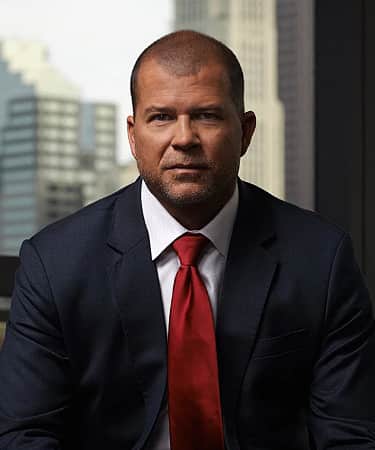
Mark Wieczorek is a former Hamilton County prosecutor who defends students, faculty, and coaches accused of sexual misconduct at Midwest universities, including Vanderbilt University. As a Vanderbilt University Title IX lawyer, his job is to put the same procedural pressure on the Title IX Office that the office’s own investigators put on you, and to do it before the Decision Maker is identified, not after.
There is one fact about Vanderbilt’s Title IX posture that most respondents and most parents who call have never thought through, and it changes how an experienced attorney builds the case: Vanderbilt’s current Title IX Office, its Sexual Misconduct Policy, and its standalone Project Safe Center for confidential reporting were all created or rebuilt in the institutional response to the 2013 case involving four Vanderbilt football players. Vanderbilt has every reputational and operational incentive to demonstrate procedural seriousness today, and that translates into a Title IX process built to move on Vanderbilt’s schedule, not the respondent’s.
Vanderbilt’s Title IX Process Is Built to Move on Vanderbilt’s Schedule
Vanderbilt’s Sexual Misconduct Policy (“SMP”) and companion Formal Grievance Protocol (“FGP”), effective August 1, 2024, control every Title IX matter on the Vanderbilt campus. Title IX Coordinator Mary Roy, J.D., Director of the Title IX Office, oversees intake. The Title IX Office is located at 2100 West End Avenue, Suite 700, Nashville, Tennessee 37203. Reports can be filed by phone at 615-343-9004 or by email to titleix@vanderbilt.edu. The Title IX Office is distinct from the Equal Opportunity and Access Office, which handles non-Title-IX discrimination matters at Vanderbilt.
The SMP and FGP together govern formal sexual-misconduct resolutions. The FGP covers the narrower subset of conduct that must be addressed under the federal Title IX regulatory framework, and Vanderbilt has not migrated to the 2024 Title IX regulations following their vacatur in federal court. The 2024-25 SMP carries forward into the 2025-26 academic year as the controlling policy.
The 90-Day Resolution Window
Once a Formal Complaint is filed and accepted, Vanderbilt’s Title IX Office targets ninety business days from issuance of the Notice of Allegations to written determination. That target is not a hard cap, but it is the schedule the Investigators work to. Within those ninety business days a designated Investigator interviews both parties and any witnesses they identify, gathers documentary and digital evidence, and produces a Preliminary Investigative Report. Both parties get ten calendar days to inspect the evidence and submit a written response. The Investigator considers those responses and finalizes the Final Investigative Report, to which the parties have an additional five calendar days to respond. The Hearing takes place at least ten days after the Final Investigative Report is issued.
The Adviser does not submit written responses on behalf of the party, but the response is built with the Adviser’s strategy. This is the most important written work product in the entire process. By the time the Hearing convenes, the Final Investigative Report is the record, and the responses inside it are the credibility battle.
The Single External Decision Maker
Vanderbilt’s SMP states that cases will be adjudicated by a trained external Decision Maker. That language matters. Most respondents assume a Title IX hearing means a multi-member panel of Vanderbilt faculty or administrators. At Vanderbilt, the default is one person: an external hearing officer engaged by Vanderbilt’s Hearing Manager to hear the case. The Decision Maker is identified to the parties at least five days before the pre-hearing conference. Bias challenges must be raised at least two days before the pre-hearing conference.
The procedural significance of a single-decision-maker structure is concentration. There is no second member of a panel to vote against a contested credibility ruling. There is no third faculty member to disagree on a sanction. One person hears every cross-examination question, rules on every relevance objection, and writes the final determination. The Adviser’s preparation has to account for that concentration. Cross-examination strategy, relevance theory, and the procedural objections that survive on the record all have to be aimed at one person.
Cross-Examination by Adviser Only at the Live Hearing
At the live Hearing, the rule changes. Vanderbilt’s SMP requires that cross-examination be conducted directly, orally, and in real time by each party’s Adviser, and never by a party personally. Outside cross-examination and addressing the Decision Maker on procedural or evidentiary issues, the Adviser is nonspeaking. The Adviser does not make opening statements. The Adviser does not make closing arguments. The Adviser does not pass notes during witness testimony. There are no opening or closing statements at all under Vanderbilt’s procedure.
The Decision Maker rules on each question’s relevance before the witness answers. Open-ended questions that lack relevance grounding are blocked. Compound questions are blocked. Questions outside the scope of the Final Investigative Report are blocked. Vanderbilt’s SMP also incorporates a rape-shield rule: complainant sexual history is not relevant unless offered to prove someone else committed the conduct or unless prior sexual behavior with the respondent is offered to prove effective consent. Cross-examination at Vanderbilt is the moment where the case is won or lost, and the work that decides it happens in the ninety business days before the Hearing convenes, not on Hearing day.
Sanctions and the Appellate Officer
The Decision Maker issues a written determination after the Hearing, finding by preponderance of the evidence whether a Policy violation occurred and assigning Sanctions. For student respondents, Vanderbilt’s Sanctions range across the institutional spectrum, up to and including permanent dismissal with notation on the academic transcript. For employee respondents, Sanctions can include written warnings, demotion, removal from supervisory roles, and termination.
Either party has ten calendar days from the written determination to submit an appeal to the Hearing Manager, with the cutoff at noon Central Time on the tenth day. The non-appealing party has ten calendar days to respond. An Appellate Officer, an independent third party appointed by the Hearing Manager and distinct from the Coordinator or Investigator or Decision Maker, decides the appeal typically within fourteen days following receipt of all appeals materials. Vanderbilt’s SMP recognizes five grounds for appeal: procedural irregularity affecting the outcome, new evidence not reasonably available at the time of the determination, conflict of interest or bias of the Coordinator or Investigator or Decision Maker, a determination not reasonably supported by the evidence, and severity of sanction. Building the record for grounds two and three has to start during the investigation, not after the Hearing. By appeal time the record is closed.
Call (513) 540-0450 – Free Consultation
The 2013 Case and the Title IX Infrastructure It Built
In June 2013, four Vanderbilt football players were involved in a sexual-assault matter that resulted in criminal convictions and prison sentences ranging from fifteen to seventeen years. The criminal case is a matter of public record. What is less often discussed, and what matters for a respondent in a Vanderbilt Title IX matter today, is what Vanderbilt did in response.
In May 2014, Vanderbilt was named in the United States Department of Education Office for Civil Rights public list of fifty-five institutions under active Title IX compliance review for handling of sexual violence complaints. The same year, the Provost convened a Task Force on Sexual Assault, drawing approximately twenty members from across Vanderbilt’s schools and administration, with oversight responsibility for every campus office involved in sexual-assault prevention, education, response, and adjudication. Vanderbilt established the Project Safe Center for Sexual Misconduct Prevention and Response as a standalone center in 2014. The Title IX Office was built out as a distinct office, separate from the Equal Opportunity and Access Office, reporting up to the Associate Vice Chancellor for Equity and Engagement.
The current Vanderbilt Title IX infrastructure, the SMP and FGP a respondent reads today, and the procedural calendar a respondent moves through today are direct products of that 2014 institutional response. Vanderbilt has every reputational incentive to demonstrate that its current Title IX process is rigorous, defensible, and resistant to claims of institutional failure. That posture is not unique to Vanderbilt. Penn State responded to the Sandusky matter with similar institutional reforms. Michigan State responded to the Nassar matter. The University of Michigan responded to the Anderson matter. The Ohio State University responded to the Strauss matter. Across the Midwest cluster, the universities with the most-scrutinized institutional histories tend to operate the most procedurally rigorous Title IX offices, and the procedural rigor cuts against respondents who walk into the process without experienced counsel.
The Sixth Circuit’s Title IX Standard at Vanderbilt
Vanderbilt sits in Davidson County, Tennessee, federal venue for the United States District Court for the Middle District of Tennessee and appellate venue for the United States Court of Appeals for the Sixth Circuit. The Sixth Circuit is the same federal circuit as Cincinnati, the federal circuit Mark Wieczorek practices in as his home base.
Three Sixth Circuit decisions shape the legal analysis of any Vanderbilt Title IX matter that becomes federal litigation. Doe v. Baum, 903 F.3d 575 (6th Cir. 2018), held that a Title IX claim alleging gender bias survives motion to dismiss where the institutional fact pattern plausibly suggests gender was a motivating factor in the outcome. Doe v. Miami University, 882 F.3d 579 (6th Cir. 2018), clarified that erroneous-outcome and selective-enforcement Title IX theories survive at the pleading stage on relatively modest allegations. Doe v. University of Cincinnati, 872 F.3d 393 (6th Cir. 2017), is the foundational Sixth Circuit Title IX opinion in the cluster. Together these three decisions form the Title IX framework that controls Vanderbilt respondent litigation.
There is a wrinkle for Vanderbilt that does not exist for public universities like Tennessee or Ohio State. The constitutional due-process arm of Doe v. Baum and Doe v. University of Cincinnati is grounded in the Fourteenth Amendment, which reaches only state actors. Vanderbilt is a private R1 university, and a Section 1983 procedural due process claim against Vanderbilt faces the threshold state-action hurdle. The Title IX statutory arm of those same opinions, by contrast, reaches Vanderbilt directly because Vanderbilt receives federal funding. A Vanderbilt respondent’s federal claim is a Title IX claim, not a Section 1983 due-process claim.
The Tennessee state-law workaround for the absence of a Section 1983 claim is the contract theory. Tennessee courts treat the published Sexual Misconduct Policy as a binding contract between Vanderbilt and the student. Every procedural commitment in the SMP and FGP is enforceable as a contract obligation, and any deviation by the Investigator or the Decision Maker is actionable as a breach of contract in Tennessee state court. A Vanderbilt-specific federal opinion, Z.J. v. Vanderbilt University, 355 F. Supp. 3d 646 (M.D. Tenn. 2018), brought twenty-plus claims combining Title IX theories, Clery Act, declaratory relief, and Tennessee contract and tort theories. Chief Judge Waverly D. Crenshaw, Jr., issued the December 2018 opinion. The case maps the procedural and contract theories any Vanderbilt respondent’s federal litigation has to develop.
What this means in practice: every procedural shortcut by a Title IX Office Investigator (an undisclosed bias, a witness interview the respondent’s Adviser never had access to, a relevance ruling at the Hearing that prevented cross-examination on a credibility-determinative point, an evidentiary withholding) is potentially a Sixth Circuit Title IX claim under Doe v. Baum or Doe v. Miami and a Tennessee contract claim under Vanderbilt’s own SMP. The investigation file built during the ninety-business-day window is the same record used in federal court in Nashville or in Tennessee state court if the Decision Maker decides against the respondent and the Appellate Officer affirms.
Vanderbilt’s Mandatory Reporter Framework Is Unusually Broad
Most respondents and most parents calling about a Vanderbilt matter assume the Title IX Office only gets notice when the complainant files a Formal Complaint. That assumption is wrong at Vanderbilt. The SMP defines almost every Vanderbilt employee, and certain student employees, as a Mandatory Reporter. Faculty (including adjunct, clinical, visiting, lecturers, and professors of practice). Undergraduate and graduate Teaching Assistants and Research Assistants. The Chancellor, Provost, Vice Chancellors, and Deans (including Associates and Assistants). The Title IX Office and the Equal Opportunity and Access Office. Vanderbilt University Public Safety. Student Accountability. Housing and Residential Experience staff, graduate assistants, and Resident Advisers. The Ingram Commons residential community staff, including Faculty Heads of House and Faculty in Residence. VUceptors, the upper-class student peer mentors assigned to first-year students. Athletics professional staff, graduate assistants, athletic trainers, and coaches. People Experience, the Vanderbilt human resources function. University Compliance Services.
The reporting obligation is immediate and includes (at minimum) the Mandatory Reporter’s name, the names of the involved parties, the nature of the incident, and the time and location of the incident. Mandatory Reporters who fail to report may face administrative discipline.
The practical significance of this breadth is that a Vanderbilt respondent often learns about a Title IX matter through institutional channels rather than from the complainant. A complainant who confides in a Resident Adviser, in a Coach, in an Athletic Trainer, or in a Faculty in Residence has triggered Title IX Office notice. By the time the Notice of Allegations reaches the respondent, the institution has often known for weeks. The investigation phase, the document responses, and the cross-examination strategy all have to be built into that compressed window. Retaining counsel early is not a stylistic choice. It is the only way to use the time the policy actually gives a respondent.
What Cross-Examination at Vanderbilt Looks Like When It Is Done Right
The Adviser’s cross-examination at the Vanderbilt Title IX Hearing is the single most consequential moment in the entire process. The Decision Maker rules on each question’s relevance before the witness answers. Cross has to be planned question by question, with relevance theory built in, weeks before the pre-hearing conference. Open-ended questions get blocked. Compound questions get blocked. Questions outside the scope of the Final Investigative Report get blocked.
The strongest cross-examinations at Vanderbilt Title IX Hearings work on three axes: credibility (consistency between the complainant’s earlier statements and Hearing testimony), corroboration (whether documentary or third-party evidence backs or undermines the complainant’s account), and process (whether the Investigator complied with Vanderbilt’s own SMP and FGP in gathering evidence, interviewing witnesses, and assembling the Final Investigative Report). The third axis is the one most often underused at Vanderbilt, because the SMP and FGP are dense and detailed and the Investigators do not always follow them precisely. Process violations preserved on the record become appeal grounds and federal Title IX or Tennessee contract claims.
A Vanderbilt Title IX lawyer who has cross-examined at single-Decision-Maker Title IX hearings before knows how a Decision Maker reacts to certain question patterns, where the relevance line tends to fall, and which procedural objections move the needle. That experience compounds across cases.
Why a Cincinnati-Based Title IX Attorney for a Vanderbilt Matter
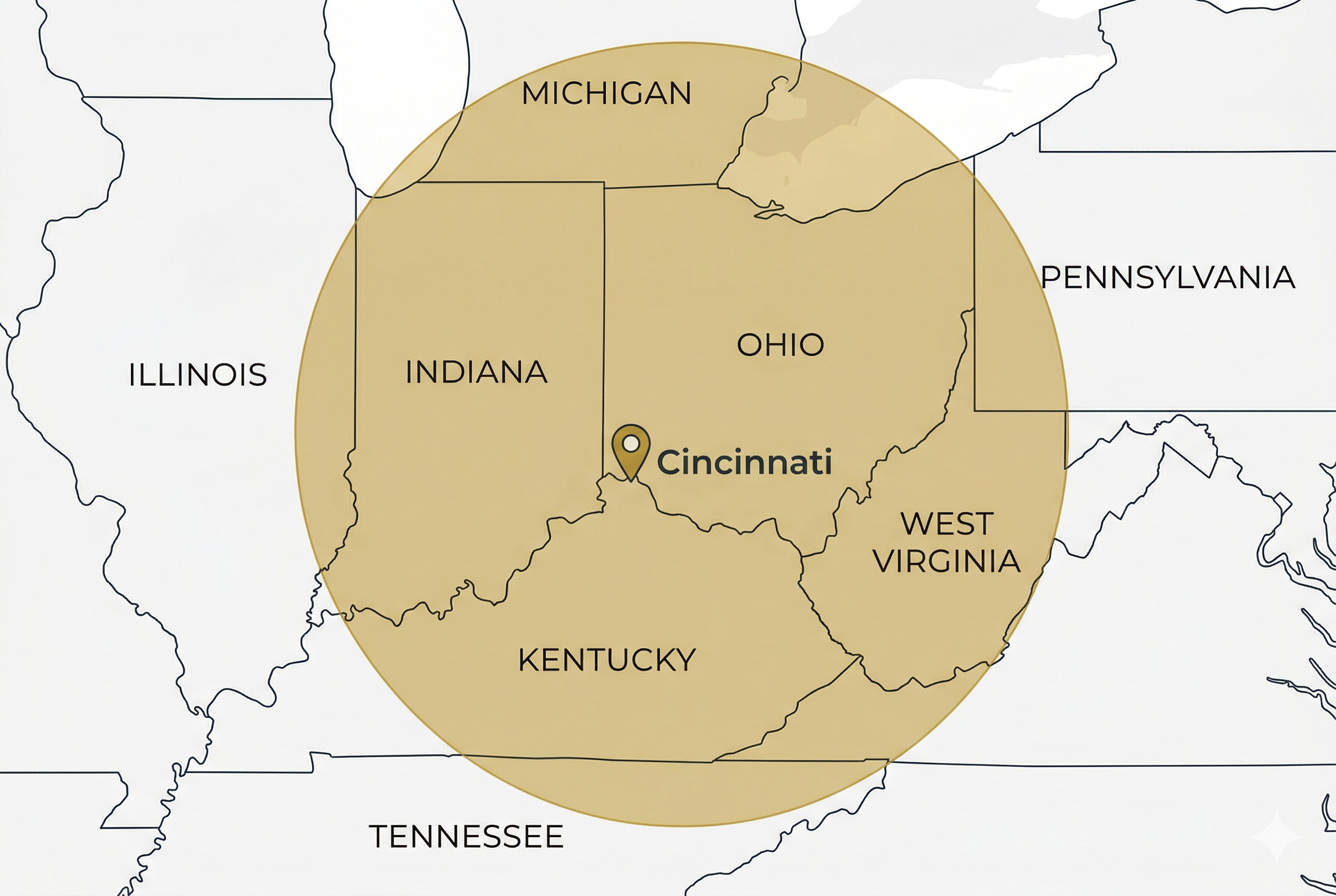
Mark Wieczorek practices Title IX defense across the Midwest from his Cincinnati office. Nashville is roughly 280 miles southwest, a four-and-a-half-hour drive Mark and his investigative team make for Sixth Circuit Title IX matters at Vanderbilt and the University of Tennessee. Most of the Title IX Office process happens in writing and on secure video platforms, not in person. Investigation interviews can be conducted remotely. Document production runs through the Title IX Office’s secure platform. The pre-hearing conference and the Hearing itself are the in-person events that matter, and the Hearing has been conducted virtually for some recent Vanderbilt cases.
Mark’s Title IX defense practice is built on his prosecutorial background. As a former Hamilton County prosecutor, he learned the investigator’s playbook from inside the system: how investigators frame questions to lock in answers, how they sequence interviews to corner accused parties, how they build a record that survives appellate review. He uses the same playbook in reverse for the defense. Vanderbilt’s Final Investigative Report is the document where most cases are won or lost, and the response window on the Preliminary and Final Investigative Reports is where Mark does the most damaging work.
Mark works the Title IX Office process the way he worked criminal investigations as a prosecutor. Build the record early. Pin down witness inconsistencies. Demand procedural compliance from the Investigator. Treat the response windows on the Preliminary and Final Investigative Reports as the most important deadlines of the case. Vanderbilt students and faculty who retain Mark get a Vanderbilt University Title IX attorney whose strategy was built around their facts, not a generic Title IX template, and whose strategy is built around the Sixth Circuit Title IX framework and the Tennessee contract theory that protect a Vanderbilt respondent.
Call (513) 540-0450 – Free Consultation
Mark Wieczorek’s Title IX Case Results
Below are real Title IX matters Mark has defended across the Midwest, for students and faculty facing the same kind of allegations you’re navigating right now. They’re a look at what’s possible when the defense is built right from day one.
- University of Dayton, faculty respondent. Represented a tenured professor in a Title IX matter. Case dismissed. Tenure retained.
- University of Cincinnati, student respondent. Represented an undergraduate accused of sexual misconduct. Found not responsible after full ARC hearing.
- University of Cincinnati, student respondent. Represented an undergraduate in a separate Title IX matter. Charges dismissed during investigation phase.
- Miami University, fraternity matter. Represented an individual charged with Title IX sexual assault and hazing as part of a fraternity matter where over 20 individuals faced charges. Following full hearing, client found not individually responsible and all felony charges dismissed.
Disclaimer: The above case results are not a guarantee, warranty, or prediction regarding the outcome of your case. Past results afford no guarantee of future results. Every case is different and must be judged on its own merits.
Frequently Asked Questions
Does my Title IX advisor at Vanderbilt have to be an attorney?
No. Vanderbilt’s Sexual Misconduct Policy expressly states that the parties may have one Adviser of their choice participating in the Title IX process at a time, who may be, but is not required to be, an attorney. Most Vanderbilt respondents retain a Vanderbilt Title IX attorney because the live Hearing requires the Adviser (not the party) to conduct cross-examination, and because the Decision Maker rules on each question’s relevance before the witness answers.
How is Vanderbilt’s Title IX process different from a public university Title IX process?
Vanderbilt is a private R1 university in the Sixth Circuit. The Sixth Circuit’s Title IX statutory framework, set out in Doe v. Baum, 903 F.3d 575 (6th Cir. 2018), Doe v. Miami University, 882 F.3d 579 (6th Cir. 2018), and Doe v. University of Cincinnati, 872 F.3d 393 (6th Cir. 2017), reaches Vanderbilt directly because Vanderbilt receives federal funding. The constitutional due-process arm of those decisions does not reach Vanderbilt because Vanderbilt is a private actor and there is no state action. Vanderbilt respondents instead enforce procedural protections through a federal Title IX claim and a Tennessee breach-of-contract claim grounded in the Sexual Misconduct Policy itself, which Tennessee courts treat as a binding contract between the University and the student. The principal Vanderbilt-specific federal opinion is Z.J. v. Vanderbilt University, 355 F. Supp. 3d 646 (M.D. Tenn. 2018).
How long does a Vanderbilt Title IX investigation take?
Vanderbilt’s published process timelines target ninety business days from issuance of the Notice of Allegations to written determination. Within that window, each party has ten calendar days to respond to the Preliminary Investigative Report and five calendar days to respond to the Final Investigative Report. The Hearing takes place at least ten days after the Final Investigative Report is issued. The Decision Maker typically issues a written determination within fourteen days following the Hearing. From Notice of Allegations to final appeal decision typically runs four to six months.
What is the standard of evidence at a Vanderbilt Title IX hearing?
Preponderance of the evidence, which the Sexual Misconduct Policy defines as more likely than not that a violation of the Policy occurred. This is the same standard most universities use under the federal Title IX framework.
Can I bring an attorney to my Vanderbilt Title IX investigation interview?
Yes. Vanderbilt’s Sexual Misconduct Policy permits one Adviser of the party’s choice at every stage, including the investigation interview, the pre-hearing conference, and the live Hearing. During the investigation phase, Advisers are present to advise the party but may not engage directly with the Investigator. At the Hearing, the Adviser conducts cross-examination of the other party and the witnesses directly, orally, and in real time, and addresses the Decision Maker on procedural and evidentiary issues.
What appeals are available after a Vanderbilt Title IX finding?
Either party has ten calendar days from the written determination to submit an appeal to the Hearing Manager, with the cutoff at noon Central Time on the tenth day. The non-appealing party has ten calendar days to respond. An independent Appellate Officer decides the appeal, typically within fourteen days following receipt of all appeals materials. Vanderbilt’s Sexual Misconduct Policy recognizes five grounds for appeal: procedural irregularity affecting the outcome, new evidence not reasonably available at the time of the determination, conflict of interest or bias on the part of the Coordinator or Investigator or Decision Maker, a determination not reasonably supported by the evidence, and severity of sanction. Building the record for grounds two and three has to start during the investigation, not at appeal time.
Title IX Defense at Other Midwest Universities
Mark Wieczorek defends Title IX matters across the Midwest. Related practice areas at other universities: University of Cincinnati Title IX defense, Ohio State University Title IX defense, University of Dayton Title IX defense, Xavier University Title IX defense, Indiana University Title IX defense, University of Illinois Title IX defense, University of Michigan Title IX defense, Purdue University Title IX defense, Michigan State University Title IX defense, Penn State University Title IX defense, University of Tennessee Title IX defense.
For an overview of Mark’s work across the Midwest, see Title IX defense practice.
If you need a Vanderbilt University Title IX lawyer who knows the Title IX Office process, the single external Decision Maker structure, and the Sixth Circuit Title IX statutory framework that protects a Vanderbilt respondent, Mark Wieczorek’s prosecutorial background and Vanderbilt-specific case strategy is the difference between a stacked process and a fair one.
Do Not Wait. Contact a Vanderbilt University Title IX Attorney Now.
The window to build your defense at Vanderbilt is the investigation phase, not the Hearing. By the time the Decision Maker convenes the Hearing, the record is largely closed. Every interview, every Preliminary Investigative Report response, every Final Investigative Report response, every objection on the record matters. The pre-hearing conference is the last unrestricted opportunity for your Adviser to shape the proceeding before the live-Hearing nonspeaking rule kicks in. If you have been notified of a Title IX matter at Vanderbilt, retain an experienced Vanderbilt Title IX lawyer today, and protect your record before the Title IX Office investigation closes.
Call (513) 540-0450 – Free Consultation
Vanderbilt students and faculty: free consultation, flat fee, no payment plans on the back end. Mark answers his own phone.