

West Virginia University Title IX Attorney: Defense for Students and Faculty
Experienced Title IX defense for West Virginia University students, faculty, and staff. Former prosecutor. Hundreds of sex crime cases handled.
Call (513) 540-0450 – Free Consultation
If you are a West Virginia University student, faculty member, or staff member facing a Title IX complaint, the next four to six months will move faster than you expect. Hiring a West Virginia University Title IX attorney early is the single biggest factor in how the case unfolds. WVU’s Office of Compliance and Prevention Education will assign an investigator within days of the Formal Complaint. You will be summoned to interviews. You will receive an investigation report. Then a single Decision-Maker will decide the rest of your academic career, your degree, and in many cases your professional future.
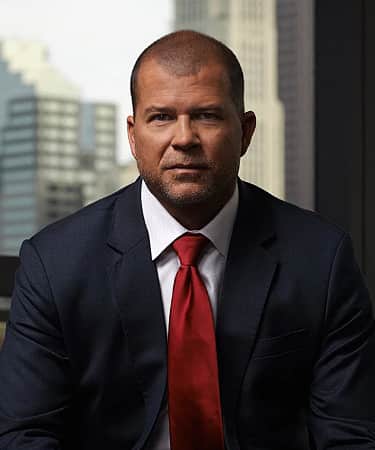
Mark Wieczorek is a former Hamilton County prosecutor who now defends students, faculty, and coaches accused of sexual misconduct at Big 12 and Midwest universities, including West Virginia University. As a West Virginia University Title IX lawyer, his job is to put the same procedural pressure on WVU that the school’s own investigators put on you, and to do it before the Decision-Maker rules, not after.
WVU’s Title IX Process Is Built to Move on WVU’s Schedule
WVU Board of Governors Governance Rule 1.6, originally adopted January 24, 2018, with an emergency modification effective August 14, 2020 and minor technical edits made December 8, 2025, controls every Title IX matter on the Morgantown campus. The Title IX Coordinator, James Goins Jr., serves as Executive Director of Compliance and oversees intake from the Office of Compliance and Prevention Education at 886 Chestnut Ridge Road, Suite 309, in Morgantown. The Section 12 Title IX Sexual Harassment grievance procedures, embedded in the Campus Student Code, govern student-respondent matters. The Non-Student Title IX Process governs employee and third-party respondents.
Once a Formal Complaint is filed, WVU’s grievance procedures aim for a prompt and equitable resolution. A designated investigator (never the Title IX Coordinator) interviews both parties and any witnesses they identify, gathers evidence, and produces an investigation report. The parties receive the report and have a defined window to respond before the matter moves to a live hearing. From Formal Complaint to final appeal decision typically runs four to six months at WVU, though the University may extend the schedule for good cause.
The Single Decision-Maker Model and Live Cross-Examination
WVU’s Title IX hearing under Section 12 is conducted before a single Decision-Maker, not a multi-member panel. The Decision-Maker is a trained Title IX hearing official who hears the live hearing testimony, rules on the relevance of cross-examination questions in real time, applies the preponderance of the evidence standard, and issues the written determination of responsibility. This single-Decision-Maker structure is similar to Ohio State University’s Title IX hearing model and unlike the three-person panel structures at Penn State, Indiana University, or Miami University.
At the hearing itself, cross-examination is conducted directly, orally, and in real time by the party’s advisor and never by a party personally. There is no right of self-representation at a WVU Title IX hearing. The advisor cross-examines the complainant, witnesses, and the investigator. The Decision-Maker rules on each question’s relevance before any answer is given, and questions deemed irrelevant are not answered. The hearing is recorded by WVU and the Decision-Maker issues a written determination.
This single procedural fact, the requirement that an advisor and only an advisor cross-examines, is the most important reason to retain experienced counsel before the investigation ends rather than after. The advisor at the hearing should not be meeting the case for the first time when the hearing convenes. Strategy, witness preparation, and cross-examination questions are built during the investigation phase, not after.
What Sanctions Look Like If a WVU Title IX Decision-Maker Finds Responsibility
Under BOG Rule 1.6, sanctions for responsible findings span the institutional spectrum. For student respondents under Section 12, the Decision-Maker may impose written warning, formal disciplinary probation, deferred suspension, suspension (definite or indefinite), expulsion, transcript notation, residence-hall removal, no-contact directives, mandatory counseling or education, restitution, and revocation of degree if the conduct is discovered after graduation. For faculty and staff respondents, BOG Rule 1.6 authorizes disciplinary action including written reprimand, suspension, demotion, denial of merit increase, denial or revocation of tenure, and termination of employment. Other respondents face appropriate corrective action.
The most common outcome in a contested WVU Title IX matter where responsibility is found and the conduct is at the more serious end of BOG Rule 1.6 is a multi-semester suspension with transcript notation, conditions for return that typically include completion of an educational program and a behavioral assessment, and a no-contact directive. Suspension with notation is functionally a career-altering sanction. Most graduate programs and many employers ask the question on application, and the notation is reported when other institutions request a transfer record. Expulsion is reserved for the most serious conduct findings or for repeat respondents.
The advisor’s job during sanctioning is to put the strongest possible mitigation case before the Decision-Maker before the determination is issued. Section 12 provides that, in Title IX matters, the parties have 10 calendar days following the Notice of Outcome to submit written positions on the appropriate sanctions, and the Decision-Maker then issues a Notice of Sanctions to both parties. That 10-day window is where mitigation evidence and argument either move the sanction range or do not. By appeal time, sanction-grounds appeals are limited to disproportion or unjustified-by-violation-nature claims, and that standard rarely overturns a sanction once a finding has been entered.
The 5-Day Appeal Window
If the Decision-Maker finds responsibility, Section 12 of the Campus Student Code provides a tight appeal window. Both parties have 5 calendar days from the issuance of the Outcome Letter (and, when a Title IX finding of responsibility issues, 5 calendar days from the issuance of the Notice of Sanctions) to file the appeal. The appeal officer issues a written final decision after reviewing the record and any party submissions.
The grounds for appeal under Section 12 are narrow: procedural error that affected the outcome, new information that was not reasonably available at the time of the hearing and could affect the outcome, conflict of interest or bias by the Title IX Coordinator or investigator or Decision-Maker that affected the outcome, and (for sanction-only appeals) a disproportionate sanction. Building the record for appeal grounds two and three has to start during the investigation, not after the Decision-Maker rules. By appeal time, the record is closed.
Call (513) 540-0450 – Free Consultation
The Fourth Circuit Just Established a Due Process Right to Cross-Examination
WVU sits in the Fourth Circuit, federal venue Northern District of West Virginia. The Fourth Circuit covers Maryland, Virginia, West Virginia, North Carolina, and South Carolina, and in April 2025 the circuit issued the most consequential Title IX due-process decision in its modern docket.
The controlling Fourth Circuit precedent is now Doe v. The University of North Carolina System, No. 24-1301 (4th Cir. Apr. 4, 2025). In that case, an expelled UNC-Chapel Hill student sued the university and individual administrators after a series of Title IX hearings he alleged were procedurally deficient, including a hearing in which the panel chair allowed a complainant to leave the hearing midway through cross-examination and permitted the complainant’s attorney to step in and effectively testify in her place. The Fourth Circuit held that students involved in university disciplinary proceedings have a procedural due process right to cross-examination when the resolution of the charge turns on credibility determinations and the potential sanctions are severe.
That holding is binding on every public university in the Fourth Circuit, including West Virginia University. It is the Fourth Circuit’s analog to Doe v. Baum, 903 F.3d 575 (6th Cir. 2018) (binding on Ohio State and the University of Cincinnati) and Doe v. University of the Sciences, 961 F.3d 203 (3d Cir. 2020) (binding on Penn State). The Fourth Circuit also reaffirmed the older liberty-interest analysis from Henson v. Honor Committee of University of Virginia, 719 F.2d 69 (4th Cir. 1983), holding that an erroneous expulsion record can constitute an ongoing or prospective injury sufficient to support equitable relief.
For pleading sex discrimination claims under Title IX itself, the Fourth Circuit follows the “plausible inference” standard now adopted across the circuits, meaning a male respondent stating a Title IX claim need only allege facts that, taken together, support a plausible inference that the school discriminated on the basis of sex.
What this means in practice: every procedural shortcut by a WVU investigator (an undisclosed bias, a witness interview the respondent never had access to, an evidentiary ruling that prevented cross-examination on a credibility-determinative point, a hearing that allowed a complainant’s attorney to substitute for the complainant on cross) is potentially a federal claim under Doe v. UNC System and Henson, and a Section 1983 due process claim against the public University on top of the Title IX claim. The investigation file built during the BOG Rule 1.6 process is the same record used in federal court if the Decision-Maker rules against the respondent and the appeal officer affirms.
What Cross-Examination at WVU Looks Like When It Is Done Right
The advisor’s cross-examination at the WVU live hearing is the single most consequential moment in the entire process. The Decision-Maker rules on each question’s relevance before the witness answers. That means the cross has to be planned question by question, with admissibility theory built in, before the hearing convenes. Open-ended questions get blocked. Compound questions get blocked. Questions outside the scope of the investigation report get blocked. A skilled West Virginia University Title IX lawyer prepares this cross-examination during the investigation phase, weeks before the Decision-Maker convenes the hearing.
The strongest cross-examinations at WVU Title IX hearings work on three axes. First, credibility: consistency between the complainant’s earlier statements (police reports, text messages, prior interviews) and hearing testimony. Second, corroboration: whether documentary or third-party evidence backs or undermines the complainant’s account. Third, process: whether the investigator complied with BOG Rule 1.6 and Section 12 in gathering evidence and interviewing witnesses. The third axis is the one most often underused. Investigators are human and the procedures are dense. Process violations preserved on the record become appeal grounds and federal claims under Doe v. UNC System.
A West Virginia University Title IX attorney who has cross-examined at Big 12 and Midwest Title IX hearings before knows how Decision-Makers react to certain question patterns, where they tend to draw the relevance line, and which procedural objections move the needle. That experience compounds across cases.
Why a Cincinnati-Based Title IX Attorney for a WVU Matter
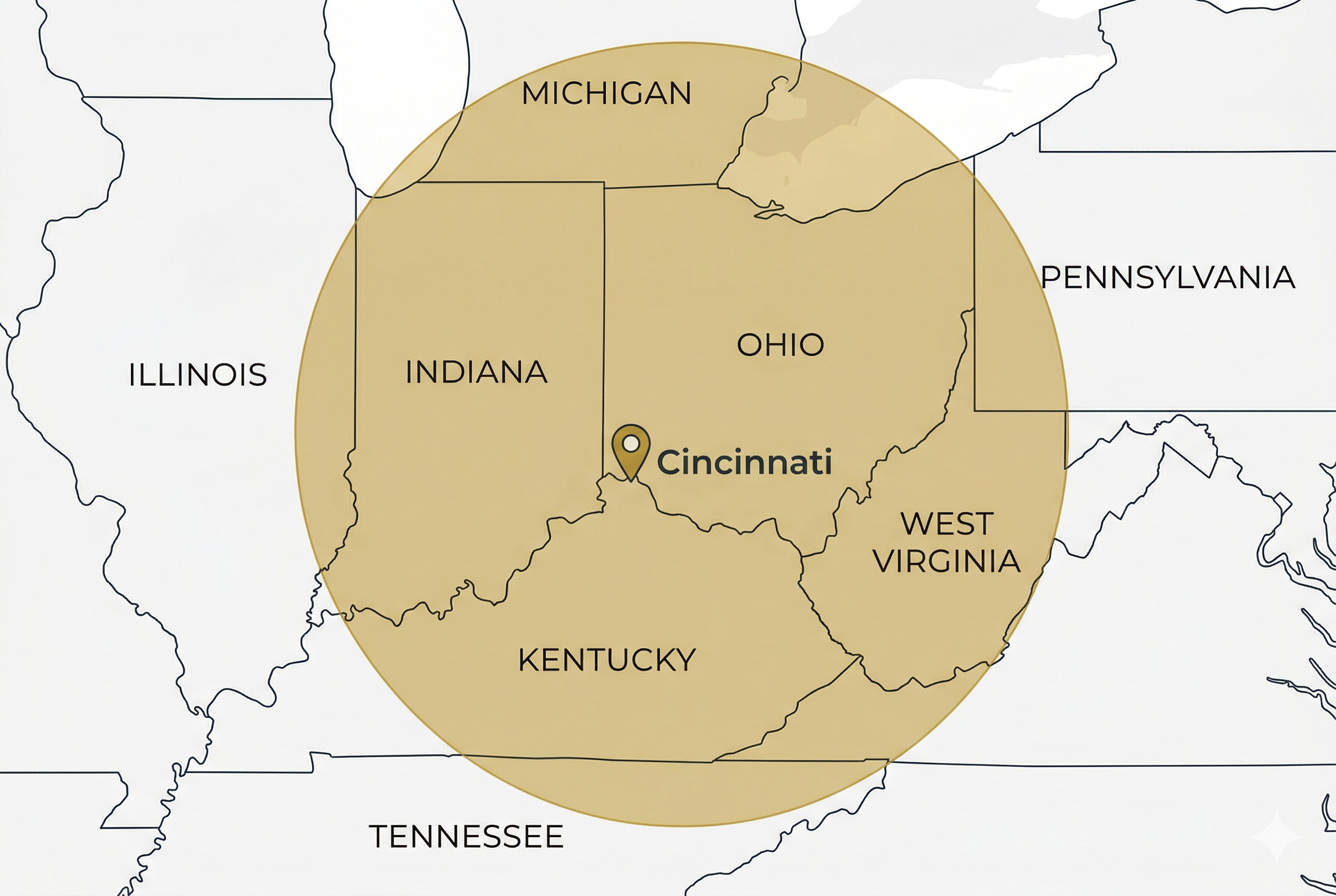
Mark Wieczorek practices Title IX defense across the Midwest from his Cincinnati office. Morgantown is roughly 250 miles east of Cincinnati, a four-hour drive Mark and his investigative team make for Big 12 and Mountain East Title IX matters. Most of the BOG Rule 1.6 process happens in writing and on secure platforms, not in person. Investigation interviews can be conducted remotely. Document production runs through WVU’s secure platform. The single in-person event that matters is the live hearing itself.
Mark’s Title IX defense practice is built on his prosecutorial background. As a former Hamilton County prosecutor, he learned the investigator’s playbook from inside the system: how investigators frame questions to lock in answers, how they sequence interviews to corner accused parties, how they build a record that survives appellate review. He uses the same playbook in reverse for the defense. The investigation report is the document where most cases are won or lost, and the response window is where Mark does the most damaging work.
Mark works the BOG Rule 1.6 process the way he worked criminal investigations as a prosecutor. Build the record early. Pin down witness inconsistencies. Demand procedural compliance from the investigator. Treat the investigation report response window as the most important deadline of the case. WVU students and faculty who retain Mark get a West Virginia University Title IX attorney whose strategy was built around their facts, not a generic Title IX template.
The WVU Context: Big 12 Athletics and a Greek Community Under Scrutiny
WVU is a public R1 land-grant university with Fall 2025 enrollment of roughly 23,500 students on the Morgantown campus and approximately 26,000 across all WVU campuses. The Mountaineers compete in the Big 12 Conference and are flagship of the West Virginia higher-education system. The Greek community at WVU includes more than 70 fraternal organizations across four governing councils with roughly 4,000 students participating, approximately 12 percent of the undergraduate population.
Two demographic facts matter for a WVU Title IX matter. First, NIL-era student-athletes (especially in football, basketball, and wrestling) have higher visibility and higher stakes when allegations enter the BOG Rule 1.6 process; eligibility, scholarships, and roster spots can be frozen during interim measures and lost on a responsible finding. Second, the WVU Greek community has been the subject of multiple high-profile institutional reviews and chapter suspensions over the last decade, and fraternity-context allegations frequently bring more than one respondent into the same investigation. A WVU Title IX attorney working a fraternity matter has to think about coordinated representation, joint defense considerations, and the order in which respondents are interviewed.
Mark Wieczorek’s Miami University fraternity case (referenced below) illustrates the dynamic: more than 20 individuals charged in the same matter, defended one of them individually, full hearing, found not individually responsible, all felony charges dismissed. That case posture maps to the WVU Greek-community fact pattern more closely than a single-respondent dorm allegation. A Big 12 student-athlete or fraternity respondent looking for a WVU Title IX lawyer should retain counsel who has cross-examined in multi-respondent matters at peer institutions, not first-time Title IX defense.
Call (513) 540-0450 – Free Consultation
Mark Wieczorek’s Title IX Case Results
Below are real Title IX matters Mark has defended across the Midwest, for students and faculty facing the same kind of allegations you’re navigating right now. They’re a look at what’s possible when the defense is built right from day one.
- University of Dayton, faculty respondent. Represented a tenured professor in a Title IX matter. Case dismissed. Tenure retained.
- University of Cincinnati, student respondent. Represented an undergraduate accused of sexual misconduct. Found not responsible after full ARC hearing.
- University of Cincinnati, student respondent. Represented an undergraduate in a separate Title IX matter. Charges dismissed during investigation phase.
- Miami University, fraternity matter. Represented an individual charged with Title IX sexual assault and hazing as part of a fraternity matter where over 20 individuals faced charges. Following full hearing, client found not individually responsible and all felony charges dismissed.
Disclaimer: The above case results are not a guarantee, warranty, or prediction regarding the outcome of your case. Past results afford no guarantee of future results. Every case is different and must be judged on its own merits.
Frequently Asked Questions
Does my Title IX advisor at West Virginia University have to be an attorney?
No. WVU Board of Governors Governance Rule 1.6 permits a party’s advisor to be an attorney of the party’s choice but does not require it. Most respondents who retain a West Virginia University Title IX attorney do so because the WVU live hearing requires the advisor (not the party) to conduct cross-examination of the complainant, witnesses, and the investigator, and that cross-examination is where the case is decided.
How long does a WVU Title IX investigation take?
WVU’s Title IX grievance procedures aim for a prompt and equitable resolution. From Formal Complaint to final appeal decision typically runs four to six months at WVU. The investigation runs first, the live hearing follows once the investigation report is finalized, and the 5-day appeal window runs after the Outcome Letter and Notice of Sanctions. WVU may extend the schedule for good cause.
What is the standard of evidence at a WVU Title IX hearing?
Preponderance of the evidence. Under BOG Rule 1.6 and the Section 12 grievance procedures, the Decision-Maker uses the preponderance standard, meaning more likely than not based on the totality of the relevant evidence. This is the lower civil standard, not the criminal beyond a reasonable doubt standard, and it is the standard most universities use post-2024 Title IX regulations.
Can I bring an attorney to my WVU Title IX investigation interview?
Yes. BOG Rule 1.6 permits an advisor (who may be an attorney) to accompany a party at every meeting and interview throughout the grievance process. The advisor may consult with the party quietly or in writing during meetings, but only the party may answer the investigator’s questions during the interview itself. Cross-examination of witnesses and the investigator is reserved for the live hearing, where only the advisor (not the party) conducts the examination.
What appeals are available after a WVU Title IX finding?
Section 12 of the Campus Student Code provides four appeal grounds: procedural error that affected the outcome, new information not reasonably available at the time of the hearing, conflict of interest or bias by the Title IX Coordinator or investigator or Decision-Maker that affected the outcome, and (for sanction appeals) disproportionate sanction. The appeal must be filed within 5 calendar days of the Outcome Letter or Notice of Sanctions. The appeal officer issues a written final decision.
Does WVU’s Title IX process apply if the alleged conduct happened off campus?
BOG Rule 1.6 covers conduct that occurs in WVU education programs and activities, which includes locations and circumstances over which WVU exercises substantial control, regardless of geography. Off-campus conduct outside that jurisdictional reach is generally addressed under WVU’s broader discrimination and harassment policy under BOG Rule 1.6. Both standards permit advisor representation, and many matters trigger investigation under both standards in parallel.
Title IX Defense at Other Midwest Universities
Mark Wieczorek defends Title IX matters across the Midwest. Related practice areas at other universities: University of Cincinnati Title IX defense, Ohio State University Title IX defense, University of Dayton Title IX defense, Miami University Title IX defense, Xavier University Title IX defense, University of Louisville Title IX defense, Indiana University Title IX defense, University of Illinois Title IX defense, Ohio University Title IX defense, University of Michigan Title IX defense, Purdue University Title IX defense, Michigan State University Title IX defense, Penn State University Title IX defense, University of Tennessee Title IX defense.
For an overview of Mark’s work across the Midwest, see Title IX defense practice.
Do Not Wait. Contact a West Virginia University Title IX Attorney Now.
The window to build your defense at West Virginia University is the investigation phase, not the hearing. By the time the Decision-Maker convenes the hearing, the record is largely closed. Every interview, every document response, every objection on the record matters. If you have been notified of a Title IX investigation at WVU, retain experienced Title IX defense counsel today.
Call (513) 540-0450 – Free Consultation
West Virginia University students and faculty: free consultation, flat fee, no payment plans on the back end. Mark answers his own phone.