

Purdue University Title IX Attorney: Defense for Students and Faculty
Experienced Title IX defense for Purdue University students, faculty, and staff. Former prosecutor. Hundreds of sex crime cases handled.
Call (513) 540-0450 – Free Consultation
If you are a student, faculty member, or staff member at Purdue University facing a Title IX investigation, you need an attorney who understands how this specific campus handles sexual misconduct cases. Purdue is a Big Ten flagship, an Association of American Universities member, and the largest land-grant research university in Indiana. The procedural rules that govern a Purdue Title IX case run through the Office of Institutional Equity and the Vice President for Ethics and Compliance, are spelled out in Policy III.C.4 (Title IX Harassment) and the Procedures for Resolving Complaints of Title IX Harassment, and culminate in a hearing before a single Hearing Officer rather than a panel. That single-decision-maker structure is unusual among Big Ten campuses and changes the entire defense playbook.
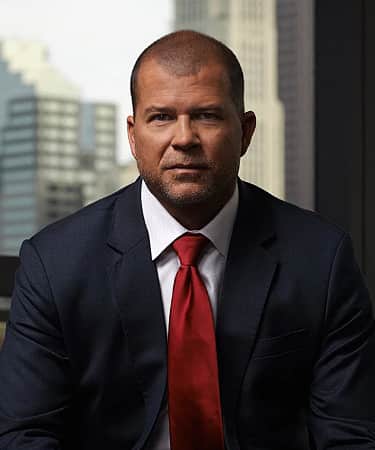
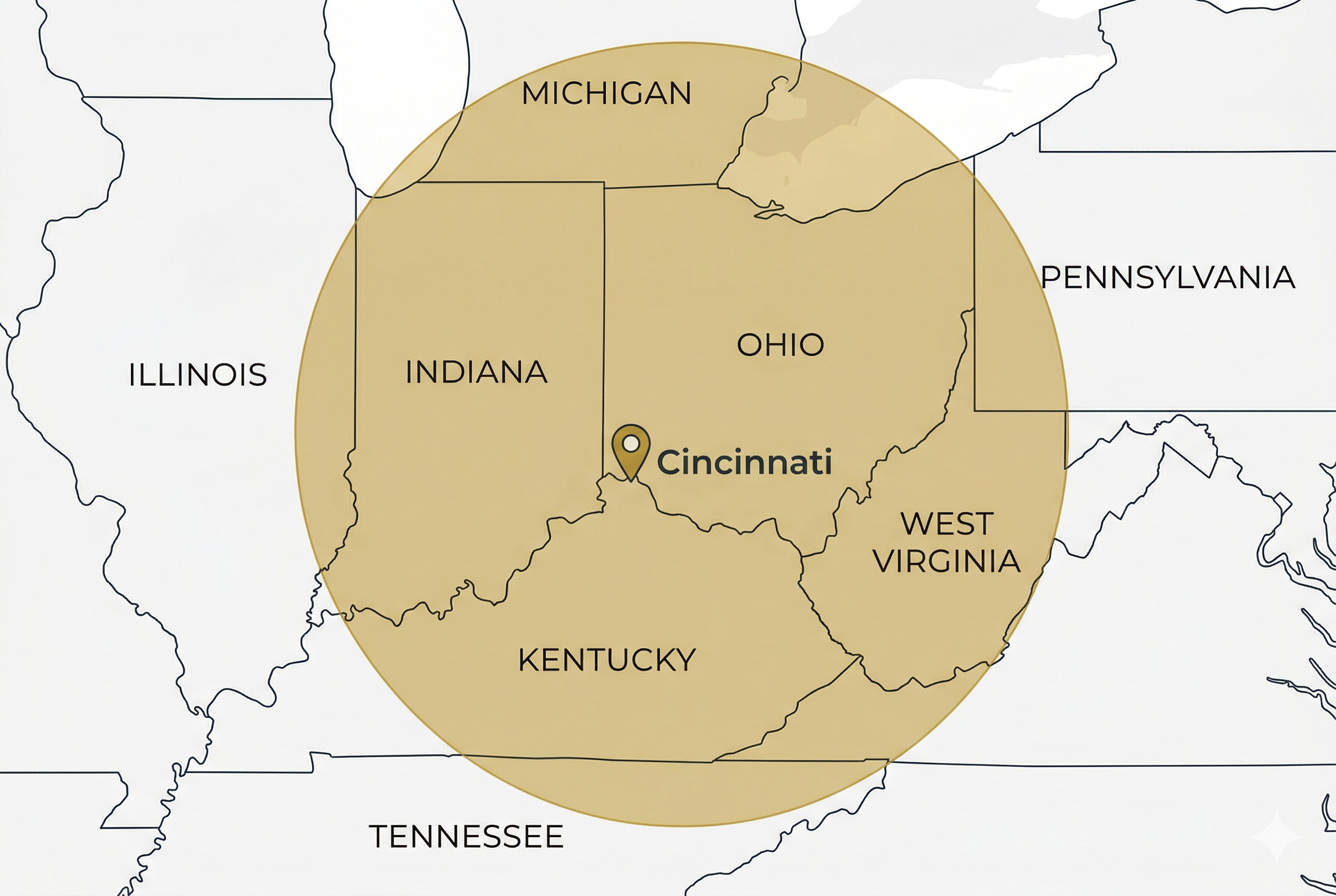
Mark Wieczorek is a Title IX lawyer based in Cincinnati who represents students and faculty at Purdue University. West Lafayette is roughly 200 miles from his office, well within his Midwest service area. As a former prosecuting attorney who has handled hundreds of sex crime-related cases, he knows how investigations are built, where procedural weaknesses exist, and how to protect your rights through every stage of the Purdue disciplinary process.
Call (513) 540-0450 – Free Consultation
How the Purdue Title IX Process Works
Two documents control a Purdue Title IX case. Policy III.C.4, the Title IX Harassment policy, was last revised on August 12, 2025 and defines what conduct falls within Title IX, who is covered, and who is required to report. The companion document, Procedures for Resolving Complaints of Title IX Harassment, controls intake, investigation, the live hearing, and appeals. Both are published by the Office of the Vice President for Ethics and Compliance and the Office for Civil Rights at Purdue. An attorney representing a Purdue Respondent must read both end to end. The hearing structure, the cross-examination rules, the appeal officer, and the timeline are all laid out in the Procedures, not the policy.
The Offices Involved in Your Case
Purdue routes Title IX cases through several offices, and which one is driving the file at any given moment determines what your next move should be. The Title IX Office at Purdue West Lafayette, located in Ernest C. Young Hall at 155 S. Grant Street, is the Title IX Coordinator’s office and the intake point for Title IX reports. The current Title IX Coordinator is Christina Wright. The office can be reached at (765) 494-7255 or titleix@purdue.edu. The Office of Institutional Equity handles the broader civil-rights compliance function and oversees the investigators assigned to formal complaints. The Office of the Vice President for Ethics and Compliance, located at the same Ernest C. Young Hall address, decides appeals. Sanctions are imposed by the appropriate Vice President, Vice Chancellor, Vice Provost, or Dean. For a student Respondent, the Dean of Students is the sanctioning officer.
Under Policy III.C.4, a long list of senior personnel are mandatory reporters who must forward disclosures of Title IX harassment to the Title IX Coordinator. The category includes the president, chancellors, vice presidents, vice chancellors, vice provosts, deans, department heads, directors, and any employee with supervisory or management responsibility. A passing comment to the wrong faculty member, advisor, or supervisor can trigger an investigation before you know a report has been filed.
The Single Hearing Officer Model
This is the structural feature that most distinguishes Purdue from its sibling Big Ten Title IX systems. Where the University of Illinois sends student cases to a three-person panel that must include a student member, Purdue’s Procedures route every formal complaint to a single Hearing Officer who is responsible for both administering the hearing and issuing the decision on responsibility and, if applicable, sanctions. The Hearing Officer cannot be the University Investigator in the matter and cannot be the Title IX Coordinator. The Procedures place no further public limit on who the Hearing Officer can be.
That structure cuts both ways. A single decision-maker can be persuaded by a single coherent theory of the case more efficiently than a divided panel can. A single decision-maker can also adopt the investigator’s narrative wholesale if the defense never disrupts it. The defense playbook at Purdue has to be built around moving one person, not three, and around the relevance rulings that one person will issue at the hearing. An experienced Title IX attorney prepares the case as if the Hearing Officer has read nothing but the investigation report, because in many cases that is exactly what has happened.
Sanctions: Who Imposes Them Depends On Who You Are
Purdue’s Procedures separate the responsibility decision from the sanction decision in a way many parties do not anticipate. The Hearing Officer determines responsibility. The sanction is then imposed by the appropriate Vice President, Vice Chancellor, Vice Provost, or Dean, based on the Respondent’s role at the university. The table below summarizes the structure.
| Procedural Element | Student Respondent | Faculty or Staff Respondent |
|---|---|---|
| Who decides responsibility | Single Hearing Officer | Single Hearing Officer |
| Who imposes sanctions | Dean of Students | Appropriate Vice President, Vice Chancellor, Vice Provost, or Dean |
| Standard of evidence | Preponderance of the evidence | Preponderance of the evidence |
| Cross-examination | Conducted by your Hearing Advisor | Conducted by your Hearing Advisor |
| Investigation timeline target | 60 days from assignment to Investigator | 60 days from assignment to Investigator |
| Hearing scheduling | At least 10 days after the Investigation Report is provided | At least 10 days after the Investigation Report is provided |
| Appeal officer | Vice President for Ethics and Compliance | Vice President for Ethics and Compliance |
| Appeal filing window | 10 days from issuance of notification | 10 days from issuance of notification |
| Appeal decision target | Normally within 30 days of receipt | Normally within 30 days of receipt |
Tip: on mobile, swipe the table horizontally to see all three columns.
The Investigation Phase
After a Formal Complaint is accepted, the matter is assigned to a University Investigator. The Investigator conducts interviews with both parties and with witnesses, collects documentary and electronic evidence, and prepares a written Investigation Report. Parties are permitted to bring an Advisor to investigative meetings, but at that stage the Advisor serves in a support capacity and cannot speak on the party’s behalf.
Purdue’s Procedures set a target of 60 days from assignment of the Formal Complaint to the Investigator to completion of the investigation, with extensions for good cause approved by the Title IX Coordinator. Extension requests and the reasons given for them are a critical part of the record. Unjustified delays are appellate ammunition. Strong advocacy during the pre-hearing window is one of the most important opportunities in the case. An experienced attorney uses that period to challenge factual conclusions, identify omissions, request additional witnesses, and build the record for the hearing.
Cross-Examination Rules at the Live Hearing
Purdue hearings are live, on the record, and follow strict questioning rules:
- Neither the Complainant nor the Respondent may directly question the other party or any witness
- Each party’s Hearing Advisor conducts cross-examination of the other party and any adverse witnesses, directly, orally, and in real time
- The Hearing Officer rules on the relevance of each question before it is answered and must explain on the record any decision to refuse a particular question
- An Advisor may be an attorney, and a retained attorney serving as Hearing Advisor may also provide legal advice to the client during the hearing
- Every hearing is conducted at least 10 days after the Investigation Report is provided to the parties
Choosing your own Title IX lawyer as your Hearing Advisor places a trained questioner, working for your interests, into the cross-examination seat and keeps real-time legal advice available to you throughout the hearing. A lawyer who has prepared the case, understands the procedural rules, and has worked through every piece of evidence conducts the questioning that protects your record. This is one of the most consequential moments of the hearing.
Standard of Evidence at Purdue Title IX Hearings
Purdue applies the preponderance of the evidence standard. The Hearing Officer needs only to conclude that the conduct more likely than not occurred. Preponderance is a significantly lower bar than the beyond a reasonable doubt standard used in criminal court, and combined with the single-Hearing-Officer structure it makes evidentiary preparation, witness credibility, and the relevance rulings of the Hearing Officer disproportionately important.
Appeals
An appeal must be filed in writing, with all supporting materials attached, and submitted in person, by courier, or by postal or electronic mail within ten days of the issuance of notification of the decision. Appeals are decided by the Vice President for Ethics and Compliance. The other party has ten days to file a response. Normally the appeal decision is issued within thirty days of receipt. Enumerated grounds include procedural irregularity that affected the outcome, new evidence not reasonably available at the time of the original determination, conflict of interest or bias by the Title IX Coordinator, the Investigator, or the Hearing Officer, and a sanction that is disproportionate to the violation.
The procedural weight of that structure cannot be overstated. There is no campus-level board further up the chain. The appeal is the last institutional review. That places extraordinary value on the record built during the investigation, the relevance objections raised at the hearing, and the bias challenges preserved before the Hearing Officer was seated. An attorney who waits until after an unfavorable outcome to think about appeal has already lost most of the appellate record.
Emergency Removal and Interim Action
Purdue can impose immediate interim measures upon receipt of a Formal Complaint. Those measures can include removal from campus, administrative leave, reassignment, no-contact directives, and interim suspension. Interim action is imposed before the investigation has produced any finding. Timing matters. If you have been placed on interim suspension or emergency removal, contact a Title IX attorney immediately. The first week of a case sets the record for everything that follows.
Why Purdue Title IX Cases Are Different
Purdue presents challenges for Respondents that attorneys unfamiliar with this campus often miss.
Purdue is a state actor, and constitutional due process applies. Unlike private institutions, Purdue University is bound by the Fourteenth Amendment. Students and employees facing discipline have due process rights enforceable through 42 U.S.C. § 1983 in the U.S. District Court for the Northern District of Indiana, with appeal to the U.S. Court of Appeals for the Seventh Circuit. If the university violates its own procedures or fails to provide adequate process, a prepared attorney can challenge the outcome in federal court. That protection is meaningful only if your attorney understands how to preserve the record for a potential legal challenge.
The controlling Title IX precedent in the Seventh Circuit was authored on Purdue’s own conduct. In Doe v. Purdue University, 928 F.3d 652 (7th Cir. 2019), then-Judge Amy Coney Barrett, now a Justice of the United States Supreme Court, authored an opinion recognizing a stigma-plus liberty interest in continued higher-education enrollment and adopting a plausible inference of sex bias pleading standard for Title IX erroneous-outcome claims. The plaintiff in that case had been suspended by Purdue based on a finding of sexual violence, lost his Navy ROTC scholarship, and was barred from a Navy career. The Seventh Circuit reversed the dismissal of his Fourteenth Amendment due process claim and his Title IX claim. The decision is binding precedent in every federal court in Indiana, Illinois, and Wisconsin, and the plausible-inference test has since been adopted by the Third and Ninth Circuits as well. For a current Purdue Respondent, that case is uniquely powerful: the controlling law was made on the very institution where the new case is being heard.
Doe v. Trustees of Indiana University reinforces the property-interest analysis. In Doe v. Trustees of Indiana University, 101 F.4th 485 (7th Cir. 2024), the Seventh Circuit held that a state university student had a constitutionally protected property interest in his continued enrollment and was entitled to a meaningful opportunity to be heard before expulsion. Read together with Doe v. Purdue, the two cases give an Indiana Respondent at a state institution two distinct constitutional theories that must be preserved from the very first interview.
Purdue’s procedures have been the subject of federal litigation for years. The 2019 Barrett opinion did not arise in a vacuum. Purdue has faced repeated federal challenges to its Title IX adjudications. When a university has been through that level of judicial scrutiny, the institutional reflex is to demonstrate procedural rigor on the surface while continuing to operate the same single-Hearing-Officer machinery underneath. That tension is something an experienced Title IX attorney can use.
Purdue’s procedure is unusually centralized. Most Big Ten campuses route Title IX cases through panels with multiple decision-makers. Purdue routes every formal Title IX complaint to a single Hearing Officer. Persuading one decision-maker through a single coherent theory of the case is a different defense skill from persuading three voting panelists with divergent perspectives. A generalist attorney who approaches Purdue as if it were structured like Indiana University or the University of Illinois has misread the file.
The Greek system is a recurring Title IX pressure point. Approximately 17 percent of Purdue undergraduates are members of a fraternity or sorority across roughly 90 organizations. The largest fraternity, sorority, and cooperative life community in Purdue history makes Title IX allegations arising out of Greek life, parties, chapter houses, and recruitment events a recurring subject of investigation. Such allegations frequently trigger overlapping institutional responses: a Title IX investigation, chapter discipline through Fraternity, Sorority and Cooperative Life, and in some cases a criminal inquiry.
The Purdue University Police Department runs a parallel investigation. PUPD is a sworn police agency. PUPD’s investigation proceeds independently of the Title IX case. Statements made in a Title IX interview can be obtained in a criminal case. That exposure is the single biggest reason to consult a lawyer before the first interview, not after it.
As part of his broader Title IX defense practice, Mark Wieczorek represents students and faculty at Purdue and other institutions throughout the Midwest. He understands how each university’s process creates unique pressure points and opportunities for the defense.
Call (513) 540-0450 – Speak With Mark Directly
Proven Results at Midwest Universities
Mark’s track record at other Midwest universities speaks directly to the defense he provides Purdue students and faculty.
University of Dayton: Professor Accused of Inappropriate Sexual Contact
Result: Case Dismissed. Full Tenure and Pension Retained.
A tenured professor faced accusations that threatened his career, his pension, and decades of professional work. Mark identified inconsistencies in the complainant’s account, procedural irregularities in the investigation, and evidentiary gaps that the university’s own process failed to address. The case was dismissed entirely. The professor continues to teach today.
University of Cincinnati: Student Accused of Rape and Sexual Assault
Result: Case Dismissed Prior to Hearing.
A UC student faced allegations serious enough to result in immediate expulsion. Mark was retained early, before the investigation had fully taken shape. By challenging the reliability of witness accounts and identifying procedural deficiencies, the case was dismissed before a full hearing.
University of Cincinnati: Student Accused of Rape and Sexual Assault
Result: Not Responsible After Full Hearing.
In a separate matter, a second UC student faced rape and sexual assault allegations that went to a full disciplinary hearing. Mark prepared an exhaustive defense, identified inconsistencies across multiple interviews, and presented a clear, evidence-based narrative to the hearing panel. The student was found not responsible.
Miami University: Student Accused of Title IX Sexual Assault and Hazing
Result: Not Individually Responsible. All Felony Charges Dismissed.
Mark represented an individual charged with Title IX sexual assault and hazing as a fraternity member. Over 20 individuals faced charges. Following a full hearing, the client was found not individually responsible and all felony charges were dismissed.
Disclaimer: Past results do not guarantee future outcomes. Each case is unique and must be evaluated on its own facts and circumstances.
Supportive Measures During Your Purdue Title IX Case
While your Purdue Title IX case is pending, the university is required to offer supportive measures at no cost. These are non-disciplinary and non-punitive, and a formal complaint is not required to receive them. They may include:
- Counseling referrals and mental health services
- Academic accommodations, including rescheduled exams, extensions, and class changes
- Housing relocation within the residence halls
- Mutual no-contact directives
- Work and class schedule modifications
- Transportation and parking adjustments
- Campus escort services
- Leaves of absence
Purdue may also impose interim action, including removal from campus, administrative leave, or interim suspension, if the Title IX Coordinator determines it is warranted. Interim action can happen before you have a chance to respond to the allegations. If you are notified of interim action, contact a Title IX attorney the same day.
Frequently Asked Questions: Title IX at Purdue University
Can I bring a lawyer to a Title IX hearing at Purdue University?
Yes. Purdue’s Title IX Procedures expressly state that an Advisor may be an attorney, and that a retained attorney serving as a Hearing Advisor may conduct cross-examination of a Party or witness and may provide legal advice to their client during the Hearing. At the live hearing, the parties themselves are not permitted to question the other party or witnesses directly. Cross-examination must be conducted by each party’s Hearing Advisor. Choosing your own attorney as your Hearing Advisor places a trained questioner, working for your interests, into that role.
Does Purdue use a hearing panel or a single decision-maker?
Purdue uses a single Hearing Officer, not a panel. The Hearing Officer is the individual responsible for administering the hearing and issuing decisions on responsibility and sanctions. The Hearing Officer cannot be the University Investigator in the matter or the Title IX Coordinator. That structural choice puts unusual weight on a single decision-maker and makes pre-hearing strategy, evidentiary preparation, and the relevance objections raised at the hearing disproportionately important.
What is the standard of evidence at a Purdue Title IX hearing?
Purdue applies the preponderance of the evidence standard. The Hearing Officer needs only to conclude that the conduct more likely than not occurred. That is a significantly lower bar than the beyond a reasonable doubt standard used in criminal court, and it is one of the reasons Title IX investigations are so consequential even when no criminal charges are filed.
How much time do I have to appeal a Purdue Title IX decision?
An appeal must be filed in writing, with all supporting materials, within ten days of the issuance of notification of the decision. Appeals are decided by the Vice President for Ethics and Compliance. The other party has ten days to respond, and a decision is normally issued within thirty days from the date the appeal was received. Enumerated grounds include procedural irregularity, new evidence, conflict of interest or bias, and disproportionate sanction. The procedural record built during the investigation and the hearing is what controls the appeal.
Why does the Doe v. Purdue case matter for current Title IX respondents?
Doe v. Purdue, 928 F.3d 652 (7th Cir. 2019), is the controlling Title IX precedent in the Seventh Circuit, and it was authored by then-Judge Amy Coney Barrett on the conduct of Purdue itself. The opinion recognized a stigma-plus liberty interest in continued higher-education enrollment and established a plausible inference of sex bias pleading standard for Title IX erroneous-outcome claims. Because Purdue’s own due-process failures created the law, that precedent is directly available to a Purdue Respondent today. Preserving the record from the first interview forward is what makes those theories usable later.
Title IX Defense at Other Midwest Universities
Mark Wieczorek also represents students and faculty facing Title IX investigations at the University of Cincinnati, Ohio State University, the University of Dayton, Miami University, Xavier University, the University of Louisville, Indiana University, the University of Illinois, Ohio University, the University of Michigan, Michigan State University, Penn State University, University of Tennessee, and Notre Dame. Each university has its own Title IX procedures, hearing formats, and institutional culture. Mark tailors his defense strategy to the specific school and its process.
For an overview of Mark’s statewide work across every Indiana university, see Title IX defense across Indiana.
Do Not Wait. Contact a Purdue University Title IX Lawyer Now.
Under Policy III.C.4, a wide category of senior Purdue personnel are mandatory reporters who must forward any disclosure of Title IX harassment to the Title IX Coordinator. A Title IX investigation can open within days of a report. Interim action can separate you from classes, housing, or campus before you have responded to a single allegation. Purdue’s single-Hearing-Officer structure and ten-day appeal window mean the procedural path of your case is set in the first week. The wrong defense in front of the wrong Hearing Officer is no defense at all.
Purdue has been the named institution in the controlling Seventh Circuit Title IX opinion, operates one of the most centralized Title IX adjudication systems in the Big Ten, and runs a sworn police investigation alongside its administrative process on a campus of more than 50,000 students. The institutional pressure to act decisively on Title IX cases has not diminished. If you are a student, faculty member, or staff member at Purdue facing a Title IX investigation, call Mark Wieczorek before you attend any meetings, respond to any emails, or make any statements.